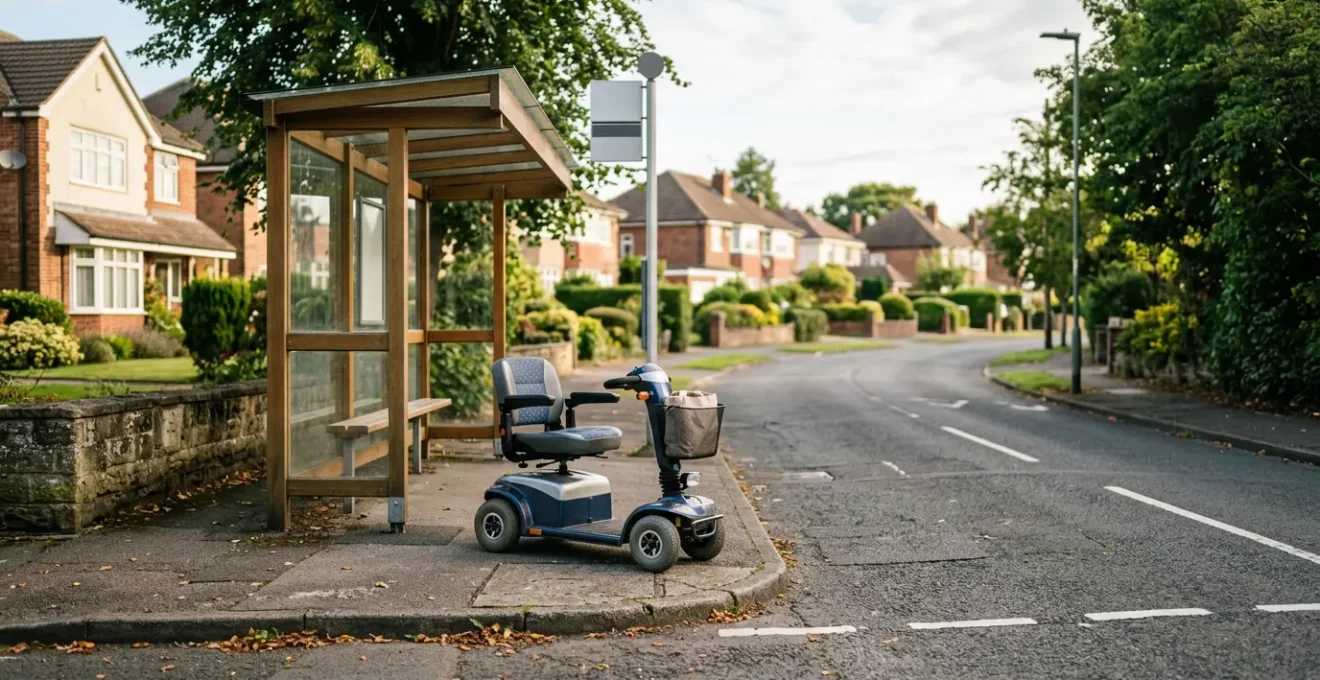
For a second-hand scooter, comprehensive insurance is only financially viable if the annual premium is significantly lower than its current depreciated value, minus the policy excess.
- Minor damage repairs often cost less than the policy excess, making a claim financially illogical.
- The greatest financial risk is not damage to your scooter but third-party liability, which can cost thousands regardless of your scooter’s value.
Recommendation: Calculate your scooter’s current market value, check the policy excess, and prioritise a policy with robust liability cover over high accidental damage limits for your older model.
You’ve made a savvy financial decision by purchasing a second-hand mobility scooter, saving a significant amount compared to buying new. Now, you’re faced with another cost: comprehensive insurance. The sales pitch promises « total protection » and « peace of mind, » but as a value-oriented owner, you’re right to be sceptical. Is paying a hefty annual premium for a scooter that has already lost much of its value a sound investment or simply a waste of money?
The standard advice often revolves around the emotional comfort of being covered. However, a true assessment goes beyond feelings and into financial calculation. The core question isn’t whether insurance is « good, » but whether the mathematical reality of your scooter’s worth justifies the cost of the policy. This involves a clear-eyed look at the real-world risks, the « hidden costs » of being uninsured, and the often-overlooked details in the policy’s fine print, like excess amounts and depreciation clauses.
This guide moves past the platitudes. We will not be selling you a policy; we will provide a financial framework. By breaking down the specific costs of theft, accidental damage, and third-party liability, we will weigh them against the dual pressures of insurance premiums and your scooter’s declining value. The goal is to equip you with a break-even analysis model, allowing you to make a calculated, confident decision based on numbers, not just nerves.
To help you navigate this financial decision, this article breaks down the most common and costly scenarios you might face. By understanding the real-world value of each insurance component, you can determine if a comprehensive policy is a necessary safeguard or an unnecessary expense for your specific situation.
Summary: A Financial Breakdown of Scooter Insurance Worth
- Garage Break-Ins: Why Locking the Door Isn’t Enough for Insurers?
- Reversing into a Wall: Who Pays for Your Cracked Tiller?
- The ‘Get You Home’ Service: Is Breakdown Cover Included in Comprehensive?
- Lost Keys: The £150 Lock Replacement You Didn’t Budget For
- Depreciation: Will You Get Enough Cash to Buy Another Scooter?
- Supermarket Car Parks: How a Minor Scrape Can Cost You £500?
- The Screamer: Why Noise Is Your Best Defense Against Opportunists?
- Choosing the Right Lock: Securing Your Scooter in High-Theft Areas
Garage Break-Ins: Why Locking the Door Isn’t Enough for Insurers?
Storing your scooter in a locked garage or shed provides a basic level of security, but from an insurer’s perspective, it’s often the bare minimum. The risk of theft remains significant, and policies are written with specific conditions to mitigate it. With 375,048 reported vehicle thefts in England and Wales in a single year, insurers view unattended vehicles, even those behind a locked door, as targets. They expect you to take further, specified precautions.
This is where the fine print becomes critical. Many owners are surprised to learn that their comprehensive theft cover can be voided if the scooter wasn’t secured *in a particular way*, even within a locked structure. The policy isn’t just about covering the loss; it’s about you proving you took contractually agreed-upon steps to prevent it. A common requirement is the use of an independent, high-quality lock.
The standard for this is often explicit. As security experts at Litelok clarify, a policy’s validity can be contingent on specific security hardware. They note:
Many insurance policies require you to have a Sold Secure approved lock of appropriate level to cover the value of your bike and accessories and you have met the requirements in your policy wording.
– Litelok Security Experts, What Are Sold Secure Bike Locks? All You Need To Know
Therefore, the « hidden cost » of not having insurance is not just the scooter’s value, but the cost of not knowing these rules. A claim can be denied not because theft didn’t happen, but because your security measures didn’t meet the insurer’s non-negotiable standards. This makes understanding your policy’s security clauses as important as the lock on your garage door.
Reversing into a Wall: Who Pays for Your Cracked Tiller?
Accidental damage is a core component of comprehensive insurance. A moment of misjudgment can lead to a cracked tiller, a bent frame, or damaged bodywork. The assumption is that your policy will cover the repair costs. However, for owners of older, lower-value scooters, the financial reality is dictated by one crucial policy detail: the excess amount.
The excess is the fixed amount you must pay towards any claim before the insurer contributes. For example, if your policy has a £100 excess and the repair bill for a cracked tiller is £150, the insurer will only pay the remaining £50. This mechanism is designed to deter small, frequent claims and has a direct impact on the value proposition of the insurance itself. A higher excess generally leads to a lower annual premium, a tempting offer for a cost-conscious owner.
Herein lies the financial trap. If the repair cost for your second-hand scooter is only slightly more than, or even less than, your excess, making a claim is financially illogical. You would be better off paying for the repair out-of-pocket to avoid both the hassle of the claims process and the potential increase in your premium at renewal time. A case study on the financial sense of making claims highlights that policyholders must choose an excess they are comfortable paying, as it directly determines the threshold at which the insurance becomes useful for minor damages.
For a scooter worth only a few hundred pounds, a policy with a £100 or £150 excess effectively becomes a « major disaster only » policy for accidental damage. It won’t help with the small scrapes and knocks that are far more common. This is a key part of your break-even analysis: is the premium worth paying if you’re unlikely to claim for the most frequent types of damage?
The ‘Get You Home’ Service: Is Breakdown Cover Included in Comprehensive?
One of the most practical fears for any scooter user is a breakdown far from home. A flat tyre, a dead battery, or a mechanical failure can leave you stranded. Many comprehensive insurance policies address this by offering breakdown cover or a « get you home » service, but it’s rarely a standard inclusion. It is typically an optional, paid add-on, requiring another cost-benefit calculation.
This service provides roadside assistance to recover you and your scooter. As one insurance guide from Monarch Mobility explains, this feature is designed for real-world mobility. They state, « Breakdown cover offers extra assistance if your mobility scooter breaks down while you’re out and about. It can include recovering your scooter from a repair shop and may even provide a courtesy scooter to use while yours is being fixed. » This sounds invaluable, but its financial worth depends on its cost versus the likelihood and expense of a breakdown.
Let’s consider a common scenario: a puncture. The cost of a mobile call-out to repair a tyre can be significant. Specialist insurers report that a single puncture repair claim can be as high as £95, with some policies capping annual claims at £300 for this type of cover. If the breakdown assistance add-on costs £40 per year, it might seem like a bargain. You would only need one breakdown every two years to break even.
However, for an older, well-maintained scooter with solid tyres (which can’t be punctured), the risk of this specific event is zero. The value of breakdown cover, therefore, depends heavily on your scooter’s type (e.g., air-filled vs. solid tyres), its age, its reliability, and how far you typically travel. For a user who only makes short trips around their local area, the cost of a taxi home might be far less than the annual cost of the add-on.
Lost Keys: The £150 Lock Replacement You Didn’t Budget For
Losing a simple house key is an inconvenience; losing a modern mobility scooter key can be a significant financial setback. The days of cheap, purely mechanical keys are long gone. Today’s scooters often feature complex ignition systems with electronic chips and coded immobilisers for security. This complexity means a replacement is not a simple matter of cutting a new key.
This is a classic « hidden cost » of ownership that many people overlook until it’s too late. The process can involve a specialist locksmith, reprogramming the scooter’s internal electronics, and potentially replacing the entire ignition barrel. The cost for this can easily run from £150 to several hundred pounds, a substantial and unplanned expense. Comprehensive insurance policies often include key cover specifically to address this high-cost, low-frequency event.
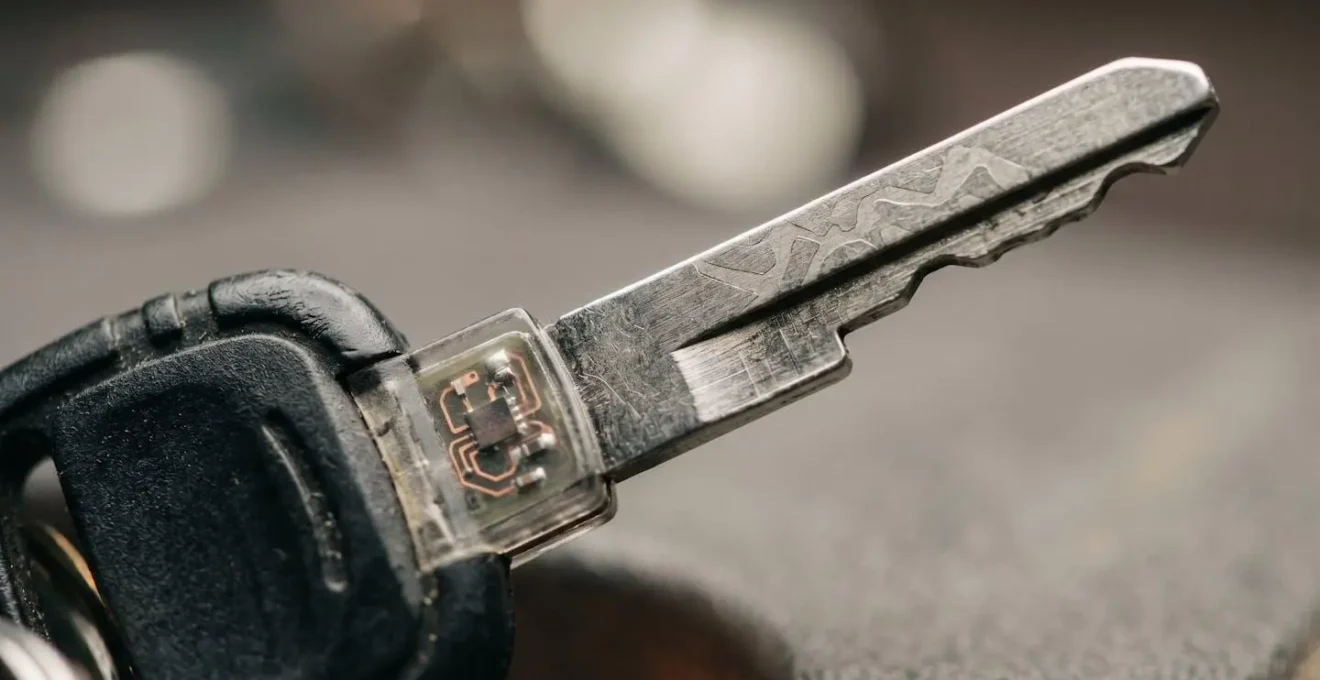
As the image above illustrates, the intricate engineering of modern scooter keys makes replacement a specialist job. Policies that include key protection recognise this risk. For instance, comprehensive policies can offer up to £1,000 in coverage for replacement keys, locksmith assistance, and the reprogramming of key fobs. For an annual premium, this transfers the risk of a very expensive one-off incident to the insurer.
For an owner of a second-hand scooter, this feature can be particularly valuable. The risk of losing a key is the same regardless of the scooter’s age, but the relative financial impact is greater. A £200 bill for a lost key on a scooter that’s only worth £500 is a major blow. Therefore, when evaluating a policy, the quality and limit of its key cover should be a significant factor in your decision.
Depreciation: Will You Get Enough Cash to Buy Another Scooter?
This is perhaps the most critical and misunderstood aspect of insuring an older asset. If your second-hand scooter is stolen or written off, a comprehensive policy will pay out. But it won’t pay what you paid for it, nor will it pay the cost of a new one. The insurer will pay its current market value at the time of the loss—a figure heavily eroded by depreciation.
This is the depreciation trap. The value of mobility scooters, like cars, falls sharply from the moment they are first sold. While the most dramatic drop occurs in the first year, the value continues to decline steadily over time. For instance, industry data shows a 30% to 50% value drop within the first year for electric scooters. While your second-hand model has already undergone this initial hit, its value continues to decrease each year you own it.
Imagine you bought a three-year-old scooter for £600. Two years later, it gets stolen. The insurer’s valuation might determine its current market value is only £350. After you pay your £100 policy excess, you receive a cheque for just £250. This payout is unlikely to be enough to purchase a comparable replacement scooter, leaving you with a significant financial shortfall and no mobility.
This reality must be at the heart of your financial calculation. You must ask: « Is paying £80 a year in premiums worth it to protect an asset that, in the event of a total loss, might only yield a £250 payout? » The lower your scooter’s value, the less sense a high-cost comprehensive policy makes for theft or write-off protection. The decision pivots on whether the premium is a reasonable price to pay for a partial, not full, replacement fund.
Supermarket Car Parks: How a Minor Scrape Can Cost You £500?
When debating insurance, owners often focus on protecting their own scooter. However, the most significant financial risk you face may have nothing to do with your scooter’s value. It’s the risk of causing damage to someone else’s property—a concept known as third-party liability. A busy supermarket car park is a prime location for such an incident.
Imagine you’re navigating a tight space and accidentally scrape the side of a parked car. Your scooter might be unscathed, but you’ve left a deep scratch on the car’s door. The owner is, understandably, not happy. A professional repair for a modern car’s paintwork can easily cost £500 or more. If you don’t have insurance, that bill comes directly out of your pocket. This single, minor incident could cost more than the scooter itself.
This is why liability coverage is often considered the most essential part of any mobility scooter policy. As experts at Monarch Mobility state, « Third-party liability coverage is generally recommended for all mobility scooter owners, as it protects you from potentially significant financial costs. » This protection becomes your financial shield against claims for property damage or, in a worst-case scenario, personal injury to another person. The potential costs can run into the thousands or even millions of pounds, a risk that is entirely disconnected from the value of your own scooter.
The claims process, as detailed in a guide by mobility liability specialists, involves the insurer investigating the incident, determining fault, and handling the settlement with the third party. This not only covers the financial payout but also saves you the stress and complexity of managing the legal and financial negotiations yourself. For many, this protection against potentially life-altering liability costs is the single most compelling reason to have insurance, even for the oldest, cheapest scooter.
The Screamer: Why Noise Is Your Best Defense Against Opportunists?
Physical locks are a primary deterrent, but they can be defeated by a determined thief with the right tools and enough time. The second layer of defense is psychological: drawing unwanted attention. This is the role of an audible alarm or « screamer. » Opportunistic thieves thrive on silence and speed; a high-decibel alarm shatters both, dramatically increasing the risk of being caught.
For a second-hand scooter, often parked in public spaces or communal areas, an alarm acts as a powerful signal that this is not an easy target. It transforms a quiet, tempting object into a loud, problematic one. While a professional thief might not be deterred, the vast majority of scooter thefts are carried out by opportunists who will simply move on to a quieter, unprotected target.
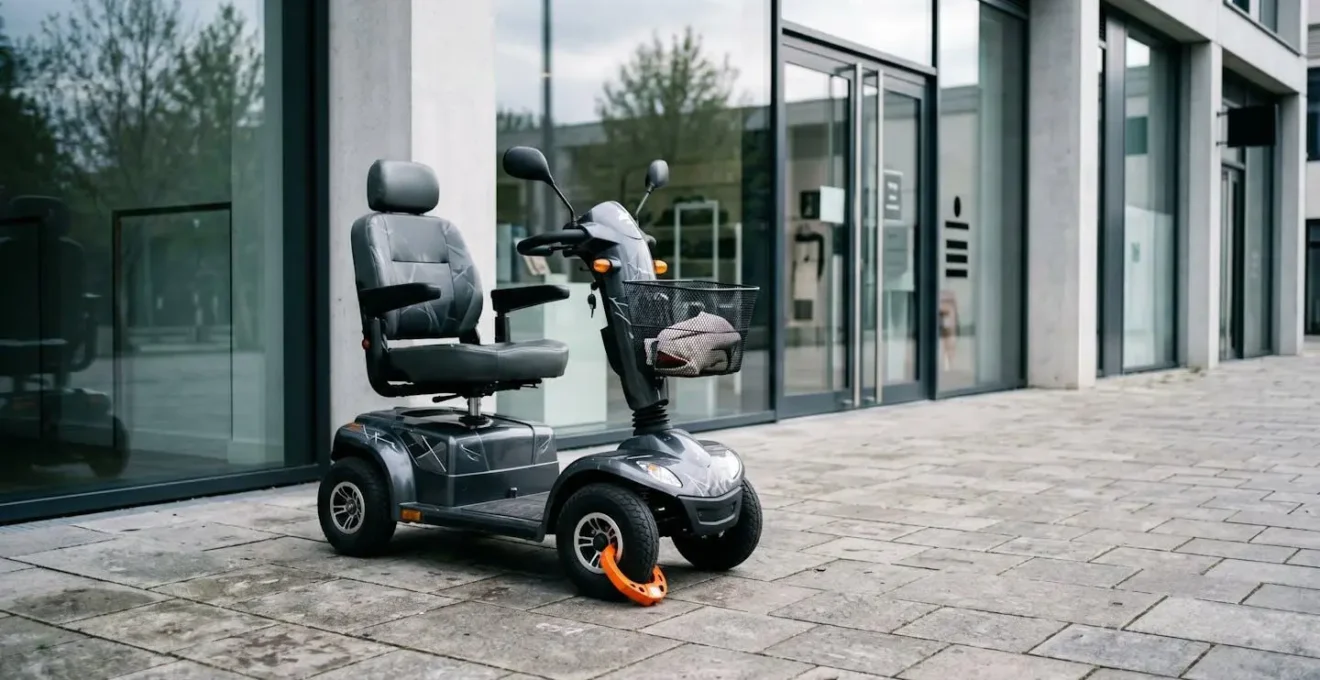
Beyond the practical security benefit, fitting an alarm can also have a direct financial advantage when it comes to insurance. Insurers are in the business of managing risk, and they recognise that an alarm system actively reduces the likelihood of a theft claim. Consequently, they are often willing to reward proactive owners.
As a guide from Wheel Freedom points out, this can translate into direct savings: « Some insurers offer a small discount for fitting an approved alarm system, which can help offset the cost of the alarm over the policy’s life. » This creates a compelling financial loop. Investing in an alarm not only makes your scooter safer but can also lower your annual insurance premium, making the entire security ecosystem more affordable. It’s a small investment that pays dividends in both security and cost savings.
Key takeaways
- The value of comprehensive cover hinges on a break-even analysis: compare the annual premium against the scooter’s depreciated value and potential claim costs.
- Third-party liability is the most critical insurance component, protecting your personal finances from claims that can far exceed the scooter’s worth.
- Insurance validity is often conditional on using specific security measures, such as a ‘Sold Secure’ rated lock, even when the scooter is stored at home.
Choosing the Right Lock: Securing Your Scooter in High-Theft Areas
The final piece of the security and insurance puzzle is your choice of physical lock. This decision is not just about deterring thieves; it’s about satisfying the contractual obligations of your insurance policy. As we’ve seen, insurers will not pay a theft claim if you haven’t used the correct type of security. Choosing the right lock is therefore a prerequisite for your insurance to have any value at all.
The industry benchmark for lock quality in the UK is the Sold Secure rating. This independent testing body, owned by the Master Locksmiths Association, certifies locks based on their resistance to attack. The ratings—Bronze, Silver, Gold, and Diamond—give a clear indication of a lock’s strength. Insurers rely on this system to set their minimum security requirements. For example, industry standards confirm that many policies require a Sold Secure Gold rated lock or higher to validate a claim, especially for higher-value items or in high-risk areas.
For the owner of a second-hand scooter, this means you can’t simply buy the cheapest lock available. You must check your potential insurance policy for its specific Sold Secure requirement and purchase a lock that meets or exceeds that level. A Gold-rated D-lock or heavy-duty chain might seem like overkill for an older scooter, but if the policy demands it, it’s a non-negotiable purchase. The lock becomes part of the total cost of being insured.
Action Plan: Assessing Your Real-World Scooter Security Risk
- Points of Contact (Storage & Use): List every location your scooter is left unattended. (e.g., Home garage, outside shops, at a community centre, overnight in a shared shed).
- Collecte (Existing Measures): Inventory your current security. (e.g., Garage door lock type, existing D-lock brand/model, any ground anchor). Is anything ‘Sold Secure’ rated?
- Coherence (Insurance Policy Check): Get a quote for a policy you’re considering. Find the exact wording in the policy documents regarding security requirements. Does it specify a Sold Secure level (Silver, Gold)?
- Mémorabilité/Emotion (Risk Profiling): Honestly assess your local area’s theft risk. Check local crime maps or forums. Is scooter theft common? This will help you decide if you should exceed the insurer’s minimum requirement.
- Plan d’intégration (Bridging the Gap): Compare your existing measures (Step 2) with the insurer’s requirements (Step 3) and your risk profile (Step 4). Purchase the required lock and/or alarm to fill any security gaps *before* the policy starts.
Ultimately, the decision to purchase comprehensive insurance for your second-hand scooter is a personal financial calculation. By using this framework to weigh the annual premium against your scooter’s depreciated value, the policy excess, and the critical need for liability cover, you can move beyond vague promises of « peace of mind » and arrive at a conclusion that makes true financial sense for your situation.