Legislation & insurance
Regaining your independence through a mobility scooter is a liberating experience, offering a renewed sense of freedom to explore your local community and beyond. However, stepping into the world of powered mobility brings with it a new set of responsibilities. Unlike walking, operating a vehicle—even a silent, electric one—places you within a specific legal framework designed to keep you and those around you safe.
Many new owners are surprised to learn that the regulations governing mobility scooters in the UK are quite comprehensive. From tax exemptions to pavement etiquette, and from registration requirements to the complexities of insurance, there is a lot to digest. This guide serves as your comprehensive resource to navigating the legal and financial landscape of scooter ownership, ensuring you remain compliant with current regulations while enjoying your travels with total peace of mind.
Understanding VAT Relief: Are You Eligible?
One of the first financial considerations when purchasing a mobility scooter is the potential for VAT relief. In the UK, mobility scooters are often eligible for 0% VAT, representing a significant saving. However, this is not an automatic discount applied to every customer; it is strictly tied to the user’s medical status.
Defining ‘Chronically Sick or Disabled’
To qualify for VAT relief, HMRC requires the user to be ‘chronically sick or disabled’. This definition is specific: it applies if you have a physical or mental impairment that has a long-term and substantial adverse effect on your ability to carry out everyday activities, or a condition that the medical profession treats as a chronic sickness (such as diabetes). It is important to note the distinction between a chronic condition and a temporary injury. A broken leg, for example, does not qualify you for VAT relief, whereas a permanent mobility impairment does.
The Declaration Process
Claiming this relief does not usually require a doctor’s letter at the point of purchase. Instead, you must complete a eligibility declaration form provided by the seller. Accuracy is paramount here; making a false claim is a serious offence. Furthermore, you should be aware that purchasing a scooter for a parent with conditions like dementia is permitted under these rules, provided the vehicle is for their personal use. Always check your invoice to ensure VAT has been removed correctly, as rectifying this after the sale can be administratively difficult.
DVLA Registration and Legal Classifications
A common misconception is that mobility scooters exist outside the realm of the Driver and Vehicle Licensing Agency (DVLA). In reality, the requirement to register your vehicle depends entirely on its classification. Understanding the difference between Class 2 and Class 3 vehicles is the cornerstone of legal compliance.
- Class 2 Scooters: These are designed exclusively for pavement use (except when crossing roads). They have a maximum speed of 4mph and do not need to be registered with the DVLA.
- Class 3 Scooters: These are road-legal vehicles capable of speeds up to 8mph. They must be equipped with lights, indicators, a horn, and a rear-view mirror. Crucially, Class 3 scooters must be registered with the DVLA.
The Registration Process and ‘Nil Value’ Tax
If you own a Class 3 scooter, you must fill out the relevant forms (typically a V55/4 for new vehicles or V55/5 for used ones). While you are required to display a tax disc historically (though this has moved to a digital system for cars, the status remains relevant for scooters), the tax class is usually ‘Nil Value’. This means you do not pay road tax, but you must still apply for it annually to keep the vehicle legally on the road. Failing to keep your address updated with the DVLA, or forgetting to SORN (Statutory Off Road Notification) a scooter you are no longer using on public land, can result in unexpected fines.
Rules of the Road and Pavement Etiquette
Operating a mobility scooter requires a blend of legal adherence and common courtesy. The rules change depending on whether you are driving on a pedestrian pavement or a public road.
Speed Limits and Pedestrian Zones
On pavements and in pedestrian areas, the law is strict: you must not exceed 4mph. Most Class 3 scooters feature a ‘tortoise’ switch or a low/high-speed toggle specifically for this purpose. Using the 8mph setting on a pavement is illegal. Furthermore, pedestrians always have the right of way. In crowded areas, it is your responsibility to yield. The ‘silent vehicle’ problem means pedestrians often cannot hear you approaching; relying on a polite verbal warning is often better than a startling horn.
Navigating Roads and Crossings
When driving a Class 3 scooter on the road, you are subject to the Highway Code. You must observe traffic lights, give way at junctions, and position yourself correctly. However, you are not permitted on motorways or in bus lanes. Regarding Zebra crossings, while you have the same rights as a pedestrian when you are on the pavement waiting to cross, drivers may not always anticipate a scooter moving across quickly. Eye contact and caution are essential.
Safety Systems: Brakes, Speed, and Maintenance
Your safety relies heavily on the mechanical integrity of your scooter. Modern legislation mandates specific safety features, particularly regarding braking systems.
Understanding Your Braking Systems
Road-legal scooters are required to have two independent braking systems. Typically, this involves the automatic electromagnetic brake (which engages when you release the throttle) and a secondary mechanical brake. It is vital to regularly perform the ‘Let Go’ test: on flat ground, release the throttle and ensure the scooter comes to a smooth, prompt halt. Additionally, be wary of the freewheel lever (often putting the scooter into ‘Neutral’). If this lever is disengaged, your electromagnetic brakes will not function, posing a severe risk on inclines.
The Dangers of Speed Modification
Tampering with speed restrictors to make a scooter go faster than its legal limit is a dangerous practice that renders the vehicle illegal for use on public land. More importantly, modifying the speed controller or removing the limiter will instantly void your insurance policy. If you are involved in an accident with a modified scooter, you could be held personally liable for all costs.
Why Mobility Scooter Insurance is Essential
Perhaps the most critical topic in this guide is insurance. Currently, insurance is not a legal requirement for mobility scooters in the same way it is for cars, but operating without it is a significant financial gamble. The Department for Transport strongly recommends it, and for good reason.
The Critical Importance of Third-Party Liability
The most important aspect of any policy is Third-Party Liability. If you accidentally scrape a car in a supermarket car park, collide with a pedestrian, or cause someone to trip over your parked scooter, you are liable for the damages. Without insurance, compensation claims for personal injury or property damage can run into thousands—or even tens of thousands—of pounds. A dedicated scooter insurance policy covers these legal liabilities, protecting your personal assets.
Comprehensive Cover: Theft, Damage, and Breakdown
Beyond liability, comprehensive insurance offers protection for the scooter itself. This is particularly valuable given the cost of modern machines.
- Theft and Vandalism: Storage is a key concern. Insurers often require that the scooter is locked in a secure garage or shed when at home. Leaving it unsecured in a garden may invalidate a theft claim.
- Accidental Damage: Whether it is reversing into a wall and cracking the tiller or suffering damage during transit, comprehensive cover handles repairs.
- Breakdown Recovery: The ‘Get You Home’ service is invaluable. If your battery fails or you get a flat tyre miles from home, this cover ensures you and your scooter are transported back safely, rather than being stranded.
Navigating the legislation and insurance landscape may seem daunting initially, but these rules exist to protect you. By ensuring your vehicle is correctly registered, your VAT status is accurate, and you are adequately insured, you can focus on what matters most: enjoying the independence and mobility your scooter provides.
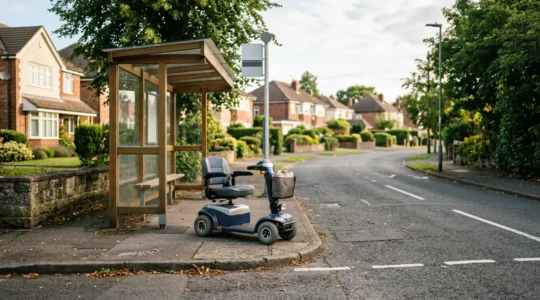
Is Comprehensive Insurance Worth It for a Second-Hand Mobility Scooter?
For a second-hand scooter, comprehensive insurance is only financially viable if the annual premium is significantly lower than its current depreciated value, minus the policy excess. Minor damage repairs often cost less than the policy excess, making a claim financially…
Lire la suite
Why Third-Party Liability Is the Most Critical Insurance for Scooter Owners?
Contrary to popular belief, the greatest financial threat to a scooter owner isn’t theft, but a personal bankruptcy lawsuit from a seemingly minor liability claim. Even a small scrape in a car park can expose you to hundreds in legal…
Lire la suite
Pavement Etiquette: Giving Way and Speed Rules for Scooter Users
The key to avoiding conflict isn’t just knowing the rules; it’s mastering the art of predictability and proactive communication with pedestrians. Most tension arises from surprising pedestrians, not from speed alone. Signalling your intentions early is more effective than just…
Lire la suite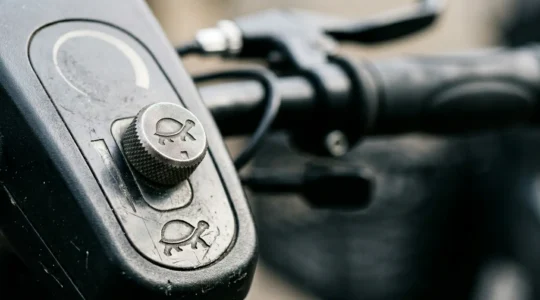
Why Speed Restrictors Are Mandatory for Class 3 Scooters on Pavements?
Contrary to the belief that a scooter’s speed limiter is merely an inconvenient feature, it is a legally mandated safety system. Tampering with this device is not a simple modification; it is a deliberate act of negligence that instantly voids…
Lire la suite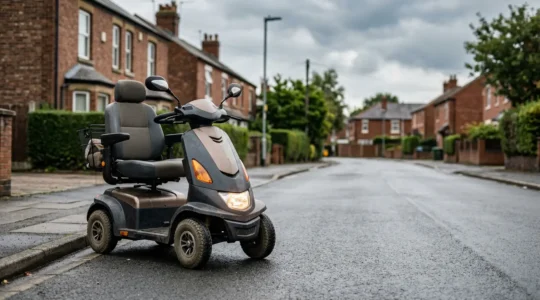
How to Complete Class 3 Scooter Registration with the DVLA Correctly?
In summary: Registering your Class 3 (8mph) scooter with the DVLA is a legal requirement, not an option. You must use form V55/4 for new scooters and V55/5 for used, unregistered scooters. While vehicle tax is ‘Nil Value’, you must…
Lire la suite
Can you drive a mobility scooter in town centres? UK pavement regulations explained
In summary: You can legally use a Class 2 mobility scooter (max 4mph) on pavements, but pedestrians always have priority. Speed must be adjusted to the environment; the 4mph limit is not a target, especially indoors or in crowds. The…
Lire la suite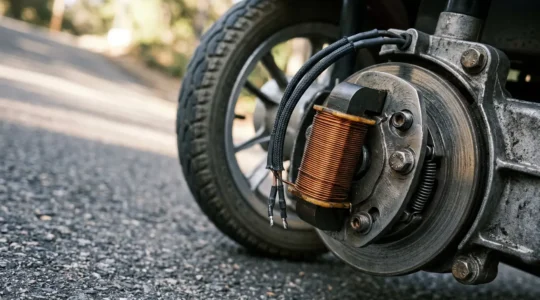
How Your Scooter’s Electromagnetic Brakes Engineer Your Safety on Steep Hills
Your scooter’s stability on a hill isn’t magic; it’s a precisely engineered fail-safe system where the brake’s natural state is ‘locked on’. Electromagnetic brakes require constant power to *release*, meaning any power interruption—from releasing the throttle to turning the key—instantly…
Lire la suite
How to Claim VAT Relief on a Medical Scooter in the UK Correctly?
In summary: VAT relief is not automatic; you must meet HMRC’s strict definition of being « chronically sick or disabled ». The eligibility declaration form is a legal document. Mistakes can lead to delays or the full VAT amount being charged. You…
Lire la suite