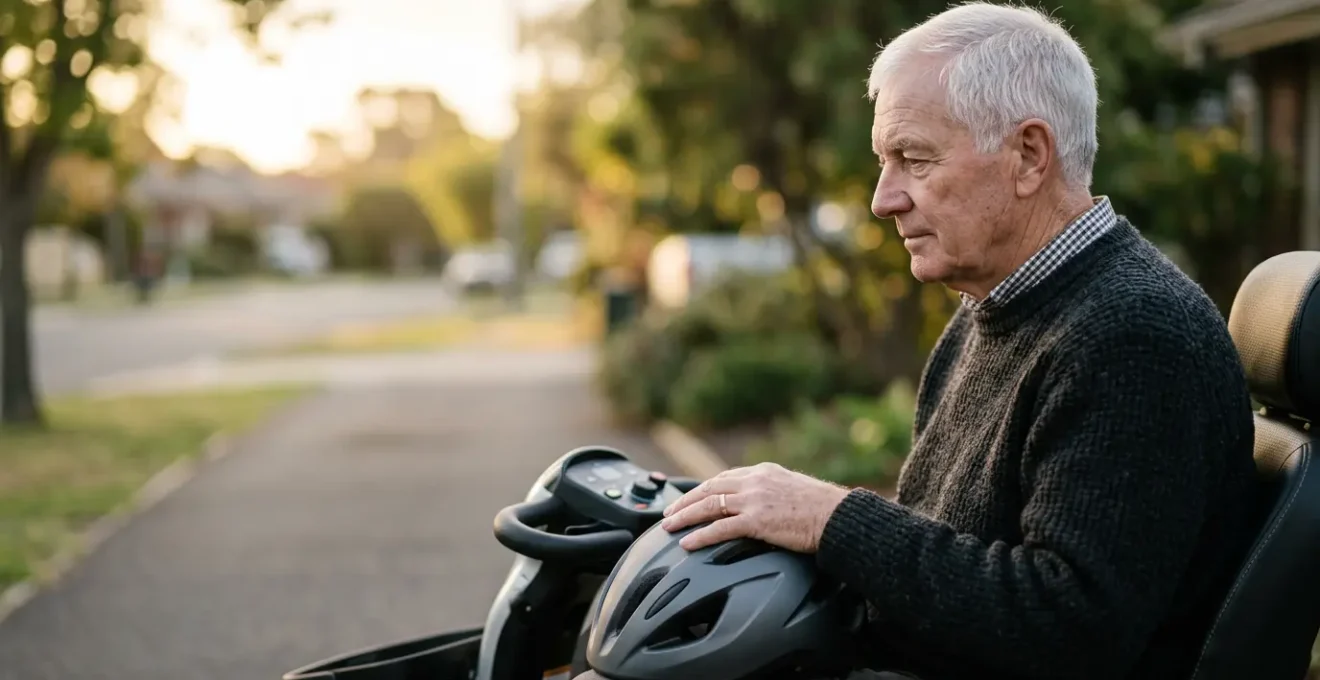
The debate over mobility scooter helmets isn’t truly about the law, but the misunderstood physics of low-speed falls.
- Even stable, slow scooters present a significant fall risk, and simply tipping over can be enough to cause serious head trauma.
- While wearing a helmet is not legally mandatory, choosing not to can see your compensation significantly reduced in an accident claim due to contributory negligence.
Recommendation: Assess your personal risk based on the real-world physics of a fall, not just legal loopholes, and choose head protection that matches your specific usage and needs.
For many mobility scooter users, the question of wearing a helmet is a daily point of contention. You value your freedom and independence, and the idea of adding a cumbersome helmet can feel like an unnecessary burden, especially when it’s not a legal requirement. Most advice simply states the obvious: « it’s not mandatory, but it’s recommended. » This leaves you, the user, caught between a vague suggestion of safety and the practical realities of comfort, convenience, and personal choice.
This approach is failing you because it sidesteps the most important part of the conversation. The real issue isn’t about blindly following a rule that doesn’t exist. It’s about understanding a fundamental, counter-intuitive truth: the unique and often underestimated danger of a low-speed trauma. The common belief that a fall at 4 or 8 mph is harmless is a dangerous misconception. The physics of how your head hits a hard surface tells a very different story.
This article will not simply tell you to wear a helmet. Instead, it will empower you to make a truly informed decision. We will move beyond the simple legal question and delve into the « why » of head protection. We will analyse the actual risk of falls, explain the mechanics of injury even at low speeds, and explore the significant financial implications of « contributory negligence. » Finally, we will provide practical, tailored solutions that address the real-world challenges of helmet use, from winter warmth to storage. By the end, you’ll have a clear framework for assessing your own risk and deciding what level of protection is right for you.
To navigate this complex topic, this article breaks down the key issues you need to consider. The following summary outlines the path we will take to build a complete picture, from the legal baseline to the practical solutions.
Summary: To Wear or Not to Wear: The Helmet Debate for Mobility Scooter Users
- Is a Safety Helmet Legally Required for Class 3 Scooters on UK Roads?
- Three Wheels vs Two: Why E-Scooters Are a Fall Risk for Seniors?
- Tipping Over: Why Even Low Speed Falls Can Cause Serious Trauma?
- Ventilation vs Protection: Which Style Suits Low Speed Impacts?
- Snowboard Helmets: Warmth and Safety for Winter Riding
- Rain in the Eyes: Why a Visor Helmet Helps Vision (and Glasses)?
- Locking It Up: Where to Put the Helmet When You Go Shopping?
- Contributory Negligence: Could Not Wearing a Helmet Affect Your Claim?
Is a Safety Helmet Legally Required for Class 3 Scooters on UK Roads?
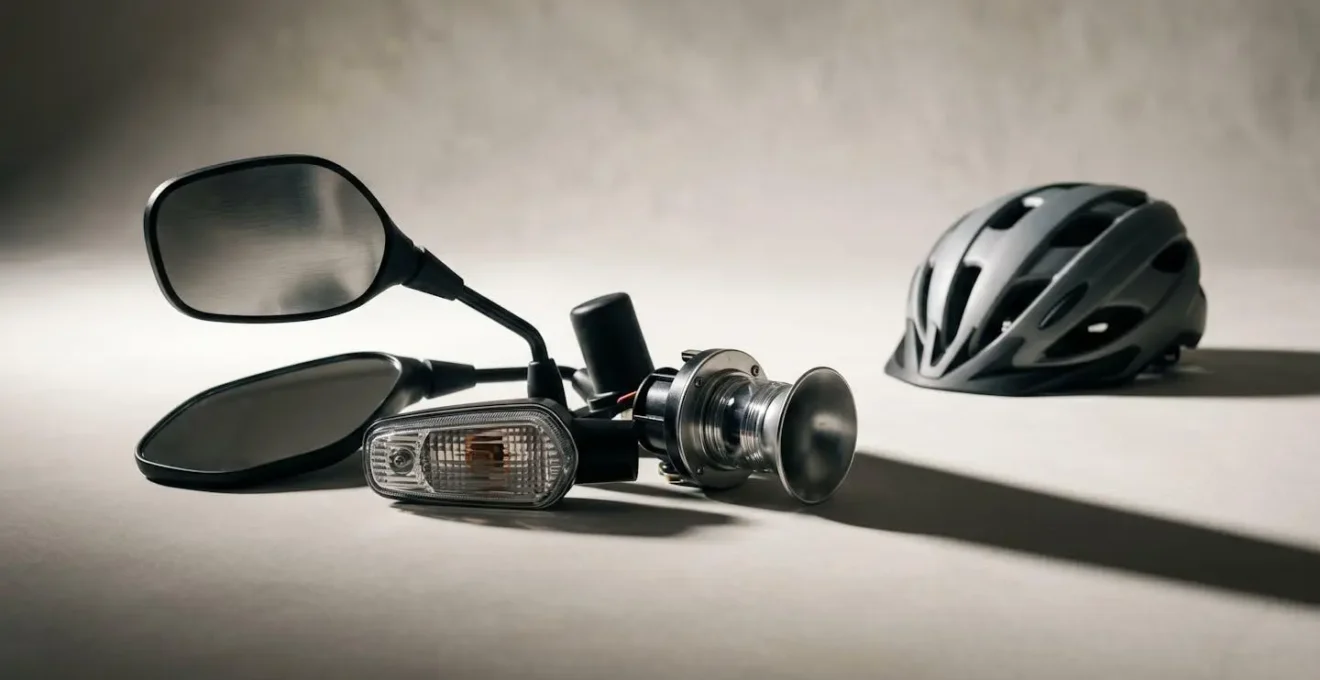
Let’s address the most direct question first: are you breaking the law by not wearing a helmet on your mobility scooter? In the United Kingdom, the answer is unequivocally no. For both Class 2 (pavement) and Class 3 (road-legal, up to 8 mph) mobility scooters, there is no legal requirement to wear a helmet. The legislation focuses on other safety aspects like lights, indicators, and a horn for Class 3 vehicles, but head protection is left to the user’s discretion.
This is confirmed by government guidelines and mobility experts alike. A clear review of official UK regulations confirms that helmets are not mandatory for mobility scooter operators. This legal clarity is important because it frames the debate correctly. This isn’t about avoiding a fine or points on a license; it’s about a personal choice regarding risk management.
However, the absence of a law doesn’t equate to an absence of risk. The recommendation from nearly every safety body and mobility provider is consistent. As stated in Monarch Mobility’s legal guidance, « Although not legally required, it is recommended that you wear a helmet, hi-vis, and other protective gear when riding a scooter, especially on roads. » This standard advice highlights the gap between legal compliance and best safety practices. The law sets the minimum standard, but it doesn’t offer a complete picture of how to stay safe. The rest of this article explores the reasons behind this strong recommendation.
Three Wheels vs Two: Why E-Scooters Are a Fall Risk for Seniors?
A common and understandable assumption is that a three or four-wheeled mobility scooter is inherently stable and therefore, safe from falls. Unlike two-wheeled e-scooters or bicycles that require constant balance, a mobility scooter feels solid and secure. However, this feeling of stability can be misleading and masks a significant, statistically proven risk. The danger isn’t necessarily from a lack of balance, but from external factors leading to tipping and falls.
Research paints a startling picture. A comprehensive University of Illinois study found that 96% of full-time wheelchair and motorized scooter users reported experiencing a fall within a two-and-a-half-year period. This staggering number shows that falls are not a rare exception, but a near-certainty over time. These incidents are often caused by environmental hazards like uneven pavements, steep kerbs, potholes, or accidentally hitting a small obstacle. The scooter’s stability is compromised, and a tip-over can happen in an instant.
Case Study: The Hidden Dangers for New Users
A clinical study documented three upper limb fractures in novice mobility scooter users who had been operating their devices for less than six weeks. A crucial finding was that all injuries occurred in close proximity to the users’ homes on familiar ground, and none had received any formal training before using their devices. This highlights a critical safety deficiency: the lack of driver training for new users, who may be unaware of how to navigate common hazards safely, dramatically increases their initial fall risk.
The problem is particularly acute for new users who are still learning the device’s handling characteristics and limitations. The transition from walking to using a scooter involves a new set of skills, and navigating a world designed for pedestrians presents unique challenges. A scooter’s wider turning circle or lower ground clearance can easily catch an inexperienced user off guard, leading to a fall in what seems like a safe environment.
Tipping Over: Why Even Low Speed Falls Can Cause Serious Trauma?
The most dangerous myth surrounding mobility scooters is that a fall at low speed—4 mph on a pavement or 8 mph on the road—is harmless. Our intuition tells us that « slow » equals « safe. » Unfortunately, when it comes to head injuries, this intuition is wrong. The speed of the scooter is not the critical factor; the height of your head and the unforgiving nature of the ground are.
Consider this: your head is positioned roughly four to five feet above the ground. When a scooter tips over, your body pivots. Your head travels that full distance downwards, accelerating due to gravity. By the time it strikes the pavement, it is moving much faster than the scooter was. It’s the same principle as falling from a standing height—a short, sharp impact that can have devastating consequences. The human skull is resilient, but it is not designed to withstand a sudden stop against concrete, tarmac, or a kerbstone.
This is the essence of low-speed trauma. The initial forward momentum of the scooter is only part of the equation. The more significant force comes from the vertical and rotational impact as you fall sideways or forwards. This is where serious brain injuries, such as concussions or intracranial bleeding, can occur. The brain, floating inside the skull, can be violently shaken or twisted by the impact, causing damage that is entirely independent of the scooter’s « top speed. »
Even a fall from a stationary scooter can be enough. Imagine your scooter is parked on a slight incline or one wheel drops into a pothole while you’re stopped. If it tips, your head will still impact the ground with significant force. The risk isn’t about speed; it’s about an unprotected head making contact with an unyielding surface. This distinction is the single most important concept to grasp in the helmet debate.
Ventilation vs Protection: Which Style Suits Low Speed Impacts?
Now that we’ve established that falls happen and can be dangerous even at low speeds, the conversation shifts to the solution: what kind of helmet is appropriate? The world of helmets is vast, but for mobility scooter users, the choice hinges on balancing protection for low-speed impacts with comfort and usability. The injuries common in these scenarios are often caused by oblique impacts, which generate dangerous rotational forces on the brain.
As the experts at MIPS Protection explain, this specific type of force is a primary cause of severe brain injury:
Rotational motion is a common cause of concussions and more severe brain injury in oblique hits to the head.
– MIPS (Multi-directional Impact Protection System), MIPS Official Safety Research
This insight is crucial. It means the best helmet for a mobility scooter user isn’t necessarily the thickest or heaviest, but one designed to manage these rotational forces. Many modern bicycle and ski helmets incorporate technologies like MIPS (Multi-directional Impact Protection System), which is a low-friction layer designed to allow the head to move slightly relative to the helmet during an angled impact, reducing the harmful rotational motion transferred to the brain. This is precisely the kind of protection needed for a tipping or fall-from-height scenario. With head injuries accounting for 40.2% of mobility scooter-related emergency visits in one study, choosing a helmet with this technology is a data-driven decision.
Your Helmet Selection Checklist
- Impact Certification: Look for a helmet certified to a recognized standard (e.g., CPSC for bike helmets, EN1077 for snow helmets). This is a baseline guarantee of quality.
- Rotational Protection: Does the helmet feature a slip-plane system like MIPS or a similar technology? This is a key feature for the types of falls common to scooter users.
- Fit and Comfort: Is the helmet adjustable? Does it sit level on your head and feel secure without being too tight? A helmet you won’t wear because it’s uncomfortable offers zero protection.
- Ventilation and Weight: Will you be using the scooter primarily in warm weather? Prioritize a well-ventilated, lightweight bicycle-style helmet to ensure you’re comfortable wearing it.
- Visibility: Consider a helmet in a bright colour (white, yellow, orange) to improve your visibility to pedestrians and traffic.
Ultimately, the best helmet is one that you will actually wear. Sacrificing a small amount of ventilation for a much higher degree of impact protection is a wise trade-off, especially when the technology to protect against the most likely injury mechanisms is readily available.
Snowboard Helmets: Warmth and Safety for Winter Riding
The concept of situational safety is key when choosing head protection. A lightweight, highly ventilated bicycle helmet might be perfect for a summer’s day, but it becomes impractical and uncomfortable in the cold and damp of winter. For year-round scooter users, a different solution is needed—one that provides both safety and warmth. This is where snowboard or ski helmets offer a compelling and intelligent alternative.
Snowboard helmets are engineered for the same types of impacts as bicycle helmets—falls onto a hard surface and potential collisions—but with the added design requirement of providing thermal insulation. They typically feature a durable outer shell, an EPS foam impact-absorbing liner, and often a rotational protection system like MIPS. However, they differ in their inclusion of soft, insulated ear pads and a thicker, fleece-like inner lining.
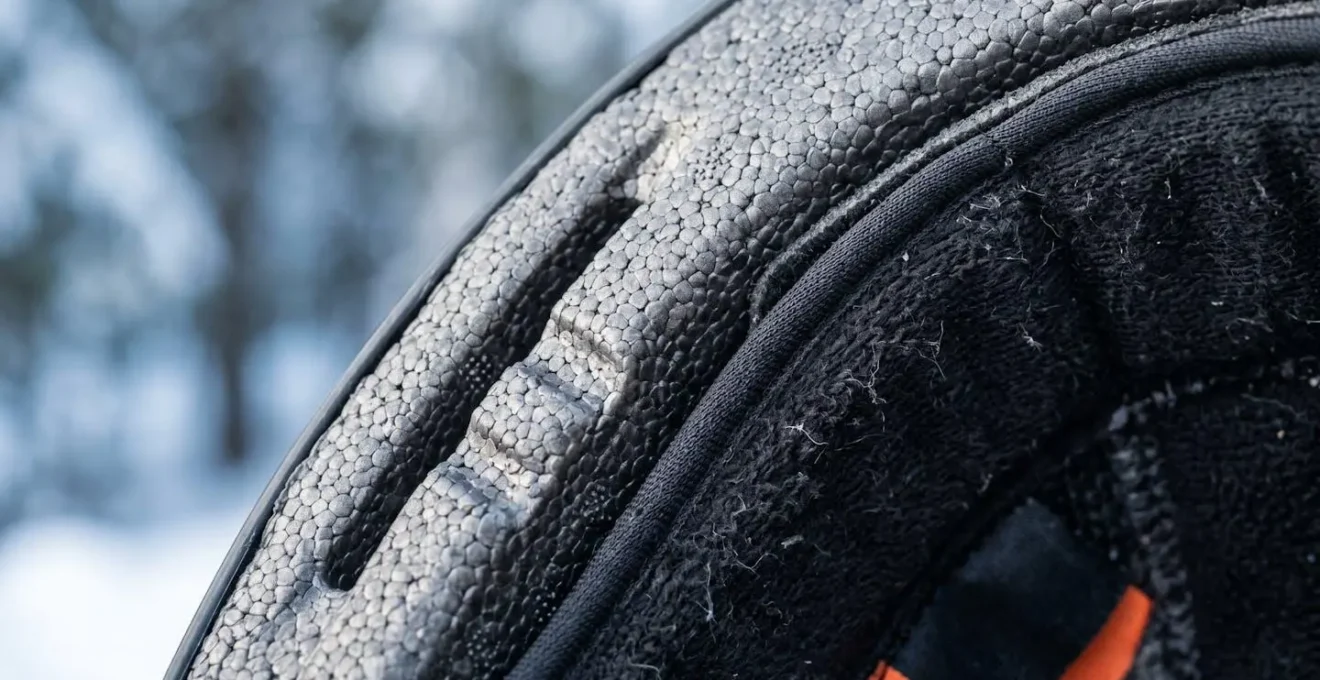
For a mobility scooter user, this design offers several distinct advantages during colder months. It eliminates the need for a separate winter hat, which can compromise the fit and safety of a standard bicycle helmet. The integrated ear pads provide warmth without muffling sound to the point of being unsafe, and many models have adjustable vents that can be opened or closed to regulate temperature. This adaptability makes them a far more practical choice for a journey to the shops on a frosty morning.
By adopting a piece of equipment from another domain, you are not compromising on safety; you are enhancing it by making it more suitable for the conditions. A warm, comfortable user is a safer user, and one who is far more likely to consistently wear their protective gear. Choosing a snowboard helmet for winter is a perfect example of a risk-based decision that prioritizes both protection and practicality.
Rain in the Eyes: Why a Visor Helmet Helps Vision (and Glasses)?
Safety is not just about impact protection; it’s also about accident prevention. For mobility scooter users, maintaining clear vision is paramount, and a sudden downpour can be more than just an inconvenience—it can be genuinely hazardous. Rain driving into your eyes can cause you to flinch, obscure your vision, and make it difficult to spot obstacles, pedestrians, or changes in the pavement surface. For the millions who wear prescription glasses, this problem is magnified, as raindrops turn clear lenses into a blurry, distorted mess.
This is another area where a specific helmet choice can provide a dual benefit of protection and enhanced practical safety. A helmet equipped with an integrated visor acts as a personal windshield. It keeps rain out of your eyes and, crucially, off your glasses, allowing you to maintain clear forward vision in wet conditions. This single feature can be the difference between navigating a wet pavement safely and failing to see a puddle or kerb that could cause a tip-over.
Modern helmet technology has evolved to solve the issues that used to plague visors, such as fogging and glare. As noted in analyses of scooter safety gear, modern helmet visors use factory-applied anti-fog coatings and hydrophobic treatments to prevent vision-obscuring condensation and allow rain to bead and roll off. This technology is particularly critical for morning and evening rides when low sun angles create blinding glare—a common accident cause for users with age-related vision changes. A tinted or photochromic visor can further enhance safety by automatically adjusting to changing light conditions.
Choosing a helmet with a high-quality, full-face visor is a proactive safety measure. It directly mitigates a common environmental risk, improving your ability to control the scooter and avoid an accident in the first place. It is a prime example of how the right equipment doesn’t just protect you in a crash, but actively helps you prevent one.
Locking It Up: Where to Put the Helmet When You Go Shopping?
One of the most significant and practical barriers to helmet use is not cost or comfort, but simple inconvenience. You’ve ridden your scooter to the local shopping centre or to a doctor’s appointment. Now what? Carrying a bulky helmet around a store is awkward, and leaving it in your scooter’s basket feels risky. This single logistical challenge is often enough for people to decide against wearing a helmet altogether. If the solution isn’t practical, it won’t be used.
Fortunately, helmet design has evolved to address this exact problem. The rise of urban cycling and e-scooting has spurred innovation in portable, compact head protection. The most effective solution for mobility scooter users is the foldable or collapsible helmet. These helmets are designed to meet the same rigorous safety standards as their traditional counterparts, but with the added ability to be reduced to a fraction of their size for easy storage.

When collapsed, these helmets can easily fit into a small backpack, a large handbag, or even the scooter’s own front basket or rear storage bag, where they are far less conspicuous than a full-size helmet. This means you can ride to your destination fully protected, and then in a matter of seconds, fold the helmet away and proceed with your day without being encumbered. It transforms the helmet from a bulky annoyance into a discreet, portable safety device.
Addressing this practical objection is fundamental. By removing the « what do I do with it when I get there? » problem, foldable helmets make the decision to wear one much easier. They prove that safety and convenience don’t have to be mutually exclusive. Investing in a solution that fits seamlessly into your routine is key to forming a consistent safety habit.
Key Takeaways
- While not a legal requirement in the UK, failing to wear a helmet can have severe physical and financial consequences.
- The risk is not speed, but the physics of a fall; even a tip-over from a standstill can cause serious head trauma due to the height of the fall.
- The concept of « contributory negligence » means that in the event of an accident, your compensation claim could be reduced by up to 25% if you were not wearing a helmet.
Contributory Negligence: Could Not Wearing a Helmet Affect Your Claim?
We have established the physical risks, but there is one final, powerful argument that operates in a completely different domain: the financial one. Even if you are involved in an accident that is entirely someone else’s fault—a car pulls out in front of you, a cyclist collides with you—your decision not to wear a helmet could have profound financial consequences. This is due to a legal principle known as contributory negligence.
Contributory negligence argues that while the other party was at fault for causing the accident, your own actions (or lack thereof) contributed to the severity of your injuries. In the context of a head injury, a defendant’s legal team will almost certainly argue that had you been wearing a helmet, your injuries would have been less severe. If a court agrees, it can reduce the amount of compensation you receive.
A cyclist’s failure to wear a cycle helmet may lead to a finding of contributory negligence and a consequent deduction in damages for personal injury.
– Weightmans Legal Analysis, Cycle helmets and contributory negligence revisited
While this analysis refers to cyclists, the legal principle is directly transferable to mobility scooter users, especially those using Class 3 scooters on the road. The precedent is well-established. While the exact amount varies case by case, research shows that UK courts typically impose reductions of between 10% and 25% on personal injury damages in such cases. For a serious, life-altering head injury with compensation running into hundreds of thousands or even millions of pounds, a 25% reduction is a financially catastrophic outcome.
This shifts the helmet from a simple safety device to a form of financial insurance. It protects not only your physical health but also your legal and financial standing in the worst-case scenario. It is a powerful rebuttal to the « it’s not illegal » argument. While you won’t be prosecuted for not wearing one, your choice could be heavily penalized in civil court, leaving you and your family to bear a significant portion of the cost of your own care.
The decision to wear a helmet remains a personal one. However, it should now be clear that this choice extends far beyond simple comfort or convenience. It is a decision informed by the physics of low-speed falls, the high probability of an eventual tip-over, and the serious legal and financial doctrine of contributory negligence. The question is not whether you are legally obliged, but whether you are willing to accept the full spectrum of physical and financial risks. Choosing the right helmet—one that is comfortable, practical for your needs, and certified safe—is the most effective step you can take to mitigate those risks and safeguard your independence for years to come.