In summary:
- Registering your Class 3 (8mph) scooter with the DVLA is a legal requirement, not an option.
- You must use form V55/4 for new scooters and V55/5 for used, unregistered scooters.
- While vehicle tax is ‘Nil Value’, you must still complete the tax application process.
- Failure to update your address on the V5C logbook can lead to a fine of up to £1,000.
- Third-party liability insurance is not legally mandatory but is critically important for your financial protection.
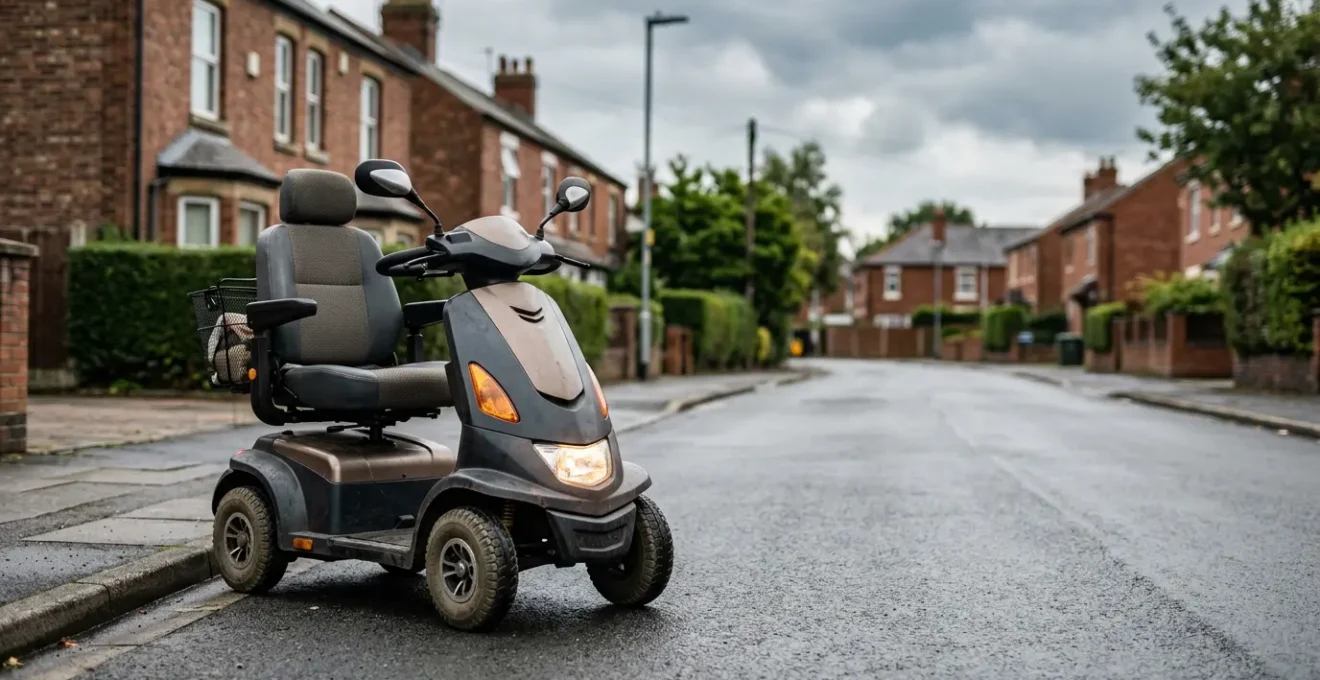
The arrival of a brown envelope from the DVLA can cause a wave of anxiety for any vehicle owner. For the new keeper of a Class 3 mobility scooter, this feeling is often amplified by a fog of confusion. Is it a vehicle? Does it need tax? What are these forms, and what happens if you get it wrong? Many owners are unaware that any scooter capable of travelling at 8mph is officially classified as a ‘mechanically propelled vehicle’ and falls under specific DVLA regulations. While some may advise you to simply ignore the paperwork, this approach exposes you to significant financial penalties.
The common advice often lumps all mobility scooters together, failing to distinguish between lightweight Class 2 models, which require no registration, and their heavier, faster Class 3 counterparts. This guide serves as your official compliance assistant. Its purpose is not just to list the steps, but to demystify the bureaucratic logic behind them. We will clarify why each piece of information is required, transforming your uncertainty into confident compliance. Understanding the ‘why’ is the key to completing the process correctly the first time and ensuring you can use your scooter with complete peace of mind.
This article will provide procedural clarity on the entire DVLA registration process. We will examine the correct forms for new and used scooters, explain the concept of nil value tax, detail your legal obligations as a keeper, and underline the critical importance of insurance. By following this guidance, you will fulfill all your legal duties and avoid any potential fines.
Summary: Correctly Registering Your Class 3 Mobility Scooter with the DVLA
- New vs Used: Which Form Do You Actually Need to Fill Out?
- Nil Value Tax: Do You Still Need to Display a Disc in 2024?
- Why You Don’t Need a Number Plate (But Might Want One for Identification)?
- Moving House: The Fine for Forgetting to Tell DVLA About Your Scooter
- Taking It Off the Road: Do You Need to SORN a Scooter You Don’t Use?
- The Rules of the Road: Where Can You Legally Drive a Heavy-Duty Beast?
- Chronically Sick vs Temporarily Injured: Do You Qualify for VAT Relief?
- Why Third-Party Liability Is the Most Critical Insurance for Scooter Owners?
New vs Used: Which Form Do You Actually Need to Fill Out?
The first point of procedural confusion for new keepers is selecting the correct DVLA application form. The choice is determined by one simple factor: the scooter’s history. Your legal obligation is to provide the DVLA with the correct origin information, and two distinct forms exist for this purpose. For a brand-new Class 3 scooter that has never been registered by anyone, you must complete form V55/4 (‘Application for a first vehicle tax and registration of a new motor vehicle’). This tells the DVLA that your scooter is entering the national vehicle record for the very first time.
Conversely, if you have acquired a second-hand scooter that was never registered by its previous owner—perhaps because they only used it on private land—you must use form V55/5 (‘Application for a first vehicle tax and registration of a used motor vehicle’). This form signals to the DVLA that the vehicle is not new but is being registered for the first time. In both cases, there is no fee for registration. The key is to gather all required supporting documents before you begin, as an incomplete application will be rejected, causing delays. The process typically takes two to four weeks, after which you will receive a V5C logbook confirming you as the registered keeper.
Case Study: The ‘No Previous Keeper’ Scenario
A buyer acquired a used Class 3 scooter from a private seller who had only ever used it on their farm and never registered it. To register it, the new keeper had to submit a V55/5 form along with crucial evidence: a formal bill of sale proving the change of ownership, a page from the user manual confirming its 5-8mph speed capability, and proof of its weight. Despite having no prior registration history, the DVLA accepted the evidence and successfully issued a new V5C logbook and registration number within four weeks, demonstrating that a clear paper trail is the key to registering a used, unregistered vehicle.
Action Plan: Guide to V55/4 & V55/5 Form Completion
- Determine Form: Use V55/4 for a brand new, never-registered scooter. Use V55/5 for a used scooter being registered for the first time.
- Gather Documents: Collect the Certificate of Newness (for new scooters) or a bill of sale (for used), plus your own photo ID and proof of address.
- Locate VIN: Find the Vehicle Identification Number (VIN) on the scooter’s frame, often under the seat or near the footplate, and copy it precisely onto the form.
- Enter Vehicle Details: In the Type Approval section, specify ‘Mobility Vehicle’, state the weight (must be 113.5-150kg), and confirm the maximum speed is 8mph.
- Complete Keeper Details: Fill in your full name and current address in capital letters with black ink. Sign the declaration and post the form and all documents to DVLA, Swansea, SA99 1BE. No fee is required.
Nil Value Tax: Do You Still Need to Display a Disc in 2024?
The term ‘vehicle tax’ often causes significant confusion for Class 3 scooter keepers. It is a legal requirement for your scooter to be taxed to be used on public roads. However, mobility scooters fall into a special category where the tax rate is zero. This is known as ‘Nil Value Tax’. The purpose of this process is not to collect money, but to ensure every vehicle on the road is officially logged in the DVLA’s central database. Think of it as a mandatory, free check-in for your vehicle each year.
A common question is whether a tax disc needs to be displayed. The simple answer is no. A major procedural change was implemented across the UK, and an official DVLA announcement confirmed that from 1 October 2014, paper tax discs no longer need to be displayed on any vehicle. The entire system is now digital, and enforcement agencies like the police can check a vehicle’s tax status instantly by looking up its registration number.
Therefore, while you must go through the motion of applying for tax when you first register the scooter (and renew it if prompted), you will not receive a physical disc to display. Your obligation is to ensure the scooter is always recorded as taxed in the DVLA system. This is done automatically when you first register the vehicle using the V55/4 or V55/5 form. The key takeaway is to distinguish the administrative process of taxing the vehicle from the outdated requirement of displaying a paper disc.
Why You Don’t Need a Number Plate (But Might Want One for Identification)?
Upon receiving your V5C logbook, you will notice it contains an official registration number for your scooter, just like a car. This leads many keepers to assume they must then purchase and fit a standard vehicle number plate. However, this is a misconception. For the vehicle class of ‘invalid carriages’, which includes Class 3 mobility scooters, there is no legal requirement to display a number plate. You will not be fined or penalised for not having one fitted.
So, why does the DVLA issue a registration number at all? The number serves as a unique identifier that links the physical vehicle to its official record and its registered keeper in the national database. While you don’t have to display it, you might want to consider using it for security and identification purposes. Mobility scooter theft is a genuine concern, and having clear, visible markings can be a significant deterrent. An analysis by Zego reveals that the average financial loss from a stolen scooter in London is around £3,000, making prevention a high priority.
Rather than a full-size number plate, many owners opt for more subtle and secure methods of identification. This can include having the registration number professionally engraved onto the frame or using durable, tamper-proof stickers in discreet locations. These markings make the scooter harder for a thief to sell and easier for the police to identify and return if it is recovered. This transforms the registration number from a piece of administrative data into a practical tool for proving ownership and protecting your property.
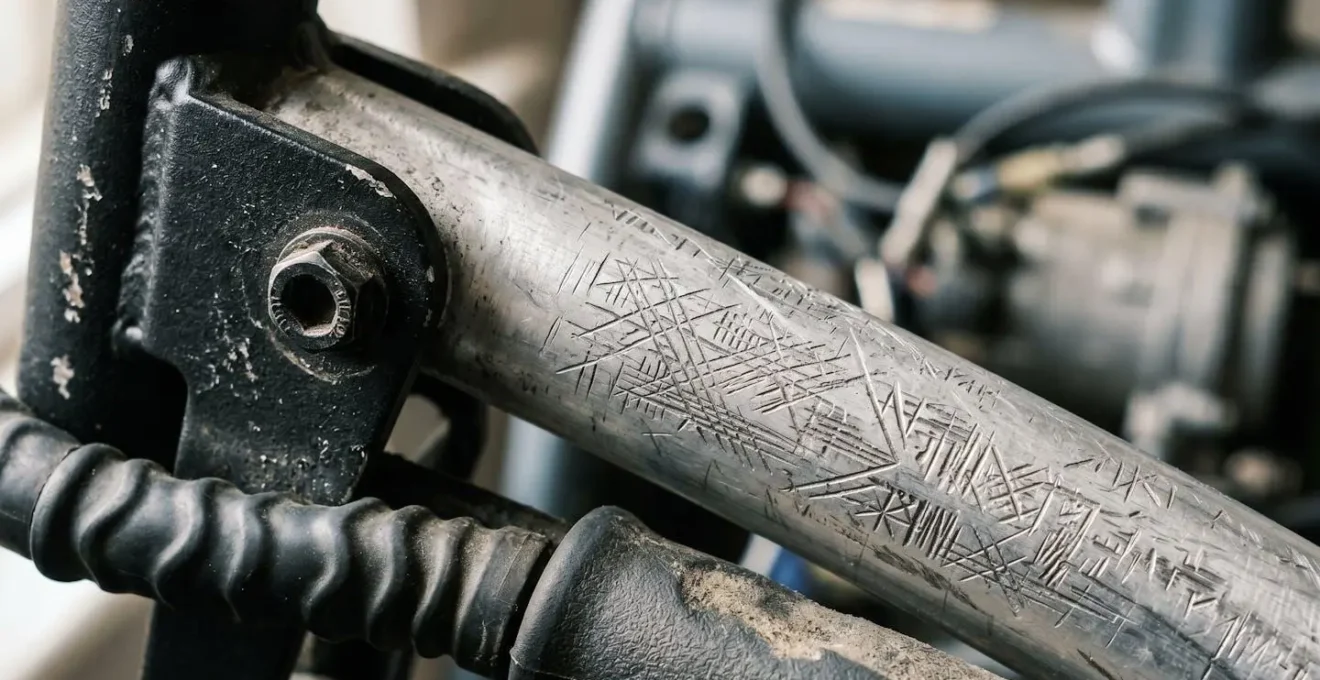
As the image demonstrates, focusing on subtle yet permanent security markings can be a more effective strategy than a simple number plate. The goal is to make your scooter uniquely identifiable to you, thereby mitigating the risk of theft and aiding in its recovery.
Moving House: The Fine for Forgetting to Tell DVLA About Your Scooter
Your V5C logbook is more than just proof of registration; it is the single official document that links you, the keeper, to your vehicle. The DVLA uses the address printed on this document for all official correspondence, including safety recalls, tax reminders, or other important notifications. Consequently, it is a strict legal requirement to ensure this information is always current. Forgetting to update your address after moving house is not a minor oversight; it is a breach of your legal obligations as a vehicle keeper.
The potential consequences of this failure are severe. According to official guidelines, keepers who do not correctly update their V5C logbook with their new address risk a fine of up to £1,000. This penalty exists because an incorrect address renders the national vehicle record inaccurate and can hinder official investigations or communications. It is crucial to understand that updating the address on your driving licence is a separate process and does not automatically update your V5C logbook. You must update each document individually.
The process for updating the address is straightforward and must be done by post. You cannot do it online. Here are the required steps:
- Locate Section 6 of your V5C logbook.
- Clearly write your new address details in the provided spaces using black ink.
- Sign and date the declaration.
- Tear off the entire section and post it to DVLA, Swansea, SA99 1BA.
- You should receive your updated V5C logbook at your new address within four weeks.
Treating your scooter’s V5C with the same importance as your passport or driving licence is the best mindset. It is the definitive official record of keepership, and maintaining its accuracy is a fundamental duty.
Taking It Off the Road: Do You Need to SORN a Scooter You Don’t Use?
If you intend to take your Class 3 scooter off the public highway for an extended period—perhaps over winter or during a period of ill health—you must officially declare it to the DVLA. This is done by making a Statutory Off Road Notification (SORN). A SORN informs the DVLA that your vehicle is not in use on public roads and is therefore exempt from the requirement to be taxed. This is a crucial administrative step. If a vehicle is neither taxed nor declared SORN, the system will automatically flag it for non-compliance.
Failure to have either valid (nil value) tax or a SORN in place can have direct financial consequences. The registered keeper of a vehicle without a SORN or tax can be liable for an £80 penalty, issued automatically. The SORN process is simple and can be done online at the GOV.UK website or by phone, using the 16-digit reference number from your V5C logbook.
The most critical aspect of a SORN is the definition of ‘off-road’. The vehicle must be kept on genuinely private property, such as inside a locked garage, on a private driveway, or in a back garden. It cannot be parked on any part of the public highway, which includes pavements and residential parking bays that are accessible to the public. Once you wish to use the scooter on the road again, you simply need to apply for vehicle tax online. This action automatically cancels the SORN. The key is to see the SORN not as an option, but as the mandatory procedure for non-use.
The Rules of the Road: Where Can You Legally Drive a Heavy-Duty Beast?
Owning a registered Class 3 mobility scooter grants you the freedom to use it on public roads, but this freedom comes with strict rules of conduct. The most important of these is the dual-speed capability. Your scooter must be equipped with a speed limiter that can switch between two maximum settings. The top speed of 8mph is for road use only. When you are on a pavement or in a pedestrian area, you are legally required to switch the limiter to the 4mph maximum setting. This is not a guideline; it is the law, designed to ensure the safety of pedestrians.
When driving on the road, you must operate your scooter with the same awareness as any other vehicle user. This includes using indicators for turns and having working front and rear lights and reflectors, especially at night or in poor visibility. You should drive on the left-hand side of the road and adhere to all road signs and traffic signals. However, there are significant restrictions on where you can go. Class 3 scooters are prohibited from motorways and any unrestricted dual carriageways where the speed limit exceeds 50mph. Using your scooter on these high-speed roads is illegal and extremely dangerous.
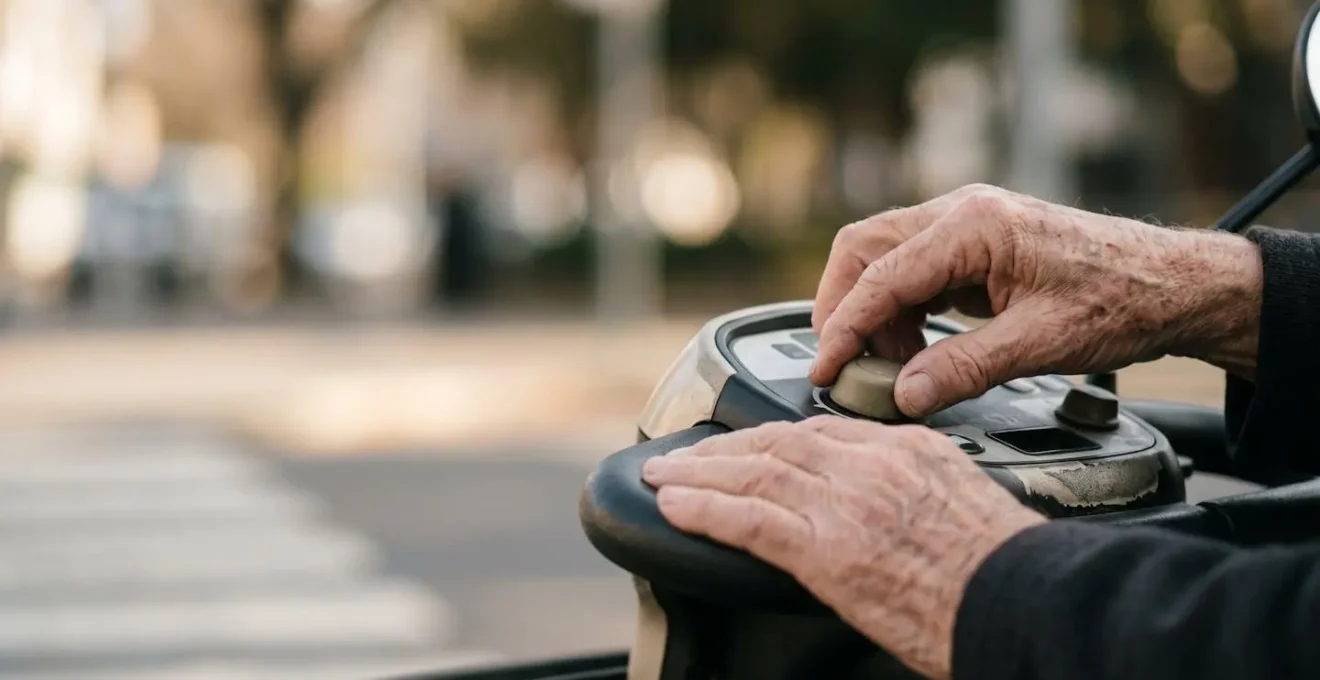
As depicted, the control to switch between road and pavement speeds is a core feature of a Class 3 scooter. Mastering its use is fundamental to operating your vehicle legally and safely. Your duty as a keeper is to understand and respect these rules, ensuring your safety and the safety of those around you.
Chronically Sick vs Temporarily Injured: Do You Qualify for VAT Relief?
When purchasing a Class 3 mobility scooter, you may be eligible for a significant financial benefit in the form of VAT relief. This is not a discount but a legal exemption that allows you to pay 0% VAT instead of the standard rate. An official government source confirms that VAT exemption allows chronically sick or disabled people to buy eligible items at 0% VAT rather than 20%, representing a substantial saving on a high-value item like a scooter. However, this relief is strictly controlled and depends on your personal circumstances.
The key distinction is between a long-term condition and a temporary injury. VAT relief is intended only for individuals who are ‘chronically sick or disabled’. A person with a temporarily broken leg or a short-term mobility issue would not qualify. The official definition is precise. To be eligible, you must have a condition that the government considers to be chronic. As His Majesty’s Revenue & Customs (HMRC) states, the formal definition is a:
physical or mental impairment which has a long-term and substantial adverse effect upon your ability to carry out everyday activities.
– His Majesty’s Revenue & Customs (HMRC), Official definition of chronic sick or disabled for VAT relief eligibility
To claim the relief, you do not need a doctor’s letter. Instead, you must sign an eligibility declaration form provided by the seller, confirming that you meet the criteria. This is a formal declaration to HMRC, and it is an offence to make a false declaration. Therefore, it is your responsibility to honestly assess whether your condition meets the ‘long-term and substantial’ requirement before signing.
Key takeaways
- Registration of a Class 3 (8mph) scooter is a legal mandate, not optional. The V5C logbook is your official link to the vehicle.
- You have a legal duty to inform the DVLA if you move house or take the vehicle off the road (SORN), with significant fines for non-compliance.
- While not legally required, third-party liability insurance is a practical necessity to protect yourself from potentially life-changing financial claims.
Why Third-Party Liability Is the Most Critical Insurance for Scooter Owners?
One of the most dangerous misconceptions surrounding Class 3 mobility scooters is that because insurance is not a legal requirement, it is not necessary. This is a critical error in judgment. While the law does not mandate it, the absence of insurance exposes you, the keeper, to unlimited personal financial liability. If your scooter were to roll down a hill and damage a car, or if you were to accidentally knock over a pedestrian causing them a serious injury, you would be personally responsible for all associated costs. These costs can easily run into tens of thousands of pounds.
This is why organisations that deal with mobility scooters on a large scale, like the Motability Scheme, consider insurance to be a practical essential. The risk is not hypothetical; it is a real-world consequence of operating a 150kg vehicle in public spaces.
Case Study: The Motability Scheme’s Compulsory Insurance
The Motability Scheme, which leases over 600,000 vehicles, includes comprehensive insurance as a standard, non-negotiable part of every Class 3 scooter lease. Their rationale is that users face genuine liability risks daily—from minor incidents like damaging goods in a shop to major accidents involving pedestrians. By making insurance compulsory, Motability sets an industry precedent: insurance is a fundamental component of safe and responsible scooter use, protecting the user from potentially devastating financial consequences.
The most crucial type of cover is Third-Party Liability. This specifically covers the cost of damage or injury to other people or their property. Considering the low annual cost of a basic policy compared to the potentially catastrophic cost of a claim, forgoing insurance is an unacceptable financial risk. The table below illustrates this stark contrast.
| Scenario | Annual Cost | Coverage Type | Potential Liability |
|---|---|---|---|
| No Insurance | £0 | None | Unlimited personal liability – potentially £50,000+ for injury claims |
| Basic Third-Party Liability Policy | £3.80/month (£45.60/year) | Public liability cover | Protected up to policy limit (typically £2 million minimum) |
| Comprehensive Policy | £70-£100/year | Third-party liability, theft, accidental damage, legal costs | Full protection including own scooter replacement value |
| Motability Scheme (included) | Included in lease | Comprehensive cover standard | Full protection throughout lease period |
As the data from this comparison clearly shows, a small annual investment in a third-party policy effectively eliminates a source of immense financial and personal stress. Protecting your assets and independence means mitigating risks, and liability insurance is the most cost-effective way to do so.
Now that you are fully compliant with the DVLA, the final step is to secure your financial peace of mind. Obtain a quote for third-party liability insurance today to ensure you are protected against the unexpected.