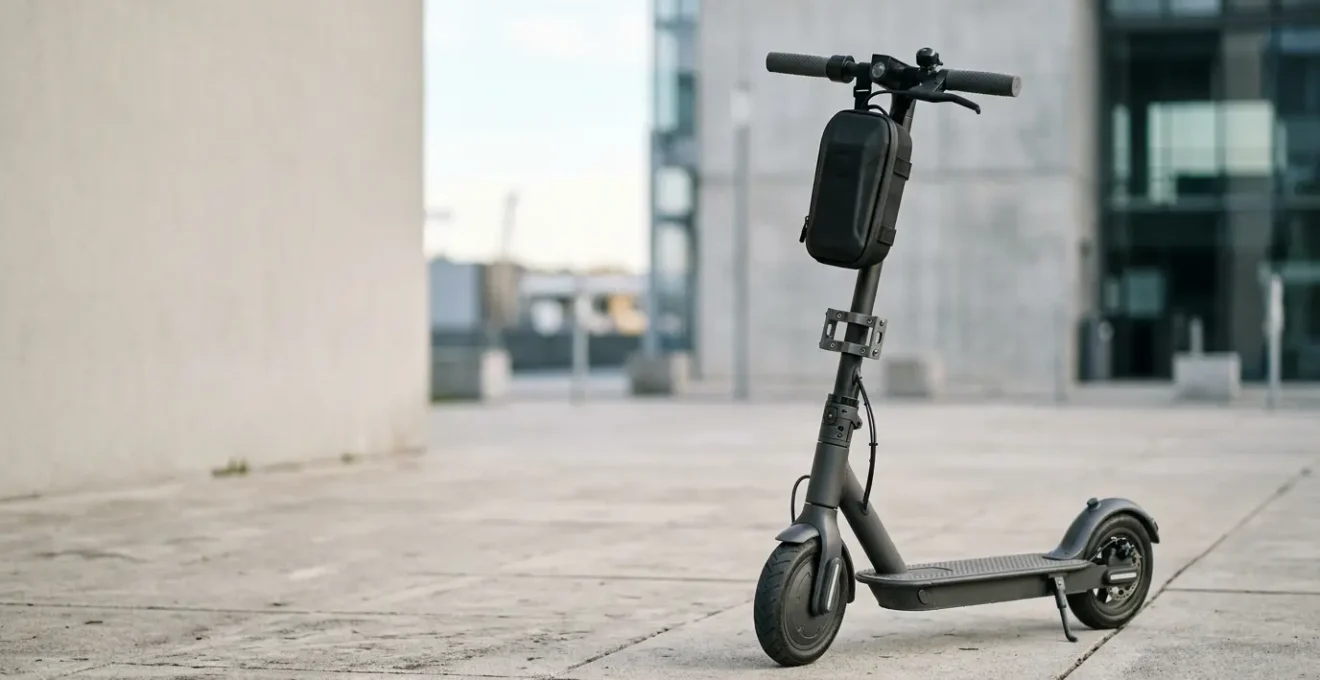
The secret to a perfect scooter setup isn’t adding more gear; it’s strategically solving the small, daily frustrations that ruin your ride.
- Protecting your phone camera from vibration is more critical than you think.
- Solving storage for shopping means balancing security, capacity, and accessibility into a modular system.
- Staying visible isn’t about wearing a bright coat, but about using reflective gear on your moving joints to trigger drivers’ motion detection.
Recommendation: Before buying anything, audit your daily ride to identify your top one or two « micro-problems »—like a rattling cane or a hard-to-read screen—and focus on solving those first.
Your scooter is more than just a way to get from A to B; it’s a declaration of freedom and efficiency. But the standard, off-the-shelf model rarely accounts for the realities of a daily commute: the morning coffee you need to transport, the unpredictable weather, or the impromptu grocery run. Many riders think customization is just about aesthetics, but its true power lies in transforming your scooter into a seamless extension of your lifestyle. We often see generic advice like « get a top box » or « add a phone mount, » but these suggestions barely scratch the surface of what’s possible and can even introduce new problems.
What if the key wasn’t just adding accessories, but choosing the right ones to solve the specific, nagging « micro-problems » that disrupt your flow? This is where a strategic approach to customization comes in. It’s about understanding the subtle physics of a gimbal coffee holder, the critical importance of vibration dampening for your smartphone’s camera, and the science behind why reflective tape on your ankles is more effective than a bright yellow jacket. This guide moves beyond the obvious to explore the practical, problem-solving accessories that deliver true daily comfort and utility. We’ll delve into the trade-offs, the hidden dangers, and the clever solutions that turn a good ride into a great one.
This article provides a curated look into the most impactful upgrades you can make. From securing your coffee to ensuring you’re seen on the gloomiest days, each section tackles a common challenge with practical, expert-backed solutions.
Summary: Essential Mobility Accessories to Customize Your Scooter
- Coffee on the Go: Gimbal Holders That Prevent Spills on Bumps
- Clips vs Bags: How to Secure Your Cane Without It Rattling?
- Vibration Proofing: Protecting Your iPhone Camera from Handlebar Shakes
- Security vs Capacity: Which Is Better for Shopping Trips?
- Thermal Lined vs Waterproof: Staying Warm in a British January
- Fluorescent on the Chair: Why Wearing Dark Coats Makes You Invisible?
- Glare and Angles: Can You Read the Battery Meter in Sunlight?
- Beyond Lights: Which Visibility Gear Prevents Accidents on Gloomy Days?
Coffee on the Go: Gimbal Holders That Prevent Spills on Bumps
The dream of sipping a hot latte on your morning commute can quickly turn into a sticky nightmare with a standard cup holder. Every bump, pothole, and sharp turn threatens to send coffee splashing onto your scooter and your clothes. This is a classic « micro-problem » where a generic solution fails. A rigid holder can’t compensate for the dynamic forces of riding, making spills almost inevitable. This is where understanding the physics of comfort provides a far superior solution.
Enter the gimbal cup holder. Unlike its static counterparts, a gimbal mount uses a system of pivots and counterweights to keep your drink perfectly level, regardless of the angle of your scooter. It isolates the cup from the jarring movements of the road, effectively letting it « float » in place. The mechanism works by keeping the center of gravity of the drink constant, neutralizing the sloshing forces that cause spills. It’s the same principle used in marine chronometers and cinematic camera stabilizers, applied to the crucial task of protecting your morning brew.
The beauty of this solution lies in its elegant application of physics. The gimbal mechanism, with its intricate pivots, actively works to cancel out bumps and tilts. This macro shot highlights how the dual-pivot system allows for complete rotational freedom.

As you can see, the design allows the cup to swing freely, ensuring it remains upright. This isn’t just an accessory; it’s a piece of engineering that solves a fundamental problem. Choosing a gimbal holder is a perfect example of moving beyond basic accessories to adopt a system that truly enhances your daily riding experience, turning a potential frustration into a moment of pure, caffeinated bliss.
Clips vs Bags: How to Secure Your Cane Without It Rattling?
For riders who use a walking cane or crutch, figuring out how to transport it on a scooter presents a unique set of challenges. Simply dropping it into a basket leads to incessant rattling and the risk of it falling out. Tucking it under a bungee cord is often insecure and cumbersome. The ideal solution must be silent, secure, and provide access that matches the rider’s needs. This is a perfect scenario for analyzing the trade-offs between different accessory types.
The primary conflict is between speed of access and silence. A rigid clamp mounted to the steering column offers the most secure and silent ride, as it holds the cane tightly against the frame, eliminating any movement. However, releasing it often requires two hands and several seconds, making it less ideal for quick, multi-stop errands. Conversely, an open hook on a side rack provides lightning-fast, one-handed access but often allows the cane to rattle against the scooter’s body on anything but the smoothest pavement.
Other solutions like simple Velcro straps offer a quiet ride with moderate access speed, but the ripping sound of the Velcro can be disruptive. Under-seat bags provide absolute silence and security, but they are the slowest to access and typically only work for folding canes. There is no single « best » solution; the right choice depends entirely on your personal priorities and daily routine. The following comparison breaks down these options to help you decide.
This comparative analysis from recent accessory guides highlights the direct trade-offs you’ll face when choosing a mounting system.
| Mounting Type | Noise Level | Access Speed | Best Use Case | Installation Complexity |
|---|---|---|---|---|
| Rigid Clamp (Steering Column) | Silent | Slow (2-hand release) | Long-distance commuting | Medium (requires Allen key) |
| Open Hook (Side Rack) | Moderate rattle | Fast (1-hand grab) | Multi-stop errands | Low (clip-on) |
| Velcro Strap Wrap | Quiet | Medium (Velcro tear) | Balanced needs | Low (self-adhesive) |
| Under-Seat Storage Bag | Silent | Very Slow (zipper/flap) | Folding cane storage | Medium (frame attachment) |
Ultimately, a hybrid approach may be best. You might use a rigid clamp for long commutes but keep a simple hook available for days with lots of short stops. This illustrates a core principle of expert customization: your setup should be as dynamic and adaptable as your life.
Vibration Proofing: Protecting Your iPhone Camera from Handlebar Shakes
Using your smartphone for navigation is one of the most common scooter upgrades, but it hides a significant, and expensive, risk. The generic advice to « get a phone mount » overlooks a critical detail: the high-frequency vibrations from a scooter’s engine and the road can destroy the sophisticated camera systems in modern phones like the iPhone. This isn’t a theoretical problem; it’s a well-documented hardware failure.
The issue lies with the Optical Image Stabilization (OIS) and closed-loop Autofocus (AF) systems. These features use tiny, free-floating lenses and gyroscopic sensors to counteract the motion of your hand for clearer photos. When you hard-mount your phone to the handlebars, these delicate components are subjected to a constant barrage of intense, high-frequency vibrations they were never designed to withstand. Over time, this can lead to permanent damage, resulting in a camera that can no longer focus or produces blurry, shaky images. The issue is so prevalent that it’s confirmed according to Apple’s support documentation and repair data analysis that prolonged exposure causes failure.
The solution isn’t to stop using your phone for navigation, but to upgrade your mount. A standard clamp isn’t enough; you need a vibration-dampening phone mount. These specialized mounts incorporate a layer of elastomeric or silicone dampers between the handlebar clamp and the phone cradle. This « decoupling » system absorbs the harmful high-frequency vibrations before they can reach your phone, while still holding the device securely. It’s a small investment that can save you from a very costly camera repair.
Case Study: Brian X. Chen’s iPhone Camera Failure
Brian X. Chen, lead consumer technology writer for The New York Times, experienced camera failure in 2020 when using his iPhone XS mounted for navigation on a Suzuki TU250X. The optical image stabilization system degraded completely after regular use, requiring full camera replacement—a pattern documented across multiple motorcycle and scooter riders who mounted phones without vibration dampening.
This real-world example underscores the importance of choosing accessories that account for the hidden physics of your ride. A cheap mount might hold your phone, but only a purpose-built, dampened mount will protect it.
Security vs Capacity: Which Is Better for Shopping Trips?
Using your scooter for shopping is a game-changer, but it introduces a complex puzzle: how do you carry everything securely and efficiently? The two most common desires—maximizing carrying capacity and ensuring the security of your belongings—are often in direct conflict. A large, open-front basket offers huge capacity for bulky items but zero security, while a small, lockable top box protects your valuables but can’t hold a bag of groceries. The best approach isn’t to choose one over the other, but to build a modular cargo ecosystem.
A modular system combines different types of storage to balance security, capacity, and accessibility. The foundation is often a lockable rear top box. This is where your high-value items go: wallet, phone, house keys, and any small, expensive electronics. It offers peace of mind when you have to step away from your scooter for a few minutes.
Next, you add capacity. Soft, waterproof panniers or side bags are perfect for this. They can hold bulky, low-value items like groceries, a change of clothes, or a rain jacket. Because they sit low and on the sides, they help maintain a low center of gravity and don’t interfere with handling as much as a heavily loaded front basket. For quick access, a small front hook or basket is ideal for items you need to grab frequently, but it’s crucial to keep the weight light to avoid compromising steering stability.
This image showcases a well-balanced modular setup, distributing weight across the front, rear, and sides for optimal handling and utility.
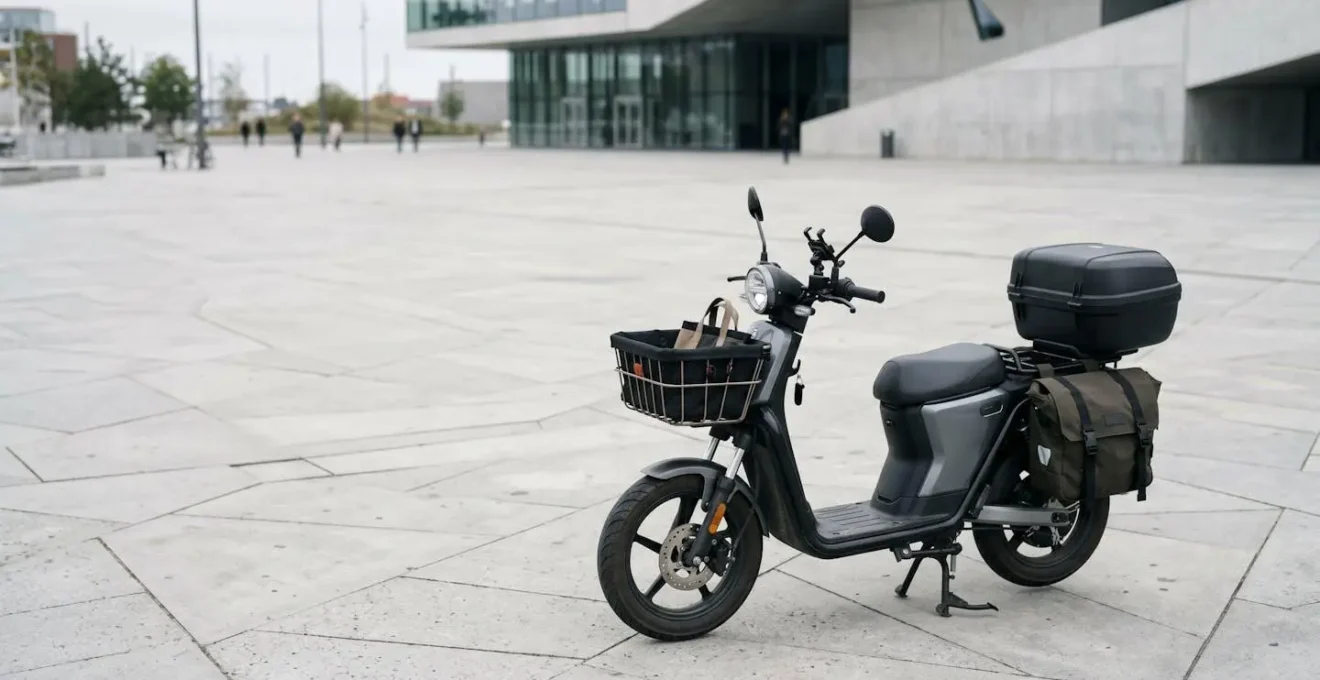
This strategic combination of different storage types transforms your scooter from a simple commuter into a versatile utility vehicle. You no longer have to choose between security and capacity; you can have both, tailored perfectly to the demands of your shopping trip.
Thermal Lined vs Waterproof: Staying Warm in a British January
Riding through a cold, damp winter requires a serious upgrade in your weather protection strategy. When it comes to keeping your hands functional, the two most popular solutions are heated grips and insulated handlebar muffs. While both aim to combat the cold, they solve the problem in fundamentally different ways, and the choice between them involves a significant trade-off between active heating and passive insulation. This is especially true when facing the biting wind and damp chill of a typical British January.
Heated grips are an active solution. They replace your standard grips and are wired into your scooter’s electrical system, using heating elements to generate warmth that radiates through your gloves. Their main advantage is providing consistent warmth from within. However, they are expensive, complex to install, and constantly draw power from your battery. More importantly, they only heat your palms, leaving the backs of your hands and fingers exposed to the freezing wind and rain, which can still lead to significant heat loss and discomfort.
Insulated handlebar muffs (or « pogies ») are a passive solution. These are large, insulated mitts that attach directly to your handlebars, creating a protected cocoon for your hands and controls. Their genius is in simplicity: they block 100% of the wind and rain, creating a pocket of still air that your body heat warms up. They require zero power, are inexpensive, and can be installed in minutes. When combined with a good pair of gloves, they are often far more effective than heated grips in sub-zero temperatures, as they eliminate the primary cause of cold hands: wind chill.
This analysis, based on data from custom upgrade guides, clearly shows the cost-benefit differences.
| Feature | Heated Grips | Insulated Handlebar Muffs |
|---|---|---|
| Initial Cost | $80-$200 (plus installation) | $30-$70 (DIY install) |
| Installation Complexity | High (electrical wiring required) | Low (strap-on or clamp) |
| Weather Protection | Warmth only (hands still exposed to wind/rain) | Complete (blocks wind, rain, and cold air) |
| Power Consumption | Drains battery (15-45W continuous) | Zero (passive insulation) |
| Effectiveness Below 0°C | Moderate (requires high setting, battery drain) | High (combined with gloves, creates dead air space) |
| Long-term Cost | Potential electrical maintenance | Replacement every 2-3 seasons (wear/UV) |
For most riders facing truly cold and wet conditions, handlebar muffs offer a more practical, cost-effective, and powerful solution. They tackle the root cause of the problem—exposure to the elements—rather than just treating a symptom.
Fluorescent on the Chair: Why Wearing Dark Coats Makes You Invisible?
When it comes to nighttime visibility, the common wisdom is to wear bright, fluorescent colors. While this is helpful during the day, it’s dangerously ineffective at night. Fluorescent colors work by reacting to UV light from the sun; in the dark, under a car’s headlights, a fluorescent yellow jacket is no more visible than a grey one. The real key to being seen at night isn’t color, but retro-reflection and biomotion. Wearing a dark coat on a scooter at night effectively makes you a phantom to other drivers.
Retro-reflective materials work by bouncing light directly back to its source with minimal scattering. This means a driver’s headlights are reflected straight back to their eyes, making the material appear intensely bright. But simply wearing a large retro-reflective vest isn’t the most effective strategy. The human brain is exceptionally good at identifying other humans by the way they move. This is the principle of biomotion. As King, Szubski, and Tyrrell note in their 2023 study:
Pedestrians dramatically overestimate their visibility at night and underestimate the safety benefits of retroreflective markings, especially when placed on major joints like ankles and knees.
– King, Szubski, and Tyrrell, 2023 Visibility and Human Factors Study
Placing small strips of retro-reflective tape on your moving parts—ankles, knees, elbows, and wrists—creates a powerful biological signal. A driver might not consciously recognize the shape of a scooter, but their brain will instantly recognize the unmistakable pattern of a moving human. This is far more attention-grabbing than a single, static block of brightness on your torso. In fact, you can achieve a 10 times longer detection distance by using this biomotion strategy compared to a simple vest. So, ditch the illusion that your bright coat helps after sunset and start thinking about how to make your movement visible.
Glare and Angles: Can You Read the Battery Meter in Sunlight?
One of the most frustrating « micro-problems » on a sunny day is not being able to read your scooter’s display. The battery meter, speedometer, and other crucial information can be completely washed out by glare, forcing you to squint, guess, or even stop to shield the screen with your hand. While aftermarket anti-glare screen protectors and custom-fit sun hoods are available, you can often solve or significantly mitigate the problem for free with a few simple ergonomic adjustments.
The issue is all about angles: the angle of the sun, the angle of your display, and the angle of your eyes. Glare happens when bright sunlight reflects directly off the smooth surface of the screen into your line of sight. The solution is to change one of those angles. Before spending money on an accessory, run through a quick audit of your current setup. A small tweak to your display’s tilt or your own riding posture can make a world of difference and costs nothing but a few minutes of your time.
These adjustments help you find the « sweet spot » where ambient light illuminates your screen without causing direct, blinding reflection. It’s a practical, hands-on approach to problem-solving that should always be your first step. By experimenting with these free solutions, you not only save money but also gain a deeper understanding of your scooter’s ergonomics and how to optimize them for your body and your environment.
Your Action Plan: 5-Step Ergonomic Audit for Glare Reduction
- Adjust display tilt angle: Loosen mounting screws and tilt the display 10-15 degrees toward your line of sight to minimize direct sunlight reflection.
- Shift your riding posture: Raise or lower your seat/handlebar position by 2-3cm to change your viewing angle relative to the display.
- Experiment with head position: Slightly tilt your head or lean forward/backward to find the glare-free ‘sweet spot’ without spending money.
- Use your hand as a temporary visor: Cup your hand above the display for 2-3 seconds to read the meter, confirming if a permanent hood is worth the investment.
- Ride at different times: Test morning vs. midday vs. afternoon sun angles to identify when glare is worst and plan charging/trips accordingly.
Only after exhausting these free options should you consider purchasing a sun hood or special screen protector. In many cases, a simple adjustment is all it takes to conquer the glare.
Key Takeaways
- Effective customization solves specific « micro-problems » (like coffee spills or phone rattle) rather than just adding generic gear.
- Every accessory choice involves a trade-off; analyze what you value most, whether it’s security vs. capacity or active heating vs. passive insulation.
- True visibility, especially in daylight, comes from creating high-contrast, moving points (like a bright helmet) and leveraging biomotion with reflectors on joints.
Beyond Lights: Which Visibility Gear Prevents Accidents on Gloomy Days?
When we think of scooter safety, we often focus on nighttime riding and the importance of headlights. However, the most significant danger is not being seen during the day. Overcast skies, rain, fog, and the visual clutter of a busy city can make a narrow scooter practically invisible to other drivers. A startling 4% to 20% reduction in crash risk has been documented simply by using Daytime Running Lights (DRLs), proving that being conspicuous in daylight is a critical safety measure.
The core of the problem is « detection failure. » Drivers aren’t necessarily reckless; they are often looking for cars and their brains simply fail to register the smaller, unexpected profile of a scooter. This is especially true at intersections and when they are turning. Lights, therefore, are your first line of defense. But beyond the standard headlight, you should consider adding dedicated DRLs that are always on, and even turn signal indicators that are brighter and more prominently placed than stock models.
However, true visibility goes beyond just lights. Your goal is to break the camouflage of the urban environment. This means creating high-contrast points on your person. Your helmet is the single most effective place to do this. As the highest point on your scooter, a helmet in a bright, solid color (like white, yellow, or orange) against the varied background of the city is incredibly eye-catching. It also benefits from natural head movements, which attract the eye.
European Accident Study: The Daytime Danger
An in-depth study of motorcycle crashes in Europe (ACEM 2004) found that in 37% of all cases the primary contributing factor was the failure of another vehicle operator to detect the motorcycle. The study further revealed that 73% of these accidents occurred in daylight conditions, with an additional 8% at dawn or dusk—demonstrating that visibility during daytime is the critical safety challenge, not just nighttime riding.
This image perfectly illustrates how a high-visibility helmet becomes the most prominent visual anchor for a driver, leveraging both height and motion.
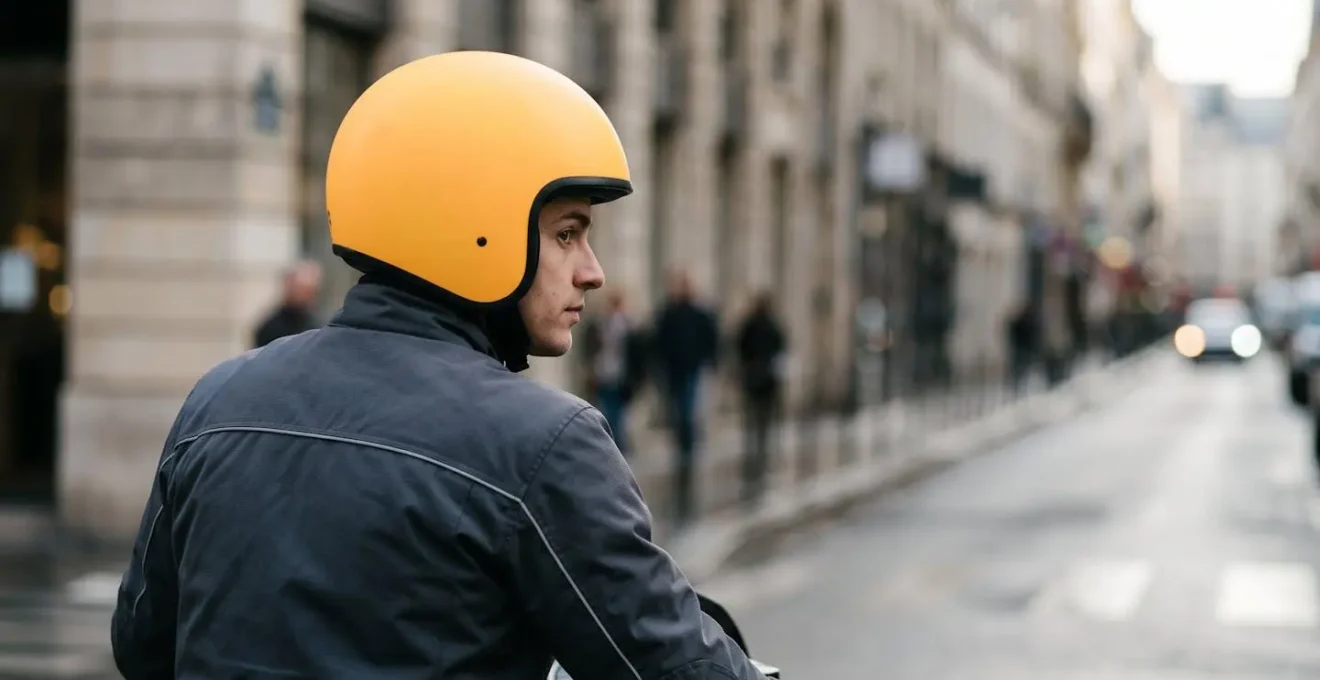
Combining always-on lights with a high-contrast helmet and strategic use of biomotion reflectors creates a layered safety system. You are no longer relying on a single point of light but are presenting a larger, more dynamic, and undeniably human profile that is much harder for other road users to ignore.
Frequently Asked Questions on Essential Mobility Accessories
How much weight can I safely carry on front-mounted hooks without affecting steering?
Front hooks should carry no more than 3-5 kg (6-11 lbs) to avoid light steering and instability. Heavier loads belong on rear racks or under-seat storage to maintain proper weight distribution and safe handling at speed.
What is the modular ecosystem approach for scooter shopping trips?
The modular approach combines multiple storage solutions: a lockable top box for valuables (phone, wallet, keys), large soft panniers for bulky low-value items (groceries), and a quick-access front basket for frequently needed items. This system balances security, capacity, and accessibility.
How do I solve the ‘last mile’ problem when carrying shopping from scooter to door?
Choose storage solutions that convert into portable bags: roll-top backpacks that detach from rear racks, panniers with shoulder straps, or collapsible totes that fit in top boxes. This eliminates the need to transfer items and reduces trips between vehicle and destination.