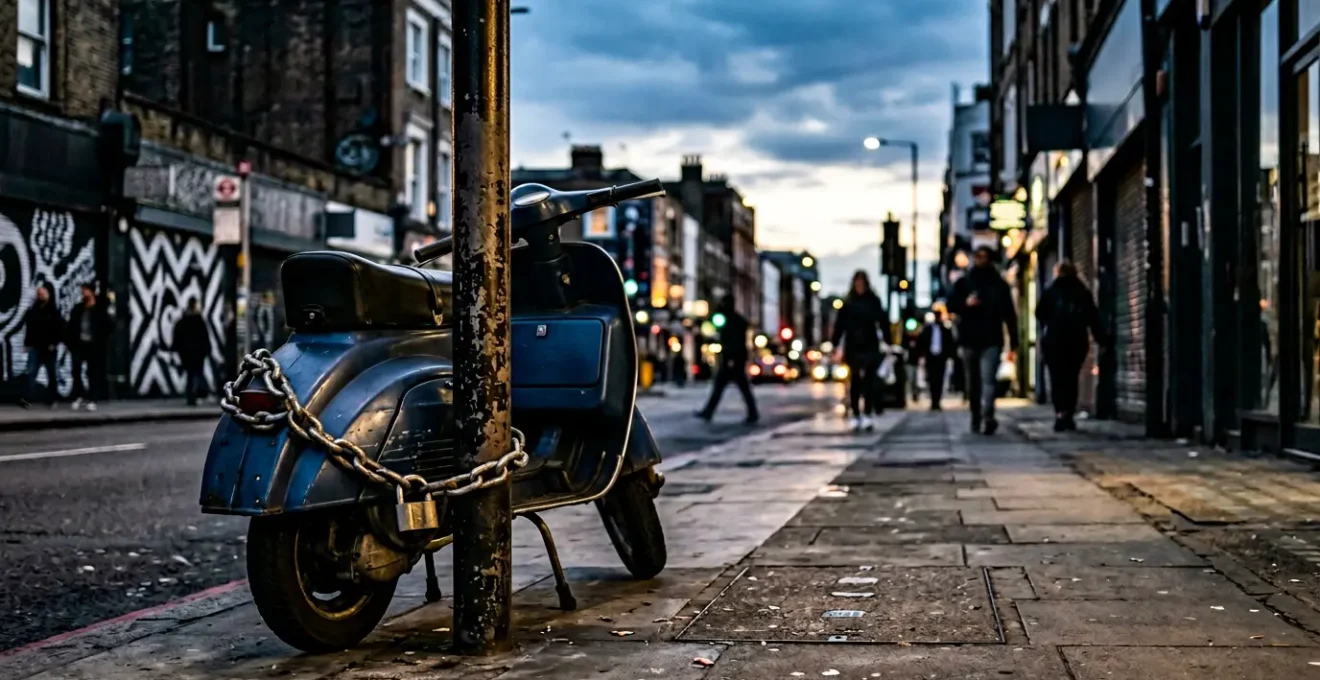
Securing your scooter isn’t about finding one « best » lock; it’s about creating a layered defense system that makes a thief’s job too difficult, too loud, and too time-consuming.
- Noise is a powerful deterrent against opportunist thieves who fear being noticed.
- How and where you lock your scooter is more important than the lock itself; proper technique removes a thief’s mechanical advantages.
- Modern keyless systems create new vulnerabilities that require specific electronic countermeasures.
Recommendation: Adopt a consistent security ritual that makes your scooter a visibly hard target, convincing thieves to move on to an easier victim.
The feeling is a cold pit in your stomach: you walk out of a shop, eyes scanning the pavement, and the spot where you left your scooter is empty. For anyone who relies on a scooter for daily mobility, parking in a public or communal space is a constant, low-level source of anxiety. The common advice often feels generic and unhelpful— »buy a heavy chain » or « park in a well-lit area. » While not wrong, this advice misses the fundamental point of effective security.
The truth is, professional thieves are not deterred by a single device. They are opportunists who perform a quick mental calculation: how long will it take, how much noise will it make, and what is the risk of getting caught? The key to protecting your property isn’t to find an unbreakable lock, but to build a strategic, layered defense system that makes the answer to each of those questions a deal-breaker for the thief.
But what if the real key wasn’t the lock itself, but a deeper understanding of a thief’s mindset and methods? This guide moves beyond simple product recommendations. It is designed to arm you with a crime prevention officer’s perspective, breaking down the attack vectors thieves exploit and showing you how to systematically shut them down. We will explore each layer of a robust security strategy, from physical immobilization and psychological deterrents to electronic countermeasures and the final safety net of insurance.
This article will guide you through the essential layers of scooter security. The following table of contents outlines the strategic components we will cover to help you build a formidable defense against theft.
Contents: A Layered Defense Against Scooter Theft
- The Screamer: Why Noise Is Your Best Defense Against Opportunists?
- Wheel vs Chassis: Where to Thread the Chain so It Can’t Be Lifted?
- Visible Deterrent: Locking the Brake Lever for Quick Stops
- Universal Keys: Why the Ignition Key Is Not a Security Feature?
- Hidden Tracking: Recovering a Stolen Scooter via App
- Garage Break-Ins: Why Locking the Door Isn’t Enough for Insurers?
- Why Installing a Key Safe Is Crucial for Scooter Users Living Alone?
- Is Comprehensive Insurance Worth It for a Second-Hand Mobility Scooter?
The Screamer: Why Noise Is Your Best Defense Against Opportunists?
In a thief’s risk calculation, time and silence are their most valuable assets. Every layer of security you add is designed to cost them more of both. While a heavy-duty chain forces them to spend more time, a loud alarm attacks their need for stealth. Opportunists, who make up a large portion of scooter thieves, are not equipped for a long, noisy struggle. They want to work quickly and quietly, and an alarm siren shatters that plan, drawing unwanted attention from every direction.
The effectiveness of an alarm is directly tied to its volume and intelligence. A weak chirp is easily ignored, but a piercing shriek creates immediate pressure. For this reason, security experts recommend devices that emit a siren of at least 110dB, the threshold of pain, which is impossible to ignore. However, volume alone is not enough. A modern, effective alarm system should have a multi-faceted detection capability to avoid false alarms while reacting instantly to real threats.
Look for alarms that combine motion and tilt sensors. This ensures the alarm triggers if the scooter is being physically moved or lifted into a van, not just bumped by a passerby. Furthermore, advanced systems include features like a pre-warning chirp for proximity, adjustable sensitivity to reduce false alarms from wind, and most critically, a phone notification system. Being alerted on your phone the second the alarm is triggered means you can react immediately, rather than discovering the theft hours later. A system with its own backup battery is also crucial, as clever thieves may try to cut the scooter’s main power first.
Wheel vs Chassis: Where to Thread the Chain so It Can’t Be Lifted?
A high-quality chain lock is the backbone of physical security, but its effectiveness is completely dependent on how it is used. The most common and critical mistake users make is leaving the lock and chain resting on the ground. This simple error hands a thief a massive advantage, providing them with the perfect setup to defeat the lock with brute force. Securing your scooter is a matter of physics as much as it is hardware.
A lock resting on the pavement can be smashed with a sledgehammer or allows a thief to use the ground for leverage with bolt cutters.
– Bennetts BikeSocial Security Testing Team, Security advice: How to use your motorcycle chain and lock
This expert insight highlights the primary attack vector: leverage. To counter this, your security ritual must always involve two things: locking *to* an immovable object and keeping the chain *tight and off the ground*. Thread the chain through a solid part of the scooter’s frame—not the wheel. A thief can remove a wheel in minutes, leaving it chained to the post while they carry the rest of your scooter away. The welded chassis or frame is the only secure point.
This technique denies them the ability to use the ground as a tool. A suspended chain is incredibly difficult to attack with bolt cutters, as it moves and absorbs the force. It also makes a sledgehammer attack impossible. By understanding the thief’s method, you can nullify it with proper technique.
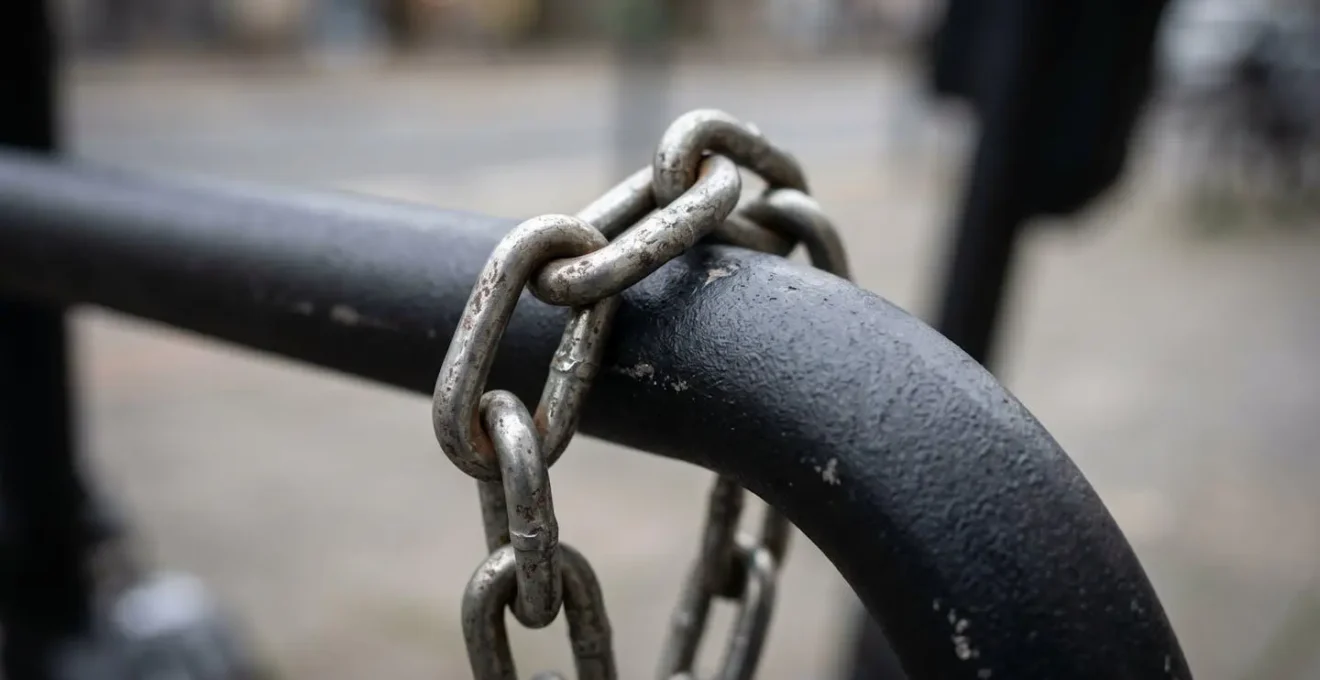
As the image demonstrates, the ideal setup involves threading a thick, hardened chain through the frame and around a solid anchor point, ensuring it is as tight as possible. This leaves no slack and no contact with the pavement, turning a simple lock into a formidable barrier that costs a thief too much time and effort.
Visible Deterrent: Locking the Brake Lever for Quick Stops
For very short stops, like running into a shop for a minute, the temptation to skip a full security routine is high. This is the exact window of opportunity a thief looks for. A brake lever or disc lock is often seen as a quick and convenient solution. As a visible deterrent, it signals to an opportunist that the scooter is not a simple « grab and go » target. It physically prevents the wheel from rolling, which can be enough to make a casual thief move on to an easier mark.
These locks are lightweight, easy to carry, and fast to apply. Their bright, conspicuous colors are part of their function, acting as a clear, visual warning. However, a crime prevention mindset requires acknowledging the limitations of any single tool. A brake or disc lock is a low-level security measure, not a substitute for a robust chain lock anchored to a fixed object. It will not stop a determined group of thieves from simply lifting the scooter into a van.
Relying solely on this type of lock also introduces a secondary risk: damage to your scooter. Thieves frustrated by a disc lock may attempt to break it with force, causing significant harm to your brake system in the process, even if they fail to steal the vehicle itself.
Case Study: The Hidden Cost of a Failed Theft
A motorcycle owner reported a real-world theft attempt where a simple disc lock did its job, but with unintended consequences. Thieves tried to break the lock and, in their frustration, caused costly damage to the brake disc, caliper, and hydraulic line. The owner was left with a hefty repair bill, demonstrating that while the lock prevented the theft, it did not prevent financial loss and major inconvenience. This highlights that such locks are best used as part of a layered strategy, not as a standalone solution.
The lesson is clear: use a brake or disc lock for its value as a quick, visible deterrent during brief stops, but never mistake it for high-level security. For any stop longer than a few minutes, it should only be used in addition to a proper chain and lock.
Universal Keys: Why the Ignition Key Is Not a Security Feature?
In the modern era of mobility, we have been conditioned to believe that electronic systems are inherently more secure than mechanical ones. When it comes to keyless ignition fobs, this is a dangerous assumption. Your scooter’s standard ignition, whether it uses a physical key or a keyless system, should not be considered a primary security feature. It is merely a switch to operate the vehicle, and thieves have developed sophisticated methods to bypass it in seconds.
Physical keys for many common scooters can be easily duplicated or « jiggled » by experienced thieves. The most alarming threat, however, targets keyless systems. Thieves use a technique called a « relay attack, » where one person stands near your home or office with a device that captures the signal from your key fob. This signal is then relayed to an accomplice standing next to your scooter, tricking the vehicle into thinking the key is present. According to vehicle security specialists, this can be done from a distance of up to 100 metres.
This means that even if your keys are safely inside your house, your scooter is vulnerable if they are too close to an exterior wall or window. The only effective defense is to block the key’s signal entirely. This is where a specific piece of equipment becomes a non-negotiable part of your security ritual.
Action Plan: Implementing a Faraday Pouch Strategy
- Store the Key: Immediately after parking, place your key fob inside a quality Faraday pouch or box. These containers are lined with material that blocks all electromagnetic signals.
- Test Your Pouch: Regularly test your pouch’s effectiveness. Stand next to your scooter with the key inside the closed pouch and try to start it. If it starts, the pouch is worn out or faulty and must be replaced.
- Increase Distance: As a backup, always store your keys deep inside your home, at least 5-10 meters away from exterior walls, doors, and windows.
- Consider Power-Cut Devices: Investigate aftermarket devices like a Keyless Protector, which automatically cuts power to the key’s battery when it’s not in motion, preventing relay attacks.
- Disable Passive Entry: Check your scooter’s settings. Some models allow you to disable the passive keyless entry feature, requiring a button press on the fob to unlock, which can disrupt relay attacks.
Hidden Tracking: Recovering a Stolen Scooter via App
Even with the most robust layered defense, a sufficiently determined and well-equipped group of thieves can sometimes succeed. At this point, the focus shifts from prevention to recovery. Unfortunately, once a scooter is stolen and loaded into a van, the chances of seeing it again are statistically grim without one key piece of technology: a hidden GPS tracker.
Law enforcement agencies are stretched thin, and a stolen scooter is often a low-priority crime. They simply do not have the resources to conduct a wide-ranging search for a single vehicle. This stark reality was confirmed by a public safety official who stated that the odds of recovery are effectively zero unless the owner can provide a real-time location.
The likelihood of us finding the scooter is zero unless there is something identifying like an AirTag or it is registered.
– Lauretta Hill, Chief of Public Safety
This makes a hidden tracker the single most important tool for recovery. These small, discreet devices are wired into your scooter’s electronics or have a long-lasting battery, and they transmit their location to an app on your phone. If your scooter is stolen, you can provide police with its exact, live location, turning an impossible search into a direct recovery operation.
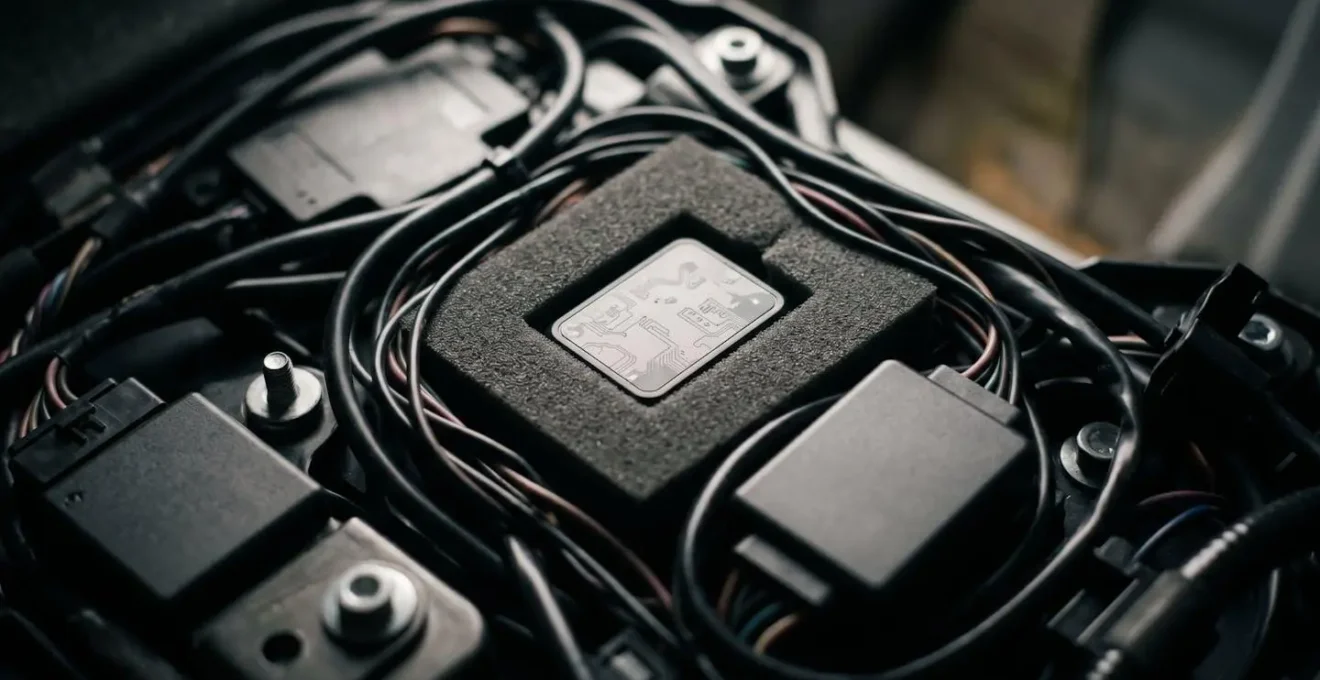
The key to a tracker’s effectiveness is its concealment. It must be hidden deep within the scooter’s bodywork, in a place where a thief is unlikely to look. Common hiding spots include under the seat, within the front fairings, or wrapped within the wiring harness. The goal is to ensure the thief doesn’t find and discard it before you and the authorities can act on its signal. This final electronic layer is your last line of defense and your best hope of getting your property back.
Garage Break-Ins: Why Locking the Door Isn’t Enough for Insurers?
There is a pervasive and dangerous myth that once your scooter is behind a locked garage door, it is safe. The data tells a very different story. A secure garage can deter casual opportunists, but for organized thieves, residential garages are prime hunting grounds. They know that valuable vehicles are stored inside, often with minimal secondary security. In fact, a staggering 80% of motorcycle and scooter thefts occur from the owner’s home.
This statistic is crucial for another reason: insurance. If your scooter is stolen from your garage or shed, your insurance provider will want proof that you took reasonable steps to secure it. Simply locking the main door is often not considered sufficient. Most policies contain clauses requiring the vehicle to be locked to a fixed object or have specific security devices engaged, even when stored on your private property. Failing to meet these requirements can be grounds for denying your claim, leaving you with a total loss.
To make your home storage « insurance-compliant, » you must replicate your on-street security ritual inside your garage. This means creating a fixed anchor point. The best option is a professionally installed ground anchor, bolted into solid concrete. This provides the immovable object to which you can chain your scooter. You must then use a high-quality, insurance-approved lock and chain (e.g., Sold Secure Gold or Diamond rated) to secure the scooter’s frame to the anchor.
Crucially, you must document everything. Take clear photographs of your entire security setup: the installed ground anchor, the chain threaded through the scooter’s frame, and the locked padlock. Keep the receipts for all security devices and record their serial numbers. Store this evidence in the cloud. In the event of a theft, this documentation becomes indisputable proof that you met and exceeded your policy’s security requirements, ensuring your claim is paid.
Why Installing a Key Safe Is Crucial for Scooter Users Living Alone?
The security of your scooter doesn’t just depend on the locks on the vehicle itself; it also depends on the security of its keys. Thieves are well aware of this and employ clever tactics to get their hands on them. One surprisingly common and low-tech method is « key fishing, » where thieves use a wire or pole with a hook to retrieve keys left on a table or hook near a letterbox or open window.
This presents a unique vulnerability, especially for people living alone or on the ground floor. You may have the best locks in the world on your scooter, but they are useless if a thief can easily acquire the key. A recent report highlighted this exact scenario.
Harvard students reported finding their scooters stolen despite using flexible locks. Security experts noted that thieves use various techniques including ‘fishing’ for keys visible through windows or near entry points. One student discovered their scooter missing after securing it with a lock… highlighting that even locked scooters remain vulnerable when keys are accessible.
– The Harvard Crimson
This real-world example shows that determined thieves will observe their targets and exploit the weakest link in their security chain. If they see keys left in a vulnerable spot, they will simply come back later to steal them. The solution is simple and highly effective: a police-approved key safe.
A key safe is a small, strong, wall-mounted box with a combination lock. By storing your scooter keys (and house keys) inside it, you completely eliminate the threat of key fishing and casual theft from within your home. It creates one final, hardened barrier. For a lone scooter user, this isn’t just a convenience; it’s a crucial security layer that protects the very tool needed to bypass all your other defenses. It ensures that even if someone breaks into your home, they can’t simply ride away on your scooter.
What to Remember
- Layered security is key: combine noise, strong locks, and tracking to create a formidable defense.
- Think like a thief: remove their leverage, block their signals, and make the theft take too long.
- Home is not a fortress: secure your scooter to a fixed anchor even in your garage to meet insurance standards.
Is Comprehensive Insurance Worth It for a Second-Hand Mobility Scooter?
The final layer in any robust security strategy is the financial safety net: insurance. After implementing physical locks, electronic deterrents, and tracking devices, insurance protects you from the financial loss if the worst still happens. For a brand new, expensive scooter, comprehensive insurance is an obvious choice. But is it worth the ongoing cost for a second-hand model? To answer this, you must consider the rapidly changing risk landscape.
Scooter theft is not a static problem; it’s a rapidly growing one. With a reported 481% increase in e-scooter thefts in some areas, the odds of becoming a victim are higher than ever. Even a second-hand scooter can represent a significant financial investment and, more importantly, a critical tool for your personal mobility. Losing it without compensation can have a major impact on your life.
The decision comes down to a simple risk assessment: can you afford to replace your scooter out-of-pocket tomorrow if it were stolen? If the answer is no, then comprehensive insurance is not a luxury, but a necessity. The table below breaks down the typical differences between basic and comprehensive policies.
| Coverage Type | Theft Protection | Third-Party Liability | Accidental Damage | Modification Coverage |
|---|---|---|---|---|
| Basic/Third-Party Only | Not Covered | Covered | Not Covered | N/A |
| Comprehensive | Market Value Paid | Covered | Covered | Requires Declaration |
| Agreed Value Comprehensive | Pre-Agreed Amount | Covered | Covered | Must Be Declared |
As the table shows, only a comprehensive policy protects you from theft. An « Agreed Value » policy is often the best choice for a heavily modified or customized second-hand scooter, as it ensures you are paid a pre-agreed amount rather than a depreciated « market value. » Ultimately, for a machine that provides essential freedom and mobility, the modest monthly cost of comprehensive coverage is often a small price to pay for complete peace of mind.
By adopting a layered security mindset and implementing these strategies, you shift the odds dramatically in your favor. Your goal is not to create an impenetrable fortress, but to make your scooter a less attractive target than the one next to it. Evaluate your personal risk, invest in the right combination of tools, and practice a consistent security ritual to protect your freedom and mobility.