
For individuals with chronic spinal conditions, daily scooter use can subject the spine to a cascade of harmful, cumulative micro-traumas through vibration.
- Whole Body Vibration (WBV) is a primary and often underestimated cause of spinal disc and facet joint loading.
- Proper ergonomic adjustments—involving suspension, seating, and rider posture—are not about comfort, but about clinical spinal protection.
Recommendation: Systematically configure your scooter as a piece of orthopedic equipment, not merely as a mode of transport, to actively mitigate these forces.
For a scooter user with a history of back surgery or a chronic spinal condition, the daily commute is more than just a journey; it’s an interaction between your body and a series of mechanical forces. The persistent hum of the motor and the jarring sensation of uneven pavement are not just minor annoyances. They are physical inputs that translate into axial loading on your vertebral column. Many riders focus on generic advice like « sit up straight » or « get a good scooter, » but for a compromised spine, this level of understanding is dangerously inadequate. These platitudes fail to address the underlying biomechanics of injury.
The real issue is the transmission of vibration through the vehicle’s kinetic chain—from the tires, through the frame, and directly into your pelvis, lumbar spine, and cervical spine. The question isn’t just about absorbing large bumps, but about dampening the high-frequency oscillations that lead to cumulative micro-trauma in the intervertebral discs and facet joints. This is a clinical challenge that requires a clinical solution. It demands a shift in perspective: from viewing your scooter’s features as matters of comfort to understanding them as critical components of orthopedic hardware.
This guide deconstructs the scooter from a spine surgeon’s viewpoint. We will move beyond superficial tips to analyze the specific role each component plays in protecting your spine. We will examine how to interrupt the pathway of harmful vibrations and transform your daily ride from a source of potential damage into a sustainable and safe mode of mobility. By understanding these principles, you can take active, informed control of your spinal health.
To navigate this critical topic, this article is structured to address each key area of scooter ergonomics. The following summary outlines the path we will take to build a comprehensive framework for spinal protection.
Summary: An Orthopedic Guide to Scooter Ergonomics for Spinal Health
- The Gap in the Back: Why You Need a Lumbar Cushion Immediately?
- Whole Body Vibration (WBV): The Hidden Risk of Cheap Scooters
- Whiplash Prevention: Setting Your Headrest for Safe Stops
- Softening the Blow: Lowering PSI Slightly for a Smoother Ride?
- The Slouch Factor: How Tiller Position Affects Your Spine Alignment?
- Memory Foam vs Gel: Which Cushion Prevents Numbness on Bumpy Rides?
- Front vs Rear vs All-Round: Where Do You Need the Cushioning Most?
- Why Maintaining Orthopedic Posture Is Critical for Daily Scooter Users?
The Gap in the Back: Why You Need a Lumbar Cushion Immediately?
The human spine is not straight; it has a natural ‘S’ curve, with the inward curve of the lower back known as the lumbar lordosis. Most standard scooter seats are flat, providing no support for this crucial curvature. When you sit for extended periods without this support, the lumbar spine flexes outward, reversing its natural curve. This posture places significant strain on the posterior longitudinal ligament, increases pressure on the anterior portion of the intervertebral discs, and forces the posterior spinal muscles, like the erector spinae, to work overtime to maintain stability. This leads to muscle fatigue, pain, and can exacerbate conditions like disc herniation or spinal stenosis.
A proper lumbar cushion is not a luxury; it is a medical necessity to fill the void between your lower back and the seat. By supporting the natural lordotic curve, the cushion helps maintain a neutral spinal alignment. This transfers the load of the upper body through the bony vertebral column as intended, rather than straining the soft tissues. The cushion effectively encourages your pelvis to maintain a slight anterior tilt, which is the foundation of a healthy seated posture and proper alignment of the entire kinetic chain, all the way up to the cervical spine.
The consequences of neglecting this support are clinically significant, leading to predictable patterns of dysfunction. As Dr. Lena Torres, a board-certified orthopedic physical therapist, notes:
Riders who switch to poorly contoured cushions often develop adaptive muscle imbalances—overactive quadratus lumborum, inhibited gluteus medius, and anterior pelvic tilt.
– Dr. Lena Torres, DPT, OCS, Board-certified orthopedic physical therapist specializing in commuter ergonomics
This imbalance is a direct precursor to chronic lower back pain and sacroiliac joint dysfunction. The choice to use a lumbar support is an immediate, high-impact intervention to prevent this pathological cascade from beginning.
Whole Body Vibration (WBV): The Hidden Risk of Cheap Scooters
Whole Body Vibration (WBV) is a term used in occupational medicine to describe the transmission of mechanical oscillations to the human body. On a scooter, this occurs when vibrations from the road surface travel through the tires and frame into the rider. While large, obvious jolts from potholes are easy to recognize, the more insidious threat comes from continuous, low-amplitude vibrations on seemingly smooth surfaces. These forces cause the spinal discs to compress and decompress rapidly, leading to cumulative micro-trauma that accelerates disc degeneration and can trigger inflammatory responses in the facet joints.
From a clinical perspective, the frequency of the vibration is as important as its magnitude. Research using advanced modeling has pinpointed specific frequencies that are particularly damaging to the spine. A 2022 finite element study on spinal health found that vibrations in the 5-7 Hz range pose the greatest adverse effects, as this is the natural resonant frequency of the human spinal column. When a scooter’s vibration output matches this frequency, the damaging forces are amplified, significantly increasing the load on spinal structures.
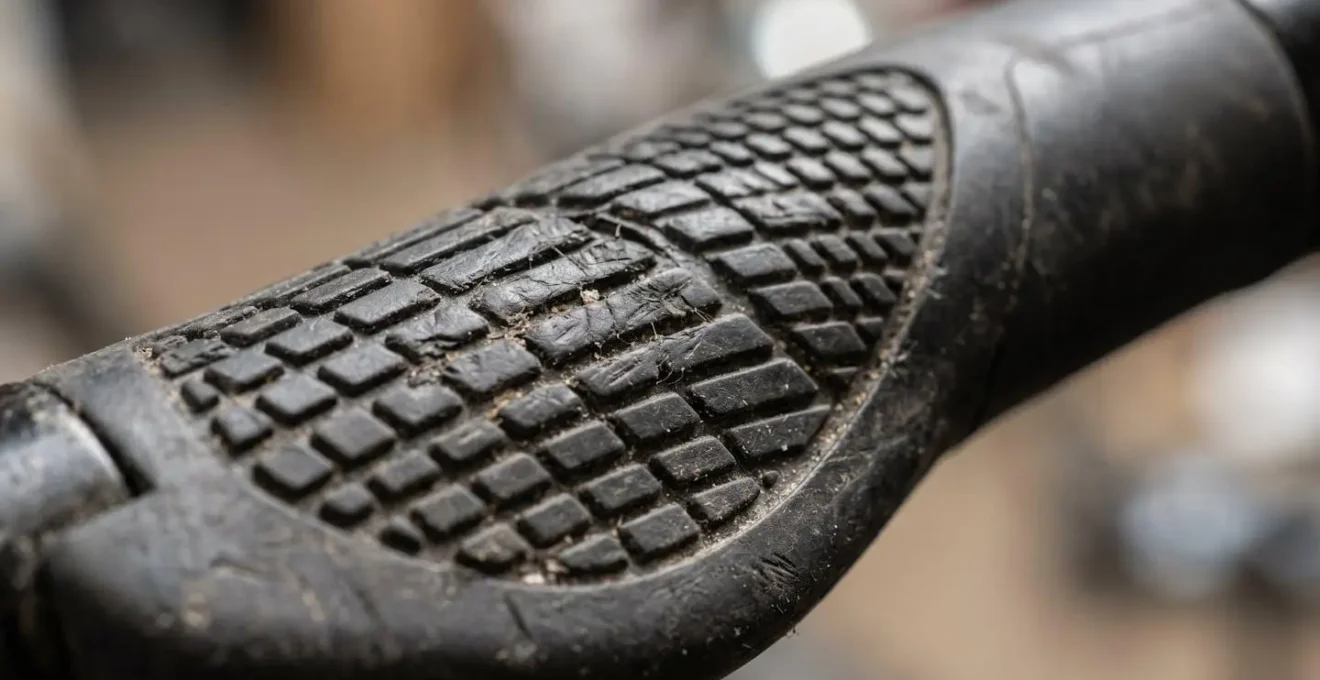
This image of a handlebar grip’s micro-texture illustrates the first point of contact for vibration dampening. High-quality materials are designed to absorb these high-frequency oscillations before they can travel up the arms to the shoulders and cervical spine.
Cheaper scooters often use inferior suspension components and harder tire compounds, which do little to filter out these harmful frequencies. They effectively transmit raw road vibration directly to the rider. For an individual with a pre-existing spinal condition, daily exposure to this level of WBV is not a matter of discomfort but a direct risk factor for accelerated degeneration and chronic pain. Choosing a scooter with a high-quality, properly tuned suspension system is therefore a primary preventative health measure.
Whiplash Prevention: Setting Your Headrest for Safe Stops
While much focus is placed on the lumbar spine, the cervical spine is equally vulnerable, particularly during sudden deceleration. A whiplash-type injury, or cervical acceleration-deceleration (CAD) syndrome, occurs when the head is thrown backward and then forward rapidly. On a scooter, this can happen during an emergency stop or a minor collision. An improperly positioned headrest dramatically increases the risk and severity of such an injury.
If the headrest is too low, it acts as a fulcrum, causing the neck to hyperextend over it during a rearward motion. If it is too far back, it allows for a dangerous amount of momentum to build before the head makes contact, increasing the force of impact. The goal of a headrest is not comfort; it is to minimize the differential motion between the torso and the head. It should act as an immediate backstop to catch the head at the very beginning of a sudden rearward movement, limiting the range of hyperextension and protecting the delicate ligaments and facet joints of the cervical spine.
For users with pre-existing cervical conditions, such as degenerative disc disease or a history of fusion surgery, preventing even minor whiplash events is paramount. Proper headrest setup is a non-negotiable safety protocol. The following steps provide a clinical guideline for correct positioning:
- Height Alignment: Position the top of the headrest so it is level with the top of your ears, or slightly above. This ensures it will support the occiput (back of the skull) and not the neck itself.
- Distance Check: The gap between the back of your head and the headrest should be as small as possible, ideally no more than 2-3 inches (5-7.5 cm). This minimizes the free space for acceleration.
- Anticipatory Bracing: During braking, consciously engage your core muscles and brace your arms. This dissipates deceleration forces through the torso and upper body, reducing the inertial forces acting on the head and neck.
- Test the Setup: While stationary, simulate the motion of being pushed back into your seat. Your head should make immediate and even contact with the headrest.
This simple, two-minute adjustment transforms the headrest from a passive feature into an active safety device, providing critical protection against a potentially debilitating injury.
Softening the Blow: Lowering PSI Slightly for a Smoother Ride?
Tire pressure, measured in pounds per square inch (PSI), is a critical and often overlooked ergonomic variable. Tires are the first line of defense against road vibrations. While manufacturers recommend a specific PSI for optimal performance and battery range, this figure represents a compromise. From an orthopedic standpoint, a slight, calculated adjustment to this pressure can have a significant impact on the amount of shock transmitted to the rider’s spine.
A tire with higher pressure has a smaller contact patch with the road, less rolling resistance, and is more « bouncy. » It transmits high-frequency vibrations with greater fidelity. Conversely, a slightly lower PSI increases the size of the contact patch and allows the tire’s sidewall to flex more, acting as an initial, low-level shock absorber. This can be particularly effective at dampening the small, chattering vibrations from coarse asphalt or uneven pavement that contribute to WBV. However, this adjustment is a delicate balance. Lowering the PSI too much can lead to sluggish steering, reduced battery life, and a significantly increased risk of « pinch flats, » where the inner tube is punctured by being compressed against the wheel rim.
The decision to adjust PSI for comfort must be informed by an understanding of these trade-offs. The following table, based on an analysis of scooter tire performance, outlines the effects of different pressure levels.
| PSI Level | Comfort | Battery Range | Steering Response | Pinch Flat Risk |
|---|---|---|---|---|
| Low (30-35 PSI) | High comfort, better shock absorption | Reduced by increased rolling resistance | Slower, mushier feel | High risk |
| Optimal (40-50 PSI) | Balanced comfort | Maximum efficiency | Responsive and stable | Low to moderate risk |
| High (55+ PSI) | Harsh, reduced shock absorption | Slightly improved | Very responsive but skittish | Increased blowout risk on obstacles |
For a rider with spinal sensitivity, a small reduction of 2-4 PSI from the manufacturer’s maximum recommended pressure may provide a noticeable improvement in ride quality without significantly compromising safety or range. Rider weight is also a factor; a common industry guideline is to add approximately 1 PSI for every 10 pounds of rider weight above average to find an optimal starting point. This small adjustment can be a powerful tool in fine-tuning your scooter’s vibration dampening profile.
The Slouch Factor: How Tiller Position Affects Your Spine Alignment?
The tiller—the vertical column connecting the handlebars to the front wheel—dictates the position of your upper body. Its height and angle directly influence the alignment of your shoulders, arms, and, most importantly, your thoracic and cervical spine. An improperly adjusted tiller forces the body into a non-neutral, compensatory posture that creates significant musculoskeletal strain.
If the handlebars are too low, the rider must hunch forward, causing flexion in the thoracic spine (kyphosis) and a forward head posture. This position places immense strain on the posterior cervical muscles and ligaments, which must constantly work to hold the head’s weight against gravity. If the handlebars are too high, the shoulders are forced into an elevated, shrugging position, leading to tension in the trapezius muscles and potential impingement syndromes in the shoulder joint. A tiller that is too close or too far away forces the elbows into a locked or excessively bent position, which impairs shock absorption and transmits more force into the shoulder and neck. The ideal position is one that allows for a relaxed, neutral upper body posture, with the shoulders down, elbows slightly bent, and wrists straight.
The clinical impact of poor tiller setup is not theoretical; it has been quantified in ergonomic studies. The following findings highlight the importance of proper adjustment.
Ergonomic Analysis of Scooter Rider Postures Using RULA Assessment
A 2022 study published by Springer analyzed electric scooter ergonomics using digital human models and Rapid Upper Limb Assessment (RULA) tools. Researchers modeled ten riders with varying anthropometric data and found that improper handlebar height and positioning significantly increased body load scores, particularly affecting the neck, shoulders, and lower back regions. The research confirmed that proper tiller adjustment is critical for reducing musculoskeletal strain during extended scooter use.
Achieving this neutral position requires a systematic approach. Stand on the scooter in your natural riding stance and adjust the tiller height and angle until your shoulders are relaxed, your elbows have a gentle bend (around 90-110 degrees), and your wrists are in a straight line with your forearms. This adjustment aligns the entire upper kinetic chain, allowing it to function as an effective shock-absorbing system rather than a generator of postural strain.
Memory Foam vs Gel: Which Cushion Prevents Numbness on Bumpy Rides?
Persistent numbness or a « pins and needles » sensation (paresthesia) in the buttocks and legs during or after a ride is a red flag. It often indicates compression of the sciatic nerve or reduced blood flow to the perineal area. This is typically caused by prolonged, concentrated pressure on the ischial tuberosities, commonly known as the « sit bones. » The choice of seat cushion material is the primary factor in mitigating this pressure.
The two most common materials, memory foam and gel, address this problem in different ways. Memory foam (viscoelastic polyurethane foam) is temperature-sensitive and conforms to the rider’s specific anatomy. It excels at distributing weight over a wider surface area, reducing peak pressure points. However, under sustained load, it can « bottom out, » compressing fully and losing its supportive properties. It can also retain heat, which may be a concern on long rides.
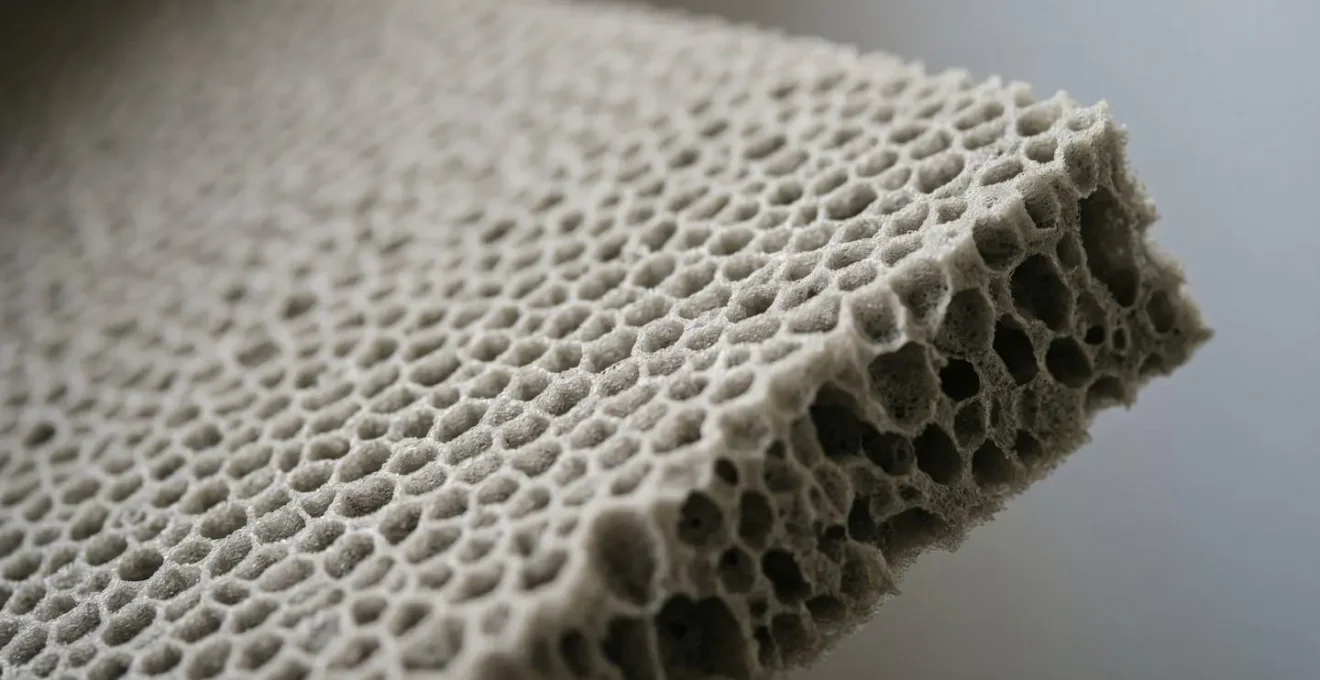
This macro view of foam material shows the cellular structure responsible for its compressive and conforming properties. It’s this internal architecture that dictates how well it can distribute pressure over time.
Gel cushions, often made of a solid-state polymer, are superior at managing shear forces and distributing sharp, localized pressure. They do not « bottom out » in the same way as foam and are generally better at dissipating heat. However, they may feel firmer and less conforming than memory foam. For riders experiencing sharp pain or numbness, a gel or hybrid cushion is often the more effective clinical choice. Medical-grade mobility cushions often use advanced honeycomb or air-cell technology, which distributes weight across a matrix of interconnected air pockets, preventing pressure on any single point.
Hybrid designs, which combine a supportive memory foam base with a targeted gel overlay on top of the sit bone areas, often provide the best of both worlds. They offer the conforming comfort of foam with the superior pressure relief of gel. For any daily scooter user, especially one with a history of sciatica or circulatory issues, investing in a high-quality gel or hybrid cushion is a direct investment in neurological and vascular health.
Front vs Rear vs All-Round: Where Do You Need the Cushioning Most?
A scooter’s suspension system is the primary mechanism for isolating the rider from road imperfections. However, not all suspension is created equal, and its location—front, rear, or dual (all-round)—determines which part of the body receives the most protection. Understanding this distribution is key to selecting a scooter that matches your specific orthopedic needs.
Front suspension primarily protects the upper body. It absorbs impacts that would otherwise travel up the tiller into the handlebars, wrists, elbows, and shoulders. This reduces fatigue in the arms and minimizes shock to the cervical spine caused by forces transmitted through the upper kinetic chain. It is essential for maintaining steering control on uneven surfaces.
Rear suspension, conversely, is dedicated to protecting the spine. It isolates the deck and seat from impacts transmitted through the rear wheel. This is the most critical component for reducing direct axial loading on the lumbar spine and pelvis. For a seated rider with a history of lower back pain or surgery, a robust rear suspension is arguably the single most important feature on a scooter. It directly dampens the vertical forces that compress intervertebral discs.
Dual suspension (front and rear) offers comprehensive, full-body protection and is the gold standard for anyone with spinal conditions or for those who ride on poorly maintained roads. The following table, based on an ergonomic analysis from eScooterNerds, breaks down the protective benefits of each configuration.
| Suspension Type | Primary Protection Area | Best Use Case | Vibration Reduction |
|---|---|---|---|
| Front Only | Arms, wrists, steering control | Short urban rides on smooth roads | 30-40% reduction in upper body impact |
| Rear Only | Spine, lower back, coccyx | Long seated commutes, spinal health priority | 50-60% reduction in spinal shock transmission |
| Dual (Front + Rear) | Full body protection | Poor road conditions, off-road, extended daily use | 70-80% overall vibration dampening |
| High-Quality Single Hydraulic | Targeted zone with superior dampening | Quality over quantity approach | 65-75% in target area (outperforms cheap dual-spring) |
It is crucial to note that quality trumps quantity. A single, high-quality hydraulic or air shock absorber in the rear can provide far superior dampening and spinal protection than a cheap, ineffective dual-spring system. For a user with spinal health as their top priority, a scooter with a high-performance rear suspension is a more clinically sound choice than one with a mediocre dual system.
Key Takeaways
- Spinal protection on a scooter is not passive; it requires active configuration of suspension, seating, and posture to mitigate Whole Body Vibration (WBV).
- The primary goal is to interrupt the kinetic chain of vibration transmission from the road to the vertebral column, especially in the 5-7 Hz frequency range.
- A combination of robust rear suspension, a pressure-relieving gel or hybrid cushion, and a supported lumbar curve forms the foundation of an orthopedic-safe setup.
Why Maintaining Orthopedic Posture Is Critical for Daily Scooter Users?
All the ergonomic hardware in the world—advanced suspension, gel cushions, lumbar supports—can be rendered ineffective if the rider does not maintain proper orthopedic posture. Posture is the active component of the system; it is how you align your body to correctly receive and dissipate the forces that the scooter’s hardware has dampened. Poor posture creates internal strain that can be just as damaging as external vibrations.
Correct orthopedic posture on a scooter is a dynamic state of balance and muscular engagement. It begins with a stable base: feet planted firmly, with slightly bent knees ready to act as the body’s own natural shock absorbers. The core muscles must be engaged to stabilize the lumbar spine in its neutral lordotic curve. The shoulders should be relaxed and drawn back, opening the chest, with the head aligned directly over the spine, not jutting forward. This « ears over shoulders, shoulders over hips » alignment ensures that the weight of the head and torso is supported by the bony structure of the spine, minimizing strain on muscles and ligaments.
The cumulative effect of poor posture is significant and well-documented. As spine surgeons at Kauvery Hospital explain, postural errors during two-wheeler use are a leading cause of conditions like slipped discs and chronic lower back pain, particularly in daily commuters. Each ride in a slouched position contributes to a pattern of micro-trauma and adaptive muscle shortening that becomes progressively harder to correct.
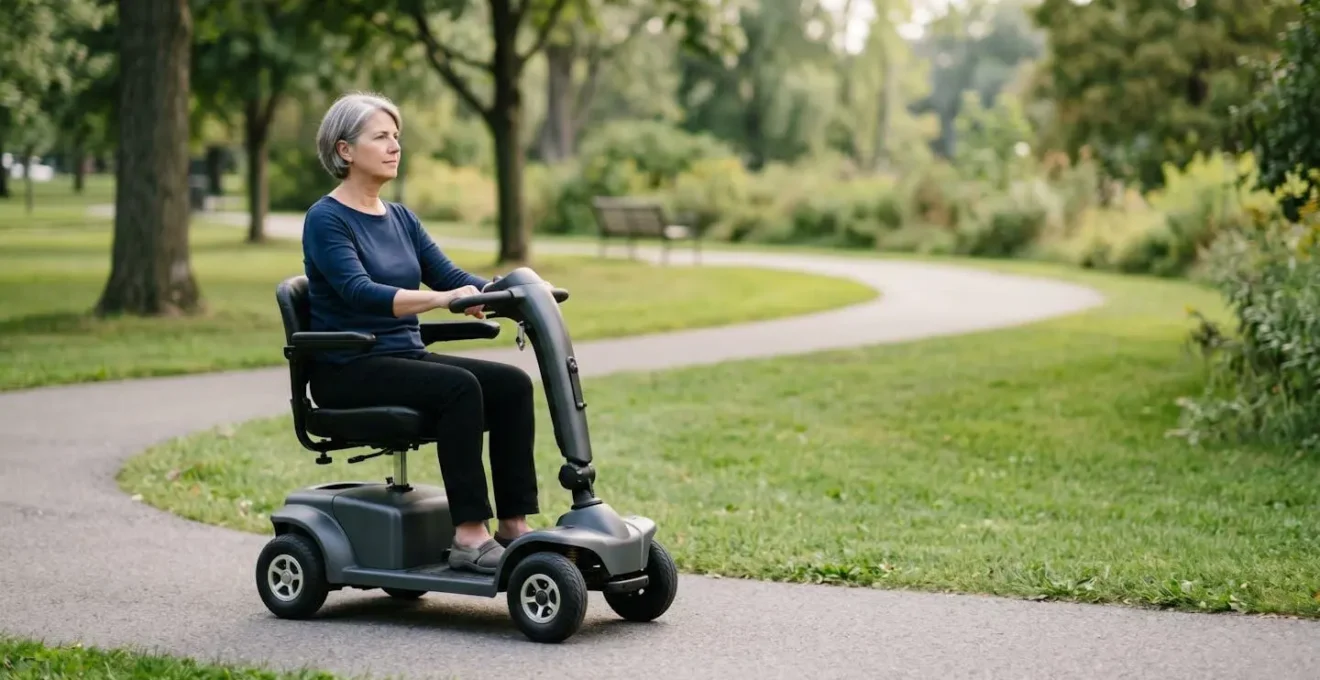
To combat this, it is essential to develop a habit of conscious postural awareness. Before every ride, perform a quick mental check to ensure your body is correctly aligned. This simple, repeatable process transforms posture from an afterthought into a foundational element of your riding safety.
Your Pre-Ride Orthopedic Checklist
- Establish Your Base: Plant your feet firmly on the deck or footrests, shoulder-width apart. Ensure your weight is balanced.
- Unlock Your Joints: Slightly bend your knees. Locked joints cannot absorb shock; bent knees are your first line of personal suspension.
- Engage Your Core: Lightly tense your abdominal and lower back muscles to support your lumbar spine in a stable, neutral position. Avoid arching or slouching.
- Set Your Shoulders: Roll your shoulders back and down, away from your ears. Keep your chest open and your upper back relaxed but straight.
- Align Your Head: Gently tuck your chin and align your head directly over your spine, as if a string were pulling the crown of your head upward. This prevents forward head posture and cervical strain.
Ultimately, treating these ergonomic adjustments and postural cues not as optional tweaks, but as a critical part of your daily spinal health regimen, is paramount. Your ability to maintain pain-free mobility in the long term depends directly on the proactive, clinical approach you take to riding today.