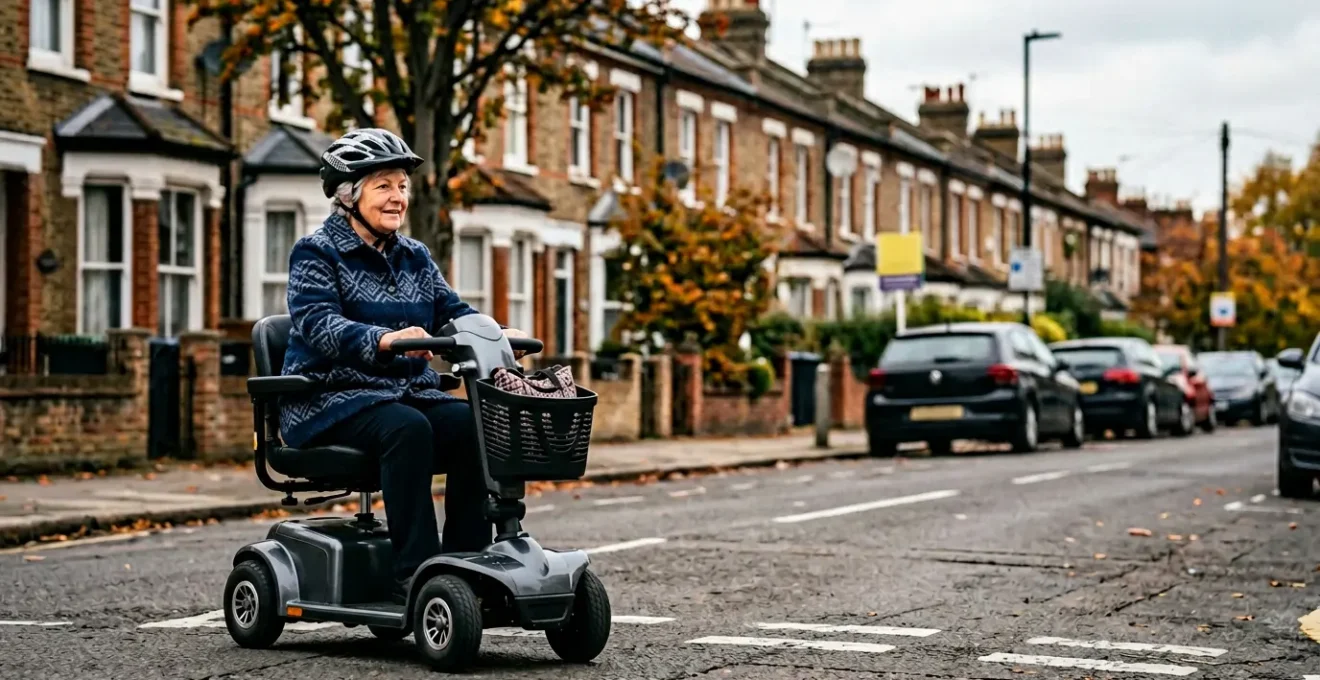
The question of whether a helmet is legally required for a mobility scooter is a dangerous distraction; the real question is whether you can afford the physical consequences of not wearing one.
- The law (Highway Code Rule 46) does not mandate helmets, focusing only on visibility recommendations.
- Even low-speed falls from a kerb can cause fatal rotational head injuries, a risk the law doesn’t address.
Recommendation: Make the personal choice to protect yourself. The absence of a legal requirement is not a guarantee of safety.
For many mobility scooter users, the question of wearing a helmet seems straightforward. You check the UK Highway Code, find no legal mandate, and consider the matter closed. This is a common and understandable conclusion, but it’s one based on a critical misinterpretation of risk. The conversation around scooter safety has been so dominated by the legal black-and-white that it completely ignores the unforgiving grey areas of physics and human biology.
The core issue is not what the law permits, but what a concrete pavement delivers in the event of a simple, low-speed tip-over. While we focus on reflective jackets and visibility, the silent, growing statistics on serious injuries point to a different threat: the rotational force of a fall. This is a force that doesn’t care about the speed limit of your scooter or the letter of the law. It cares only about momentum and the point of impact.
This article will reframe the debate entirely. We will move beyond the simple legal ‘no’ to explore the compelling, evidence-based ‘why’. We’ll examine the physics of low-speed falls, the specific vulnerabilities of scooter users, and why the most important safety decision you can make has nothing to do with following the law, but everything to do with protecting your future. We will explore how to choose protection that is not only effective but also dignified and comfortable, ultimately arguing that wearing a helmet is an act of empowerment, not compliance.
To navigate this crucial topic, we will break down the key considerations, from the exact wording of the law to the practical science of head protection.
Summary: The Helmet Debate for Mobility Scooters
- Recommended vs Mandatory: What Does Rule 46 Actually Say?
- Tipping Over: Why Even Low Speed Falls Can Cause Serious Trauma?
- High-Vis Helmets: Being Seen Above the Roof Line of Parked Cars
- Looking ‘Cool’: Finding Helmets That Don’t Look Like Bike Lids
- Chin Straps and Padding: How to Measure a Senior’s Head Correctly?
- Ventilation vs Protection: Which Style Suits Low Speed Impacts?
- Fluorescent on the Chair: Why Wearing Dark Coats Makes You Invisible?
- To Wear or Not to Wear: The Helmet Debate for Mobility Scooter Users
Recommended vs Mandatory: What Does Rule 46 Actually Say?
Let’s begin with the official text, as this is the source of much of the confusion. UK Highway Code Rule 46 addresses users of powered wheelchairs and mobility scooters, and it is clear on one point: it does not mention the word « helmet ». The focus is entirely on being seen by other road users. This is a crucial distinction between recommendation and legal obligation. The law is concerned with preventing collisions, but it offers no guidance on mitigating injury *if* a fall occurs for other reasons, like hitting a kerb.
The code advises you to make yourself more visible, especially in low light. As the official guidance from the UK government states:
Be aware that other road users may not see you and you should make yourself more visible – even in the daytime and also at dusk – by, for instance, wearing a reflective jacket or reflective strips on the back of the vehicle.
– UK Highway Code Rule 46, GOV.UK – The Highway Code
This advice is sound, but it creates a false sense of security. It implies that if you are visible, you are safe. The tragic case of John Hitchcock, a 75-year-old from Portsmouth, demonstrates the fatal flaw in this logic. He wasn’t hit by a vehicle. His scooter’s wheel simply went over the edge of a kerb, causing it to tip over. He suffered serious head injuries and later died. The inquest into his death concluded that a helmet would have saved his life. This real-world event starkly illustrates that the absence of a legal requirement is not a shield against physical harm. The most common dangers aren’t always other vehicles.
Tipping Over: Why Even Low Speed Falls Can Cause Serious Trauma?
The term « low speed » is dangerously misleading. While a mobility scooter’s pace feels gentle, the physics of a fall—particularly a tipping or rotational fall—are anything but. When a scooter tips, your head doesn’t just fall downwards; it pivots and accelerates, creating a powerful rotational impact when it strikes a hard surface. This twisting force is a primary cause of severe traumatic brain injuries and concussions, far more so than a direct, linear impact.
The danger is not hypothetical. The risk for scooter users is disproportionately high, with research highlighting they are nearly three times more likely to be killed in a road collision than any other road user group. Furthermore, the problem is escalating. Recent Department for Transport figures are alarming, showing a rise to 16 fatalities and 80 serious injuries in 2023, up from 9 deaths and 64 serious injuries the previous year. These are not just numbers; they are lives irreversibly changed by incidents often dismissed as minor.
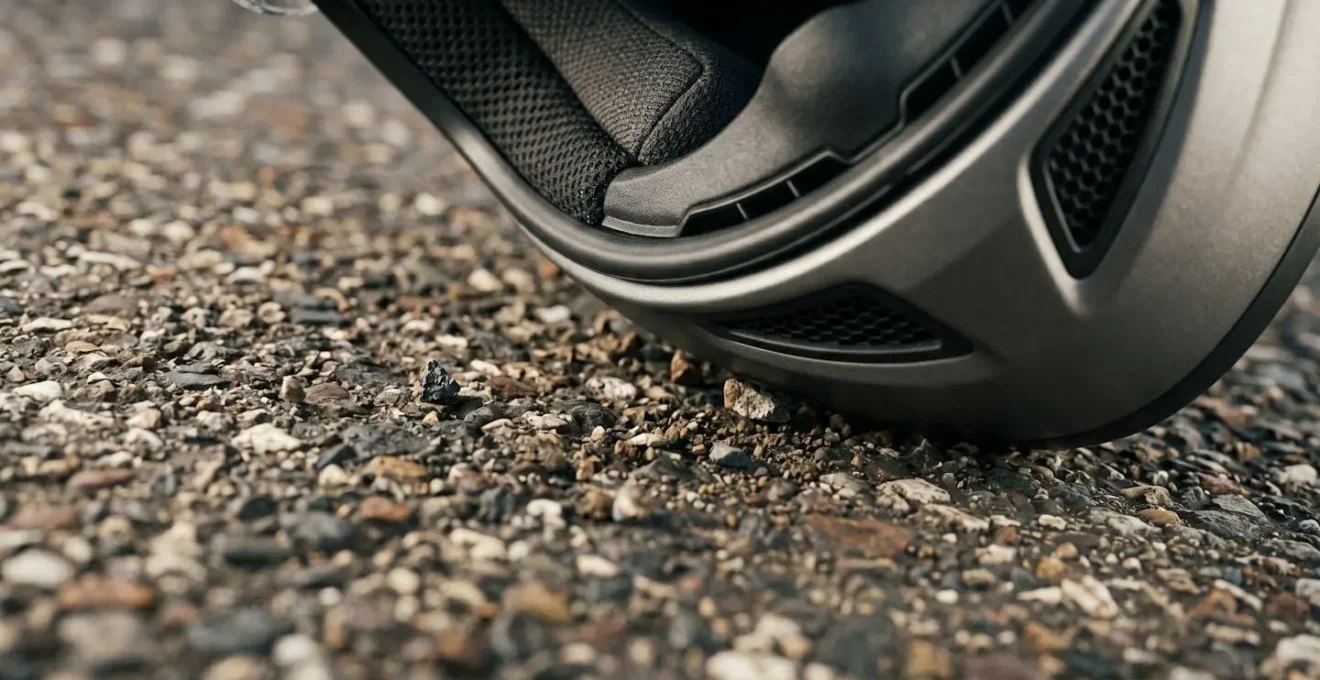
The visual above illustrates the critical moment of impact. It’s not about the forward speed of the scooter, but the whipping motion as the user’s head swings down and sideways into the unyielding ground. The brain is suspended in fluid and is highly vulnerable to this type of shearing force. Understanding this biomechanical reality is key to appreciating why a certified helmet is not just an accessory, but a critical piece of safety equipment designed specifically to absorb and dissipate these exact forces.
High-Vis Helmets: Being Seen Above the Roof Line of Parked Cars
While the Highway Code rightly emphasizes visibility, its recommendation for reflective jackets and strips on the vehicle overlooks a critical factor in urban and suburban environments: the visual horizon. A rider on a mobility scooter sits low, often below the roofline of parked cars, vans, and hedges. This creates a dangerous « visibility silhouette » problem, where the rider can be completely obscured from the view of a driver pulling out of a junction or driveway.
Wearing a dark coat, a common choice for many, effectively renders you invisible against the backdrop of tarmac, shadows, and other vehicles. While fluorescent panels on the scooter itself are helpful, they are often too low to be seen over these common obstructions. This is where a helmet offers a secondary, but vital, safety benefit: it is the highest point of your silhouette. A brightly coloured or fluorescent helmet can act as a beacon, breaking the horizontal line of parked cars and catching a driver’s eye much sooner than a jacket or panel at seat level.
Think of it as a personal lighthouse. In a sea of visual clutter, your head is the one part of you that has the greatest chance of being seen over the waves of parked vehicles. Choosing a helmet in a high-visibility colour like lime green, yellow, or bright orange is not just about being seen at night; it’s about being conspicuous in the complex visual landscape of a daytime street. This simple choice can be the difference between a driver seeing you and a driver looking right through the space you occupy.
Looking ‘Cool’: Finding Helmets That Don’t Look Like Bike Lids
One of the biggest, though often unspoken, barriers to helmet adoption is aesthetics. Many users associate safety helmets with the bulky, heavily-ventilated designs worn by sport cyclists, which can feel undignified or overly « medical » for everyday use. This is a valid concern, but one that is increasingly being addressed by modern helmet design. The market has evolved far beyond the traditional « bike lid ».
The goal is to find protection that feels like a deliberate, stylish choice rather than a reluctant obligation. Modern urban and equestrian-style helmets offer a completely different aesthetic. These designs often feature matte finishes, subtle colour palettes, leather-look trim, and more rounded, classic shapes. They look less like sports equipment and more like a piece of contemporary headwear, akin to a stylish hat. This concept of « dignified safety » is crucial; it allows you to protect yourself without sacrificing your personal style or feeling conspicuous for the wrong reasons.
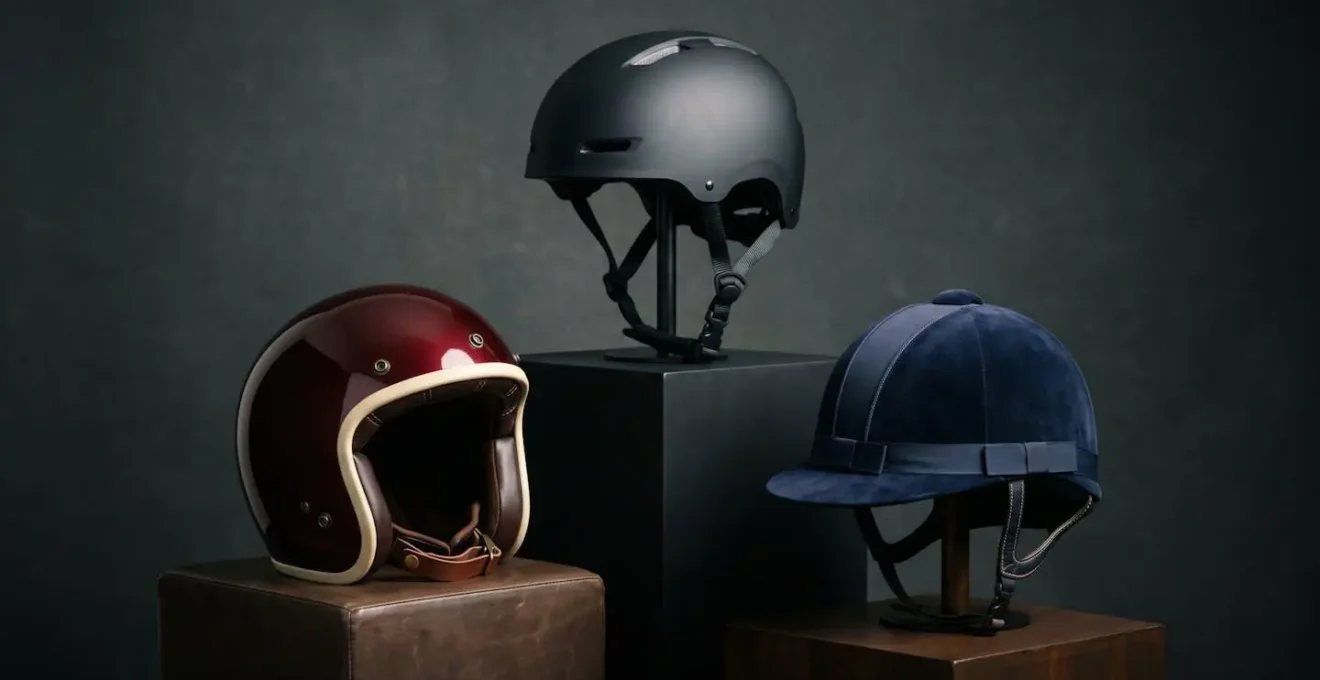
The image above showcases just a few of these alternative styles. From sleek, minimalist urban designs to retro-inspired open-face models, there are now countless options that provide certified protection without the athletic look. By exploring these alternatives, wearing a helmet can be reframed from a chore into an expression of smart, modern self-care. You are not just a patient or a victim; you are a savvy road user making an informed choice for your own well-being.
Chin Straps and Padding: How to Measure a Senior’s Head Correctly?
A helmet is only effective if it fits correctly. A poorly fitting helmet can be almost as dangerous as no helmet at all, as it can shift during an impact or come off entirely. For senior users, who may have more sensitive skin or require accommodation for devices like hearing aids, getting the fit right is paramount. It’s not just about size; it’s about the entire system of straps, padding, and shell working in unison.
The process of finding the right fit is methodical and should not be rushed. You need to ensure the helmet is snug without creating pressure points, and that it stays securely in place when you move your head. Many reputable cycle and mobility shops offer professional fitting services, which are highly recommended. However, you can perform a thorough check yourself by following a clear set of steps. This ensures the helmet will perform as designed when you need it most.
Your Action Plan for a Perfect Helmet Fit
- Check Certification: Only choose a helmet certified to a recognised standard (like CPSC or DOT). This is your baseline guarantee of protective quality.
- Ensure a Snug Fit: Place the helmet on your head. It should be level, with no more than two fingers’ width between your eyebrows and the helmet’s edge. This prevents it from tilting back during an impact.
- Perform the ‘Shake Test’: Fasten the chin strap securely. Shake your head vigorously from side to side, then up and down. The helmet should move with your head as a single unit, not slide around independently.
- Assess Comfort and Compatibility: Check for pressure points. The padding should be soft and hypoallergenic. If you wear hearing aids, ensure the helmet and straps don’t interfere with them.
- Test the Buckle: For users with arthritis or reduced hand strength, consider helmets with magnetic « Fidlock » buckles, which are much easier to operate than traditional clips.
Taking the time to get this right is a critical investment in your own safety. A well-fitted helmet is one you will forget you are wearing, but one that will be there for you in the moment you need it most.
Ventilation vs Protection: Which Style Suits Low Speed Impacts?
When selecting a helmet, a common question is how to balance ventilation with protection. For mobility scooter users, the primary threat is not high-speed crashes but low-speed, oblique, or rotational falls. This specific risk profile means you should prioritise technologies designed to counter these exact forces. One of the most significant innovations in this area is the MIPS (Multi-directional Impact Protection System).
MIPS is not a helmet brand, but a technology integrated into many different brands and styles. It’s essentially a low-friction layer inside the helmet that allows the head to move slightly (10-15mm) relative to the helmet during an angular impact. This tiny movement is critical because it helps to redirect the dangerous rotational forces that can cause concussions and other severe brain injuries. As the creators of the system explain, this technology is designed for the most common type of real-world fall.
Rotational motion is a common cause of concussions and more severe brain injury in oblique hits to the head. The Mips system consists of a low friction layer that is mounted inside the helmet. In a crash, the low friction layer is designed to move slightly inside the helmet to help redirect forces away from the head.
– MIPS Protection Systems, MIPS Official Technology Explanation
This is not just marketing; the science backs it up. The damage from a twisting impact can be far more severe than from a straight-on hit because of the strain it puts on brain tissue. Therefore, for a mobility scooter user, a helmet with a rotational protection system like MIPS offers a superior level of safety tailored to the most likely accident scenario. While ventilation is important for comfort, it should not come at the expense of this vital protective feature.
Fluorescent on the Chair: Why Wearing Dark Coats Makes You Invisible?
While fluorescent panels on a scooter are a good starting point for visibility, their effectiveness is often compromised by a simple factor: the rider’s clothing. Wearing a dark coat, especially in overcast daylight, dusk, or rain, can create a « floating » effect where the bright panels are visible but the human element—the rider—blends into the background. This makes it harder for drivers to recognise you as a person and to judge your speed and distance accurately.
This issue is compounded by the specific vulnerabilities of the typical mobility scooter user. These are not 25-year-old athletes who can bounce back from a fall. The data provides a stark profile of the user base. A detailed analysis of 1,504 patients in the UK TARN database showed the median age of those hospitalised after a scooter incident is 76.2 years. Crucially, nearly a third of these patients (29.4%) suffered major trauma.
For an older individual, an injury that might be moderate for a younger person can be life-altering. Bones are more brittle, recovery times are much longer, and the risk of complications is significantly higher. A « simple » fall can easily lead to a broken hip, a long hospital stay, and a permanent loss of independence. Therefore, the argument for maximising every possible safety measure—from wearing a bright helmet and jacket to choosing a helmet that protects against the most common type of fall—is not just about avoiding scrapes and bruises. It is about protecting your quality of life.
Key Takeaways
- The UK Highway Code does not legally require helmets for mobility scooters, but this legal loophole offers no physical protection.
- Low-speed tipping falls generate dangerous rotational forces, a primary cause of severe brain injury that helmets with MIPS technology are designed to mitigate.
- Making yourself visible involves more than vehicle-mounted reflectors; a bright helmet and clothing are crucial for being seen above the line of parked cars.
To Wear or Not to Wear: The Helmet Debate for Mobility Scooter Users
We have established that the law is silent on the issue of helmets. We have seen the tragic, real-world consequences of a simple fall from a kerb. We have explored the physics of rotational impacts and the specific technologies designed to protect you. And we’ve confirmed the alarming vulnerability of the user demographic. So, the debate « to wear or not to wear » is not a balanced one. It is a stark choice between relying on a legal loophole for a sense of security, or taking proactive, evidence-based steps to protect your own life and independence.
The decision is made more urgent by the clear and worrying trend of rising casualties. This is not a static problem; it is a growing public health issue. The feeling of safety while travelling at 4 or 8 mph is an illusion, a dangerous misperception of risk. The experience of other riders provides a powerful warning, like that of Keith Gentles, who had a close call:
Just recently had a wee bump with my mobility scooter, this left me with cracked ribs and bruised chest. I tipped over and came down on the ground with a heavy thump also hitting the side of my head. If I had been in concrete or tarmac the force could have fractured my skull, I did however land on a grass bank… When I next go out I will wear my old bike safety helmet.
– Keith Gentles
Keith was lucky. Many are not. His experience is a perfect summary of the entire issue: the potential for a catastrophic outcome from a seemingly minor incident. The choice is yours to make, and it should be made with full knowledge of the facts, not on the basis of what is, or is not, legally required.
Protecting your future independence is the most powerful reason to wear a helmet. Don’t wait for the law to change or for a near-miss to convince you. Make the smart, informed, and protective choice for yourself today.