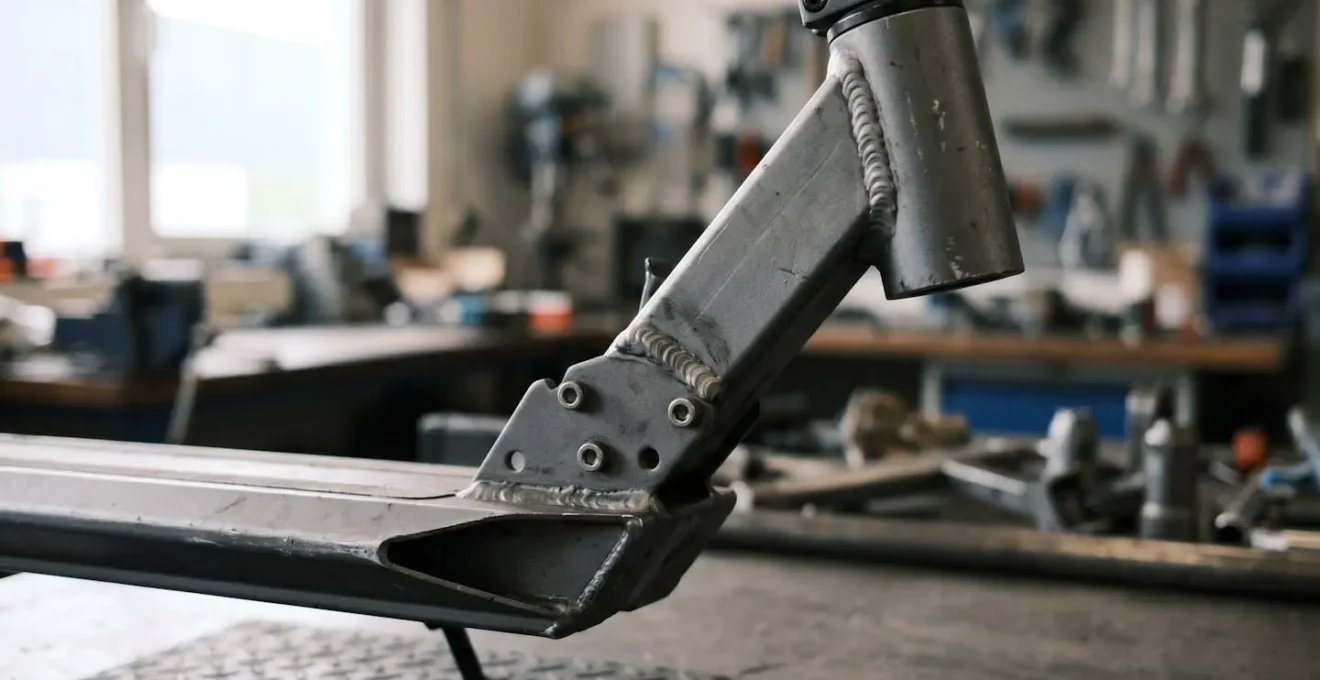
Pushing your scooter’s weight limit isn’t a minor issue; it’s the start of a predictable cascade of mechanical failures that compromises your safety.
- Overloading doesn’t just slow you down; it causes motors to overheat, batteries to drain up to 40% faster, and creates invisible micro-fractures in the chassis.
- A true « heavy-duty » scooter is defined by its braking system, controller amperage, and reinforced frame—not just the weight capacity on the box.
Recommendation: Always choose a scooter where your total weight (including gear) is no more than 80% of its stated maximum capacity to ensure a vital safety margin.
As a bariatric mobility consultant, I speak with users every day who are concerned about the durability and safety of their scooters. The manufacturer’s weight limit is often seen as a guideline, a number that can be slightly fudged without consequence. This is a dangerous misconception. Exceeding the stated load capacity isn’t a single event; it’s the trigger for a cascade of failures that can leave you stranded, facing expensive repairs, and, most importantly, at risk of serious injury. Standard advice to simply « not overload your scooter » is unhelpful because it fails to explain the severe, interconnected consequences.
The reality is that the weight limit is not just a suggestion; it’s an engineering calculation based on the limits of every single component working in harmony. When that limit is breached, the system begins to fail. The motor strains, the frame flexes beyond its design, and the battery drains at an alarming rate. These are not separate problems; they are symptoms of a single root cause: operating outside the machine’s engineered safety parameters. This isn’t about shaming; it’s about empowering you with the knowledge to understand the physics at play.
This guide moves beyond generic warnings. We will dissect the specific mechanical and electrical failures that occur when a scooter is consistently overloaded. By understanding the « why » behind the weight limit—from motor overheating on inclines to the invisible danger of chassis cracks—you will be equipped to make informed decisions. We will deconstruct what makes a scooter truly « heavy-duty » and provide clear, actionable rules for selecting a machine that guarantees your safety and independence for years to come. This knowledge is your best tool for ensuring both your mobility and your well-being.
To navigate this critical information, we will explore the specific points of failure and the key features that define a truly robust mobility scooter. This table of contents will guide you through each essential aspect.
Summary: Exceeding Your Scooter’s Weight Limit: The Cascade of Failures That Voids Your Warranty and Risks Your Safety
- Why Your Motor Overheats on Hills If You Are Near the Weight Limit?
- Cracked Chassis: The Invisible Danger of Overloading a Class 2 Scooter
- How Carrying Extra Weight Reduces Your Range by Up to 40%?
- What Features Define a True Heavy-Duty Scooter Beyond Just Weight Limit?
- The 10% Rule: Why You Should Never Buy a Scooter at Your Exact Weight?
- Heavier Packs: Will a Bigger Battery Exceed Your Axle Load Limit?
- 80kg vs 150kg: Choosing the Right Crane for Your Heavy Scooter
- Class 3 Scooters: Is a Heavy-Duty Model Worth the Extra Cost for Rural Living?
Why Your Motor Overheats on Hills If You Are Near the Weight Limit?
The motor is the heart of your scooter, but it’s not invincible. When you approach or exceed the weight limit, especially on an incline, you are forcing the motor to perform a task it wasn’t designed for. To move a heavier load uphill, the motor must draw significantly more electrical current from the battery. This surge in current generates a massive amount of excess heat within the motor windings. This process, known as thermal runaway, is the primary reason for premature motor failure. The internal components, including magnets and insulation, begin to degrade under the intense heat.
Initially, you might notice a loss of power or a burning smell. This is your scooter’s first warning sign. If ignored, this continuous overheating will permanently weaken the motor’s magnets and can even melt the insulation on the copper wires, leading to a short circuit and complete failure. According to industry analysis, 34% of e-scooter motor failures are caused by overheating, a risk that is dramatically amplified by overloading. The motor isn’t just getting warm; it’s being slowly cooked from the inside out.
This isn’t just a theoretical problem; it’s a matter of fundamental physics. As one technical analysis clearly states, the stress on an overloaded motor is palpable and destructive over time.
When you exceed this limit, the motor must work harder, resulting in overheating. That’s exactly how overloaded motors feel – stressed and overworked; over time, this may reduce efficiency and lifespan.
– Macfox E-Bike Technical Analysis, Will Exceeding an E-Bike’s Weight Limit by 30 lbs Occasionally Cause Damage?
Ultimately, a motor that frequently overheats will lose its efficiency, require more energy to produce the same power, and will inevitably fail much sooner than one operated within its designated load capacity. This failure can leave you stranded, facing a costly replacement that could have been avoided.
Cracked Chassis: The Invisible Danger of Overloading a Class 2 Scooter
While a burnt-out motor is a significant issue, a compromised frame represents a far more catastrophic and immediate safety risk. The chassis of a scooter is its skeleton, engineered to withstand a specific amount of stress. When you consistently overload the scooter, you introduce forces that exceed its structural limits. This doesn’t necessarily mean the frame will snap in half instantly. The more insidious danger is metal fatigue—the progressive and localized structural damage that occurs when a material is subjected to repeated loading and unloading.
Every bump you hit, every turn you make, and even the simple act of getting on and off the scooter creates a dynamic load on the frame. For a heavier user, these dynamic loads are significantly amplified. The stress concentrates at the weakest points, typically the weld joints, the base of the steering column, and around the folding mechanism. Over time, these repeated high stresses create microscopic cracks in the metal. These cracks are often invisible to the naked eye, hiding beneath layers of paint, but they grow with every ride.
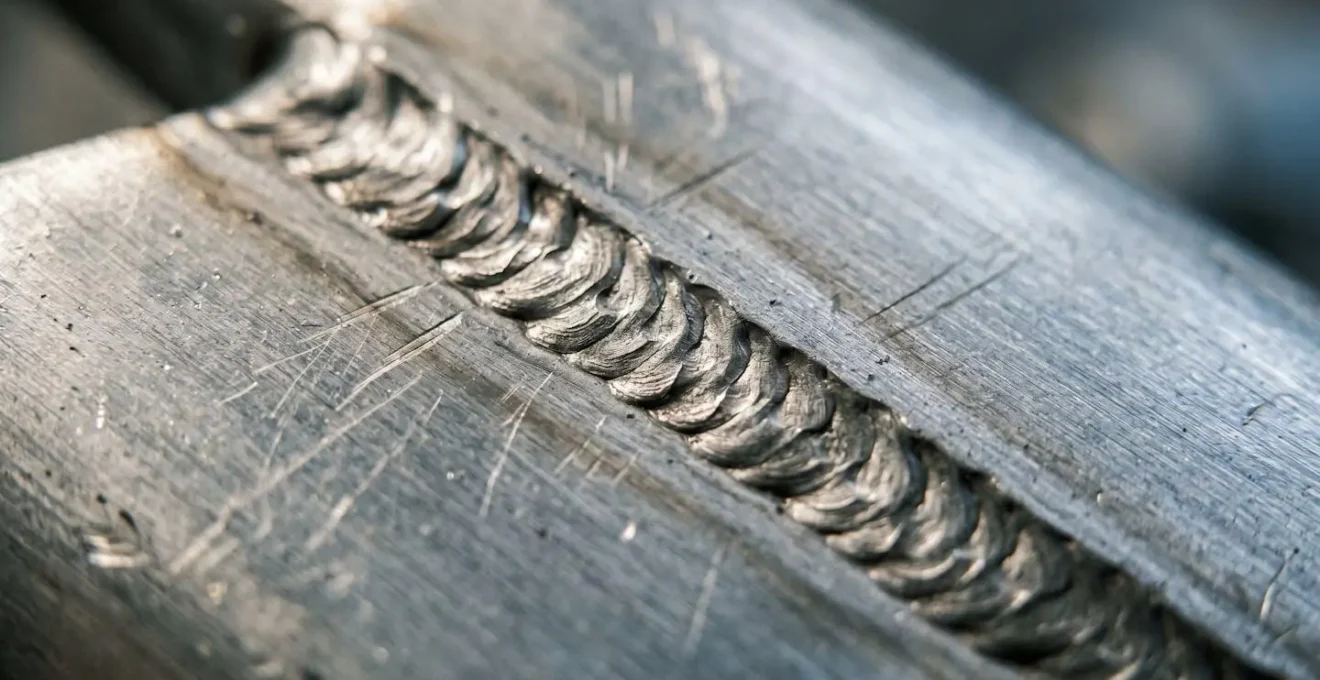
The result is a frame that is secretly and progressively weakening. One day, a seemingly minor bump or a sudden stop can cause these micro-fractures to connect and propagate, leading to a sudden and complete structural failure. A cracked weld or a snapped stem can cause an immediate loss of control, leading to a serious fall. For this reason, regular and thorough frame inspections are not just recommended; they are a non-negotiable safety procedure for any heavy rider.
Your Action Plan: Monthly Frame Inspection Checklist for Heavy Riders
- Inspect weld joints monthly, focusing on stress points where the stem meets the deck.
- Check folding mechanisms for play or looseness by applying lateral pressure.
- Look for paint bubbling or cracking at weld joints, which can indicate micro-fractures underneath.
- Use a flashlight to inspect the base of the stem for hairline cracks.
- Feel for unusual vibrations or creaking sounds during rides, as these are early warning signs.
- Check for loose fasteners and retighten to the manufacturer’s specifications.
How Carrying Extra Weight Reduces Your Range by Up to 40%?
One of the most immediate and frustrating consequences of overloading a scooter is the drastic reduction in its travel range. The advertised range is typically calculated under ideal conditions: a lightweight rider, flat terrain, and moderate speed. Every pound you add to the total payload forces the motor to work harder and draw more power from the battery to achieve and maintain speed. This increased energy consumption directly and dramatically impacts how far you can travel on a single charge.
The physics are simple: moving more mass requires more energy. When you are near or over the weight limit, the battery drains at an accelerated rate. This effect is especially pronounced when accelerating from a stop, climbing hills, or riding into a headwind—all scenarios that demand peak power from the motor. While a scooter might be rated for 25 miles, a heavier user might find their actual, real-world range is significantly less.
This isn’t a small discrepancy. Research from manufacturers specializing in heavy-duty models provides a stark picture of this reality. For example, a 300-pound rider may only get 15-17 miles of range on a scooter that is advertised to last for 25 miles under ideal conditions. That represents a range reduction of up to 40%. This loss of range isn’t just an inconvenience; it’s a critical safety and reliability issue. It can leave you stranded far from home, turning a simple trip into a stressful ordeal. This drastic reduction undermines the very independence and freedom a mobility scooter is meant to provide.
This loss of performance isn’t just about the total trip; it also affects the scooter’s behavior throughout the battery’s discharge cycle. As the battery depletes, its voltage drops, and an overloaded scooter will begin to feel sluggish and underpowered much sooner than a correctly loaded one. You are effectively shrinking the usable capacity of your battery with every extra pound you carry.
What Features Define a True Heavy-Duty Scooter Beyond Just Weight Limit?
Many manufacturers will label a scooter « heavy-duty » simply by raising its stated weight capacity, but this is often a misleading marketing tactic. A genuinely robust scooter designed for a heavier user is engineered differently from the ground up. The weight limit itself is meaningless without the supporting components to handle the increased forces. Three key features distinguish a true heavy-duty model: the braking system, the motor controller, and the frame construction.
First and foremost is the braking system. A heavier payload carries more momentum and requires significantly more force to stop safely. Standard mechanical disc brakes, common on entry-level scooters, are simply inadequate. They lack the stopping power and are prone to overheating and fading under heavy use. A true heavy-duty scooter must have hydraulic disc brakes. These systems provide superior stopping power, better modulation, and are self-adjusting, ensuring consistent performance. For users over 300 lbs, hydraulic brakes with large rotors (140-160mm) are non-negotiable for safety.
The following table from industry specialists illustrates the clear hierarchy of braking systems and why the choice is critical for heavier users.
| Brake Type | Stopping Power | Heat Dissipation | Maintenance | Recommended For |
|---|---|---|---|---|
| Mechanical Disc | Moderate | Poor | Frequent adjustments needed | Riders under 220 lbs |
| Hydraulic Disc (Standard) | High | Good | Low (self-adjusting) | Riders 220-300 lbs |
| Hydraulic with Large Rotors (140-160mm) | Superior | Excellent | Minimal | Heavy riders 300+ lbs (Non-negotiable) |
Secondly, the motor controller—the scooter’s brain—is a critical differentiator. This component regulates the flow of power from the battery to the motor. Standard controllers are often limited in the amount of amperage they can handle. When a heavy rider demands more power, a weak controller can overheat and fail. As technical specifications reveal, heavy-duty scooters require controllers rated for 30A or more, whereas standard models are often limited to 15-25A. This higher amperage rating allows the scooter to deliver sustained power without risking controller burnout. Finally, look for reinforced frames with thicker gauge metal and high-quality welds, which provide the necessary structural integrity to prevent the metal fatigue discussed earlier.
The 10% Rule: Why You Should Never Buy a Scooter at Your Exact Weight?
One of the most critical principles in selecting a safe mobility scooter is to build in a substantial safety margin. A common mistake is to purchase a scooter where your weight is very close to the maximum stated capacity. This leaves no room for error and puts you, and the scooter’s components, under constant strain. The safest approach is what I call the 10% Rule, though a 20% buffer is even better. This means your total payload should never exceed 80-90% of the scooter’s maximum weight limit.
It’s crucial to think in terms of « total payload, » not just your body weight. Your payload includes everything the scooter has to carry: you, your clothing (heavy winter coats can add 10-15 lbs), any bags or groceries, a backpack, and any personal items. This accumulated weight can easily add 20-30 lbs or more to your body weight, pushing you over the limit of a scooter that seemed « just right. »

This safety margin is not arbitrary; it’s based on sound engineering principles. In fact, most reputable manufacturers recommend that for optimal performance and safety, you should aim to be at about 80% of the scooter’s maximum weight capacity. This buffer accounts for the dynamic loads created by movement and uneven surfaces and protects the scooter’s components from excessive wear. It also ensures the scooter performs as expected in terms of acceleration, braking, and range.
Riding at the absolute maximum limit continuously eats into the crucial safety buffer that engineers design into the product. As experts in scooter engineering standards note, this buffer is there for a reason.
Manufacturers build in a safety margin (e.g., a 1.5x-2x buffer) to handle unexpected dynamic loads. Consistently riding at the max limit eats into this crucial safety buffer, rapidly accelerating metal fatigue and component wear.
– Electric Scooter Engineering Standards, Electric Scooter Weight Limit: The Ultimate Buying Guide 2025
By adhering to the 80% rule, you are not just prolonging the life of your scooter; you are actively investing in your own safety and ensuring the machine will be reliable when you need it most.
Heavier Packs: Will a Bigger Battery Exceed Your Axle Load Limit?
For many scooter users, especially those covering longer distances, upgrading to a larger battery seems like a logical solution to combat range anxiety. A bigger battery with a higher watt-hour (Wh) rating can indeed provide more energy and extend your travel distance. However, this upgrade comes with a significant and often overlooked trade-off: weight. This added weight must be factored into your total payload calculation, as it directly eats into your scooter’s available weight capacity.
The difference in weight between a stock battery and a long-range upgrade can be substantial. For example, battery upgrade specifications show that a stock 500Wh battery might weigh around 3kg (approx. 7 lbs), while a custom 1500Wh long-range pack can easily weigh over 10kg (approx. 22 lbs). That’s an additional 15 pounds added to the scooter’s base weight before you even step on it. For a rider who is already close to the weight limit, this extra battery weight could be the factor that pushes the total payload into the danger zone.
This added mass doesn’t just affect the total weight; it also impacts the scooter’s handling and balance. Most batteries are located in the deck, and adding significant weight there can alter the center of gravity, potentially making the scooter feel less stable. More importantly, this weight contributes to the overall stress on the frame, suspension, and particularly the axles. An axle load limit is a critical safety specification, and while it’s rarely advertised, it is a factor that engineers consider. Adding a heavy battery pack, combined with a heavy rider, puts immense strain on these crucial structural components.
Before investing in a battery upgrade, you must do the math. Subtract the scooter’s weight (including the new, heavier battery) from the maximum gross vehicle weight rating (if available) or the stated weight capacity. What remains is your true, available payload capacity. If that number is uncomfortably close to your own weight plus gear, the battery upgrade may be compromising your safety for the sake of range.
80kg vs 150kg: Choosing the Right Crane for Your Heavy Scooter
For many users of heavy-duty scooters, true independence means being able to transport your vehicle. This often requires a vehicle-mounted hoist or crane to lift the scooter, which can weigh anywhere from 60kg to over 100kg, into a car or van. Choosing the right hoist is just as critical as choosing the right scooter, as a failure here can result in damage to your scooter, your vehicle, or cause serious injury. The primary consideration is the hoist’s weight capacity, and just like with the scooter itself, you must incorporate a significant safety margin.
A hoist rated for 80kg is fundamentally different from one rated for 150kg. It’s not just a matter of a stronger motor; it involves thicker steel, more robust joints, and more secure mounting points. Lifting a heavy scooter creates dynamic swinging and jerking forces that can momentarily exceed the scooter’s static weight. A hoist that is rated too closely to the scooter’s actual weight may not be able to handle these forces, leading to bending, stress fractures, or catastrophic failure.
Beyond simple capacity, you must consider the crane’s articulation and reach. Can it lift the scooter high enough to clear the vehicle’s bumper and swing it fully into the cargo area without hitting the sides? Is the vehicle’s mounting point (the floor or side wall of the van) strong enough to support the combined weight and lifting forces, or does it require professional reinforcement? Selecting and installing a hoist is a serious task that requires careful planning.
Your Action Plan: Hoist Selection Safety Guidelines for Heavy Scooters
- Choose a hoist with a capacity at least 25-30% higher than your scooter’s actual weight to manage dynamic loads.
- Verify your vehicle’s mounting point integrity; consult a professional installer about reinforcement plates if necessary.
- Measure the crane arm’s articulation and reach before purchase to ensure it provides proper clearance for your scooter and vehicle.
- Test the hoist’s joints for the full range of motion needed to maneuver the scooter safely into the vehicle.
- Consider the swinging and jerking forces during a lift, which momentarily exceed the scooter’s static weight.
- Ensure safety locking mechanisms are installed to prevent accidental hoist failure or movement during transport.
Key Takeaways
- The 80% Rule: Your total payload (you + gear) should never exceed 80% of the scooter’s max weight limit to maintain a crucial safety margin.
- A True Heavy-Duty Scooter is defined by its components: hydraulic brakes, a high-amperage controller (30A+), and a reinforced frame are non-negotiable.
- Total Payload is Key: Always calculate your weight including clothes, bags, and any upgrades like heavier batteries before comparing it to the scooter’s capacity.
Class 3 Scooters: Is a Heavy-Duty Model Worth the Extra Cost for Rural Living?
When considering a mobility scooter, especially for rural or semi-rural environments with varied terrain, the debate often comes down to cost versus capability. Heavy-duty Class 3 scooters, designed for road use and higher performance, come with a significant price tag. A market analysis reveals that ultra-heavy-duty models with capacities of 400-500+ pounds can range from $2,500 to over $6,000. This steep initial investment can be daunting, leading many to wonder if it’s truly necessary.
For a heavier individual living in a rural area, the answer is unequivocally yes. A standard, lower-capacity scooter is designed for smooth pavements and gentle inclines. It will be under constant strain on country lanes, gravel paths, and uneven terrain. The combination of a heavy payload and a challenging environment is the perfect recipe for the cascade of failures we’ve discussed: motor burnout, frame stress, and rapid battery depletion. The extra cost of a true heavy-duty model is not for luxury; it’s an investment in fundamental safety, reliability, and usability.
These models feature larger wheels, full suspension systems, more powerful motors, and the robust frames and braking systems necessary to handle both a heavy load and imperfect surfaces. They provide the ground clearance needed to navigate obstacles and the power required to climb hills without faltering. Moreover, there is a hidden benefit to many high-end heavy-duty scooters that is particularly valuable for rural users.
Heavy-duty scooters often use bicycle-standard parts (like hydraulic brakes, chains, tires). For rural users far from specialist shops, this means they can be repaired by a local bike mechanic or even self-serviced, ensuring uptime and independence.
– Rural Mobility Solutions Analysis, Understanding Electric Scooter Weight Limits: A Comprehensive Guide
This interoperability is a game-changer, reducing reliance on specialized technicians who may be hours away. The higher initial cost, therefore, buys not just a more capable machine, but also greater long-term reliability and peace of mind—the very essence of true independence.
Before your next purchase, take the time to evaluate these engineering specifics beyond the sticker price. Choosing the right scooter is an investment in your safety, your independence, and your long-term peace of mind.