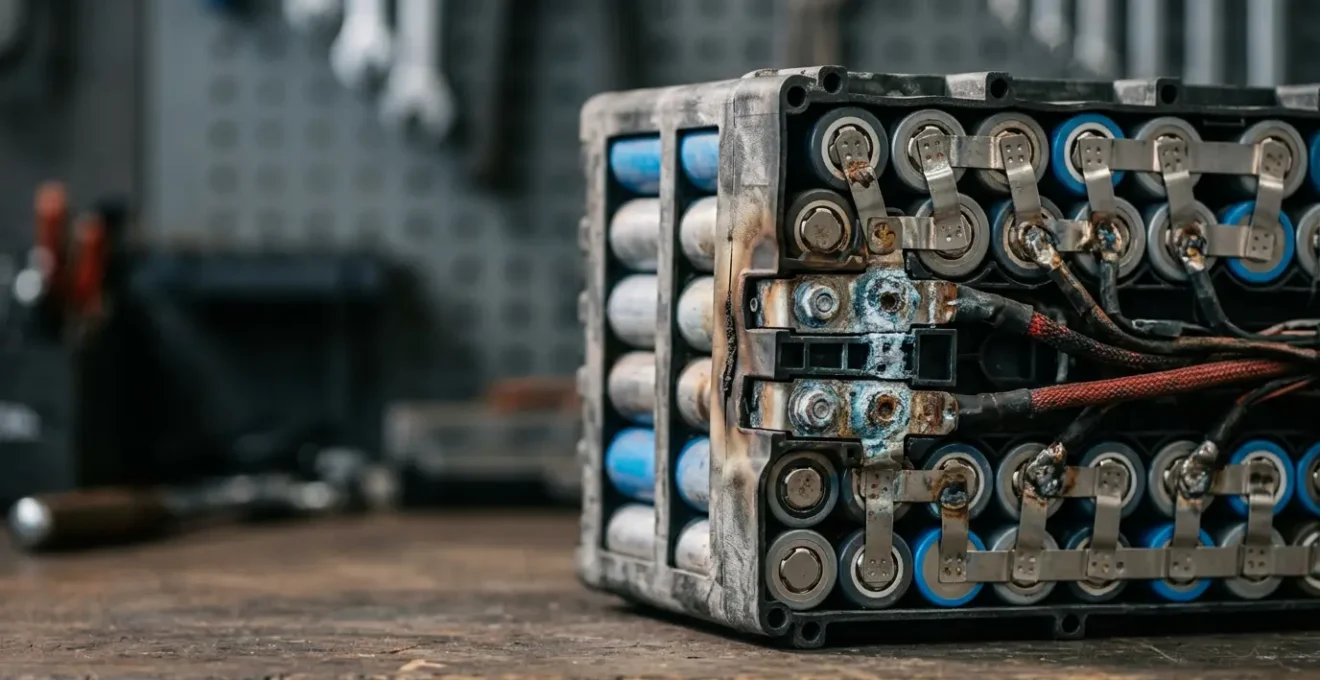
Deep discharging your scooter battery isn’t a minor setback; it’s a direct path to a premature and costly £200 replacement.
- Hitting 0% initiates irreversible chemical damage, permanently reducing your scooter’s range and power.
- Correct daily charging (the 20-80% rule) and proper long-term storage are far more critical than simply avoiding overcharging.
Recommendation: Treat your battery’s charge level like a financial asset. Never let it fall into the « red zone » below 20% to avoid predictable and expensive degradation.
Every scooter owner has felt it: that sinking feeling as the last battery bar blinks, followed by the inevitable coast to a halt. We often treat this moment as a simple inconvenience, a reminder to plug in next time. But what if this common habit is a financial blunder in disguise? The prevailing wisdom focuses on generic tips like « charge regularly » or « don’t overcharge, » yet these platitudes miss the most expensive mistake of all: the deep discharge.
The truth is that letting your battery hit 0% is not a neutral event. It triggers a cascade of irreversible chemical reactions inside the cells, silently chipping away at its capacity and lifespan. This process, known as capacity fade, is the primary reason riders find themselves facing a steep bill for a new power pack. An industry analysis from Unagi Scooters shows that this can lead to a £200 battery replacement cost, an expense that is entirely preventable.
This article moves beyond basic advice to reveal the financial and chemical reality of battery neglect. We will dissect the chain reaction that begins at 0%, explain the science behind why that last battery bar seems to last forever, and provide a concrete strategy to triple your battery’s life. It’s time to stop thinking of battery care as a chore and start seeing it as a direct investment in your scooter’s performance and your own wallet.
To navigate this crucial topic, we will break down the essential knowledge into distinct, actionable sections. The following guide provides a clear roadmap, from daily habits to long-term strategies, ensuring you have all the tools to protect your scooter’s most vital component.
Summary: Deep Discharge: The Battery Mistake That Costs Owners £200 a Year?
- The ‘Every Ride’ Rule: Why You Should Charge Even After a Short Trip?
- How to Store Your Battery When You Don’t Use the Scooter for Months?
- Can a Smart Charger Revive a Deeply Discharged Battery?
- Sulfation Explanation: What Chemically Happens When You Hit 0%?
- Sluggish Hills and Dim Lights: 3 Signs Your Battery Is Beyond Saving
- The Mistake of Ignoring Insurance and Service Costs That Adds £300/Year
- Why the First Bar Disappears Quickly but the Last Bar Lingers?
- How to Extend Your Battery Lifecycle to 3 Years Instead of 12 Months?
The ‘Every Ride’ Rule: Why You Should Charge Even After a Short Trip?
The habit of only charging when the battery is nearly empty is a direct route to premature failure. A lithium-ion battery is happiest when its State of Charge (SoC) is kept within a specific range, far from the extremes of 0% or 100%. Waiting for the low-battery warning before plugging in repeatedly stresses the battery’s internal chemistry, accelerating capacity fade and shortening its effective lifespan. Each deep discharge cycle inflicts microscopic, cumulative damage.
The « Every Ride » rule is a simple, powerful counter-strategy. By topping up your battery after every use, even a short one, you keep it within its optimal 20-80% SoC sweet spot. This practice prevents the voltage from dropping to critically low levels where damaging chemical reactions begin. Furthermore, modern scooters have a low but constant power draw from electronics like the display, controller, and any GPS trackers. This is known as parasitic drain, and over days or weeks, it can slowly pull a partially charged battery into the deep discharge danger zone without you even riding it.
Adopting this habit shifts your mindset from reactive to proactive. Instead of rescuing a dead battery, you are consistently maintaining its health. This small change in routine has a disproportionately large impact on longevity, directly translating to more charge cycles and a longer period before a costly replacement becomes necessary. It’s the single most effective daily action you can take.
Your Action Plan: Daily Charging Protocol for Battery Longevity
- Charge immediately after each ride, regardless of distance, to maintain the battery between the crucial 20-80% charge level.
- Plug in for 5-10 minutes post-ride to compensate for parasitic drain from onboard electronics like the display and controller.
- Never allow the battery to drop below 20%, as deep discharging below this threshold damages the internal cell structure.
- Periodically monitor your Battery Management System (BMS) status, if accessible, to ensure cells remain balanced and prevent issues.
How to Store Your Battery When You Don’t Use the Scooter for Months?
Long-term storage is one of the most misunderstood aspects of battery care and a common cause of failure. Leaving a scooter untouched in a garage for a season, whether fully charged or completely empty, is a recipe for irreversible damage. A fully charged battery subjected to long-term storage experiences high voltage stress, while an empty one will inevitably fall into a deep discharge state from which it may never recover.
The correct procedure for long-term storage (one month or more) involves two key factors: State of Charge (SoC) and temperature. The ideal storage SoC for a lithium-ion battery is between 40% and 60%. This level is low enough to minimise voltage-related stress on the cells but high enough to provide a substantial buffer against self-discharge and parasitic drain over several months.
Temperature is equally critical. Storing a battery in a hot environment, such as a sun-baked shed or a warm attic, dramatically accelerates its chemical aging process. Research from Battery University confirms that a battery dwelling above 30°C (86°F) experiences accelerated degradation, which is even more stressful than active cycling. The ideal storage location is a cool, dry place with a stable temperature, ideally around 15°C (59°F).

As this visualisation suggests, the environment dictates the battery’s fate. Before storing your scooter, charge or discharge it to approximately 50%, then disconnect the battery if possible, or check on it monthly to ensure the charge hasn’t dropped below 20%. This small amount of prep work can be the difference between a healthy battery and a £200 paperweight come spring.
Can a Smart Charger Revive a Deeply Discharged Battery?
When a scooter battery is left discharged for too long, its voltage can drop below a critical threshold, causing the internal Battery Management System (BMS) to enter a protective « sleep » mode. In this state, the battery will not accept a charge from a standard charger, leading many owners to believe it is permanently dead. This is where a smart charger, with its advanced features, sometimes offers a glimmer of hope.
Unlike a standard charger that simply supplies a constant current, a smart charger can analyse the battery’s state and apply a specific recovery protocol. For a deeply discharged battery, this often involves a « wake-up » feature that delivers a very low, gentle current. This trickle of energy can be enough to slowly raise the cell voltage back above the BMS’s cut-off threshold, allowing it to exit sleep mode and begin accepting a normal charge. However, this is not a guaranteed fix. As experts from RETRON Battery Systems warn in their technical guide:
A deeply discharged lithium-ion battery is usually permanently damaged so that it will no longer achieve the capacity or output of a new battery.
– RETRON Battery Systems, Technical guide on deep discharge recovery
Even if recovery is successful, the battery will have suffered permanent damage, resulting in reduced capacity and a shorter overall lifespan. Success is highly dependent on how low the voltage dropped and for how long. While there are success stories, revival should be seen as a last-ditch effort, not a reliable solution.
Case Study: LiFePO4 Battery Recovery from Deep Discharge
In one documented instance, a 12V 100Ah LiFePO4 battery on a remote cabin was successfully revived using a solar inverter’s smart charging function. The system applied a controlled low current (approximately 0.05C) for six hours. This process gradually woke up the Battery Management System by raising the cell voltages to 3.0V each, at which point normal charging could safely resume. The battery regained full functionality, but this highlights the need for specialised equipment and a slow, patient process that is not always successful.
Sulfation Explanation: What Chemically Happens When You Hit 0%?
To understand why deep discharge is so destructive, we need to look at the microscopic level inside a lithium-ion cell. The process is not a simple « emptying » of energy but a complex chemical reaction. When a battery is in a state of very low charge, undesirable and often irreversible side-reactions begin to occur, with the most notorious being the formation of lithium dendrites, often colloquially grouped with sulfation-like effects in lead-acid contexts.
In a healthy lithium-ion cell, lithium ions move smoothly between the anode and the cathode during charging and discharging. However, when the battery is deeply discharged and then recharged aggressively, the lithium ions can deposit unevenly on the anode’s surface. Instead of integrating smoothly, they form sharp, needle-like crystal structures called dendrites. These metallic growths are incredibly problematic for several reasons.
First, they consume active lithium, which is the material responsible for storing energy. Every dendrite that forms is lithium that can no longer participate in the charge-discharge cycle, leading to a direct and permanent loss of capacity. Your 30-mile range might become 25, then 20, as this damage accumulates. Second, and more dangerously, these dendrites can grow long enough to pierce the separator—the delicate membrane that keeps the anode and cathode from touching. If this happens, it can cause an internal short circuit, leading to rapid overheating, and in a worst-case scenario, thermal runaway or fire.

This macro-level visualization hints at the microscopic chaos. Each time you let your battery dip into the low single digits of charge, you are creating the perfect conditions for these damaging structures to grow. It is a quiet, invisible process, but its effects—reduced range, lower power output, and eventual total failure—are very real and very expensive.
Sluggish Hills and Dim Lights: 3 Signs Your Battery Is Beyond Saving
A failing battery rarely dies overnight. It typically displays a series of warning signs that indicate its internal chemistry has degraded to a critical point. Recognising these symptoms can help you prepare for a replacement before you are left stranded. While a single occurrence might be a fluke, a consistent pattern of these behaviours suggests the battery is nearing the end of its life.
The first and most obvious sign is a drastic reduction in range. If a scooter that once reliably delivered 20 miles now struggles to reach 10 under the same conditions, it’s a clear indication of significant capacity fade. This isn’t about the small decrease you might notice in cold weather; it’s a permanent and substantial loss of performance that persists even in ideal temperatures. The battery can no longer hold the amount of energy it was designed for due to the cumulative internal damage.
The second sign is a noticeable lack of power under load. Your scooter might feel fine on flat ground but becomes sluggish and slow when climbing a hill that it used to conquer with ease. This happens because the battery’s internal resistance has increased. The degraded cells can no longer deliver the high current required for peak power output, resulting in a sag in voltage and a feeling of weakness. You might also notice that your headlights dim significantly during hard acceleration, as the battery struggles to power both the motor and the accessories.
Finally, a battery that is beyond saving will often exhibit erratic charging behaviour. It might charge to 100% unusually fast, only to drain just as quickly. Conversely, it may take an excessively long time to charge or fail to reach a full 100% at all. The battery gauge might jump around unpredictably, dropping from three bars to one in an instant. This indicates that the Battery Management System (BMS) is struggling to balance the cells, many of which may be dead or severely damaged. At this point, the battery is no longer reliable or safe, and replacement is the only viable option.
The Mistake of Ignoring Insurance and Service Costs That Adds £300/Year
The £200 cost of a replacement battery is often just the tip of the iceberg. Neglecting battery maintenance creates a domino effect of hidden costs and risks that can easily add hundreds of pounds to your annual running expenses. Many owners are unaware that poor maintenance can directly impact their insurance coverage and lead to more frequent, costly servicing.
Insurance providers are increasingly aware of the fire risk associated with poorly maintained lithium-ion batteries. In the event of a fire or electrical failure, an insurer may investigate the scooter’s maintenance history. If it’s determined that the owner consistently ignored basic battery care protocols—such as proper charging, storage, or using the correct charger—it could be considered negligence. As one maintenance guide points out, routine care for premium models like a Dualtron with a 60V battery is essential to prevent failures that could void insurance claims. The financial risk is not just the scooter’s value, but also liability for any damage caused.
Furthermore, a degraded battery puts additional strain on other electrical components. The scooter’s controller and motor have to work harder to compensate for the voltage sag from a weak battery, which can lead to premature wear and failure of these expensive parts. What starts as a battery issue can quickly cascade into a full electrical system overhaul. This turns small, preventative actions into a major financial headache, transforming a low-cost mode of transport into a money pit. The combination of a potential battery replacement (£200), increased service needs, and the risk of a voided insurance claim can easily surpass £300 a year for a careless owner.
Why the First Bar Disappears Quickly but the Last Bar Lingers?
Many riders have noticed a strange phenomenon with their battery display: the first bar seems to vanish within minutes of a ride, the middle bars hold steady for a long time, and the final bar seems to linger forever before the scooter finally dies. This is not a fault with your display; it’s a direct reflection of the non-linear discharge curve of a lithium-ion battery.
A scooter’s battery gauge is essentially a voltmeter. It estimates the remaining capacity based on the battery’s current voltage. However, the relationship between voltage and actual State of Charge (SoC) is not a straight line. As Battery University research explains, most lithium-ion cells charge to 4.20V/cell and exhibit a distinct discharge curve. This curve has three phases.
Phase 1 is a steep initial drop. Immediately after being fully charged to 100% (around 4.2V/cell), the battery’s voltage quickly falls from its peak as soon as a load is applied. This rapid voltage drop causes the first bar on your display to disappear quickly, even though you have only used a small fraction (perhaps 10%) of the battery’s actual capacity. Phase 2 is a long, flat plateau. For the majority of the discharge cycle (from roughly 80% down to 20%), the battery’s voltage decreases very slowly and steadily. This is the « useful » part of the battery’s capacity, where the middle bars on your display hold on for a long time, giving you a predictable sense of range.
Phase 3 is the final sharp voltage cliff. Once the battery’s SoC drops below approximately 20%, the voltage begins to plummet rapidly. The display’s final bar may appear to linger because it represents a wide voltage range, but the actual remaining energy is very small. You are riding on the edge of a cliff, and once the voltage hits the BMS’s low-voltage cut-off point, the power will be cut abruptly to protect the cells from deep discharge damage. This is why that last bar can feel so deceptive and unreliable.
Key takeaways
- The 20-80% Rule: Keeping your battery within this charge range for daily use is the single most effective way to maximize its lifespan.
- Deep Discharge is a Financial Error: Letting your battery hit 0% causes irreversible damage that leads to a predictable and costly £200 replacement.
- The BMS is Your Guardian: A high-quality Battery Management System is the ultimate protector of your battery’s health, making it a crucial factor when buying a scooter.
How to Extend Your Battery Lifecycle to 3 Years Instead of 12 Months?
The difference between a battery that dies in 12 months and one that thrives for three years or more isn’t luck; it’s strategy. By moving beyond passive ownership and actively managing your battery’s health, you can dramatically extend its lifecycle and save significantly in the long run. This strategy rests on three pillars: how you charge, where you store, and how you ride.
First is Optimal Charging Habits. This means strictly adhering to the 20-80% rule for daily use. This partial-state-of-charge approach minimizes stress on the battery’s electrodes. You should only ever charge to 100% on a day when you know you absolutely need the maximum possible range. For all other days, stopping the charge at around 80-90% will significantly extend the total number of effective charge cycles the battery can deliver.
Second is Environmental Control. As discussed, heat is the enemy of battery longevity. Consistently storing and charging your scooter in a cool, dry environment (ideally between 20-25°C) is crucial. You must also avoid riding in extreme temperatures. Riding in sub-zero conditions can temporarily reduce capacity by 10-20%, while riding in heat above 30°C accelerates permanent chemical degradation. Finally, there is Riding Style Optimization. Smooth, gradual acceleration is far less stressful on the battery than demanding instant, peak power. Using your scooter’s « Eco Mode » whenever possible limits the current draw, reducing thermal stress on the cells. Aggressive riding with frequent hard acceleration generates excess heat and demands high current bursts that degrade the battery over time.
Ultimately, while these habits are powerful, the quality of the hardware itself plays a defining role. As the TEVERUN Battery Engineering Team states:
The single biggest factor is the quality of the scooter’s Battery Management System. When buying a scooter, ask about the BMS, not just the battery capacity. A great BMS is the ultimate guardian that can make a good battery last for years.
– TEVERUN Battery Engineering Team, E-Scooter Battery Life: Expert Guide
Start implementing these habits today to protect your investment. By treating your battery with the care it requires, you not only ensure your scooter is always ready for the ride but also save yourself from predictable and unnecessary costs down the line.