Blog
Living with limited mobility is often perceived through a lens of restriction, yet modern advancements and a shift in perspective are redefining what it means to be independent. Far from being a sign of surrender, embracing mobility aids is a strategic decision to reclaim autonomy. Whether it involves selecting the right vehicle or navigating social landscapes, understanding the available options is the first step toward a fulfilling, active lifestyle.
This resource explores the essential aspects of maintaining freedom, from the psychological benefits of staying active to the technical specifications of the latest electric devices. We examine how technology, legal frameworks, and social engagement intersect to create a supportive environment for those seeking to enhance their daily lives.
Overcoming the Psychological Barriers of Limited Mobility
One of the most significant hurdles to adopting mobility aids is the internal narrative. Many individuals struggle with the ‘giving up’ mindset, viewing the purchase of a first scooter not as a tool for empowerment, but as a concession to age or disability. However, reframing this perspective is crucial. Just as spectacles clarify vision, mobility aids clarify one’s ability to engage with the world.
Combatting isolation is a critical component of this mental shift. Limited mobility can inadvertently lead to shrinking social circles, but proactive engagement yields tangible health benefits. Participation in organized activities, such as joining a ‘Ramble’ group, has been shown to significantly boost mental health. These groups provide not only physical activity but also a vital sense of community, proving that movement is as much about social connection as it is about transport.
Navigating the Hardware: Scooters, Trikes, and E-Mobility
The marketplace for mobility devices is evolving rapidly, often blurring the lines between medical aids and recreational gadgets. Understanding the distinction between traditional mobility scooters and emerging electric mobility devices (like E-Scooters) is vital for both safety and legality.
Stability and Safety considerations
While modern trends lean towards sleek designs, stability remains paramount, particularly for seniors. The debate of three wheels vs two is critical; two-wheeled e-scooters pose a higher fall risk due to the balance required. Conversely, the trike revolution—featuring sitting e-scooters—is bridging the gap, offering the stability of a traditional scooter with the aesthetics and performance of modern tech. When selecting a device, prioritizing stability over speed is often the wisest course of action.
Technological Advancements
Innovation is making devices more user-friendly and secure. Two key areas of development include:
- Carbon Fiber Frames: The future of ultra-light mobility aids lies in materials that reduce weight without compromising strength, making transport and storage significantly easier.
- GPS and Apps: Security is a major concern for owners. Modern integration allows for tracking scooter theft via smartphone applications, providing peace of mind alongside physical freedom.
Legal Frameworks and Public Access
Understanding where one can ride is just as important as knowing what to ride. There is often confusion regarding pavement legalities. It is essential to note that not all electric devices are treated equally under current regulations. While Class 2 and Class 3 mobility scooters have specific rights regarding pavement and road use, many recreational e-scooters are currently restricted from public pavements/sidewalks and shops.
Before investing in a device, one must verify its classification to ensure it can be legally used for daily errands. Attempting to ride an unclassified e-scooter to the shops can result in fines or confiscation, whereas a compliant mobility scooter guarantees access.
Lifestyle Integration: Hobbies and Travel
Maintained independence allows for the continuation of hobbies and the exploration of new environments. However, not all leisure activities are created equal in terms of accessibility.
Choosing Accessible Hobbies
When deciding how to spend leisure time, the infrastructure matters. Comparing activities like gardening or museums reveals different challenges. Museums in the UK and beyond have increasingly adapted their spaces for scooters, offering wide corridors and lifts, whereas gardening may require specific adaptations to raised beds or pathways to remain accessible.
Holiday Options for Limited Mobility
Travel remains a top priority for many, but the mode of transport dictates the experience. The choice often comes down to Coach Trips vs Cruises:
- Cruises: Generally offer a ‘unpack once’ experience with high accessibility standards on board and organized excursions.
- Coach Trips: require more frequent transfers but offer a direct, scenic route to specific destinations, though legroom and scooter storage can vary.
Ultimately, the goal is to reduce reliance on others. The mistake of relying solely on children or relatives for shopping trips can strain relationships and reduce personal agency. By utilizing the right equipment and understanding the logistical landscape, individuals can maintain their role as active, independent participants in their own lives.

Beyond Stock Lights: Upgrading Lights and Reflectors for Maximum Safety
True on-road safety isn’t achieved by a single bright headlight, but by building a layered visibility system that makes you impossible for other drivers to ignore. Effective lighting is about strategic placement and dynamic patterns (biomotion, sequential signals) that trigger…
Lire la suite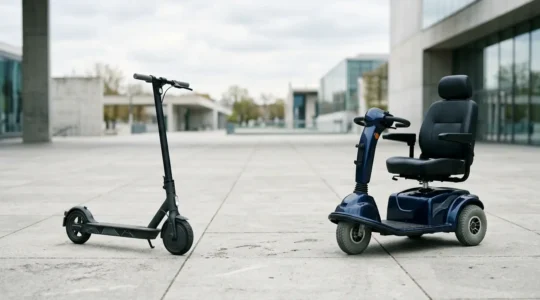
Are Electric Mobility Devices like E-Scooters Replacing Traditional Mobility Scooters?
The rise of e-scooters doesn’t signal the end for traditional mobility scooters; instead, it’s forcing a technological convergence that benefits users. Traditional mobility scooters are adopting the best features of e-scooters, like lightweight carbon fiber frames and smart GPS technology….
Lire la suite
Regaining Freedom: Combatting Isolation with Limited Mobility
Contrary to the belief that a mobility scooter signals ‘giving up’, it’s actually a powerful tool for proactively redesigning your social life and reclaiming independence. True freedom isn’t just about movement; it’s about agency—the ability to choose your own schedule…
Lire la suite